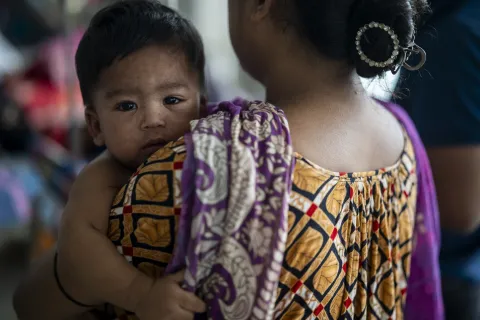
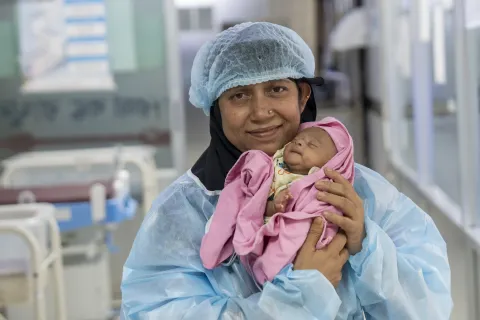
And the fight against dengue continues
A mother, a nurse, and a young volunteer push back against dengue in Barguna

- বাংলা
- English
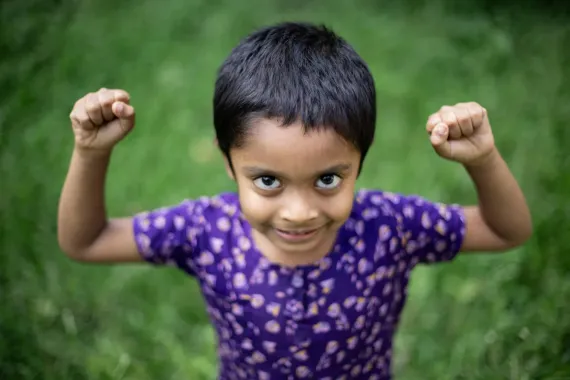
There is a very specific sound which tells you that 4-year-old Sabith is healthy and thriving. It is the sound of him running around the house, followed by his mother, Shimla, asking him to slow down.
Then comes the jumping.
Then the drawing.
And if there is a guest around, there is a good chance he will discreetly place a realistic toy snake at their feet to give them a jump scare. We were lucky enough to be one of the victims of his prank.
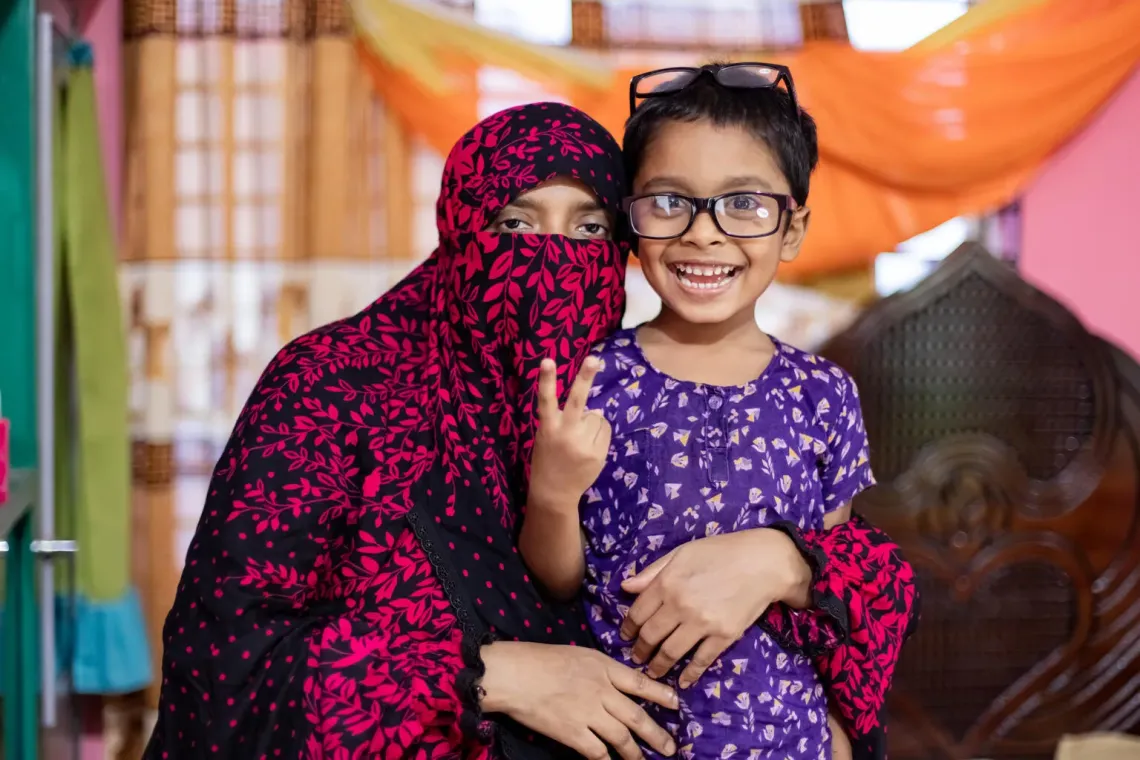
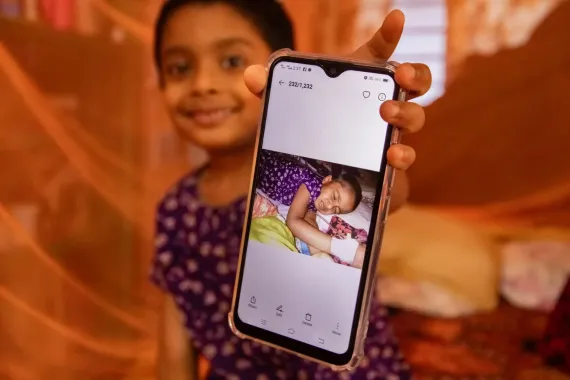
Last year, when this energetic child of hers was admitted to the hospital, watching him getting injections and attached to an IV drip left Shimla heartbroken. Sabith had developed a fever of 104°F that would not come down.
Shimla had given birth to her second child only two months earlier. Now she was sitting beside her first child, watching him fight dengue. The worry was mixed with fear as shortly before, the three-year-old child of her colleague had contracted dengue and did not survive.
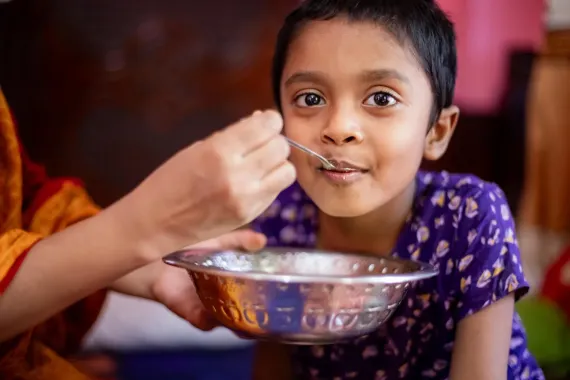
Sabith recovered. After four days in hospital, his fever went down, his platelet count improved, and he was discharged.
Today, he remembers very little about the experience. Mostly, he remembers having a fever and getting injections. His mother remembers something else – how worried he was about missing his favourite activity at school.
"Am I going to miss my PT class?" was one of the first things he said after he was brought to the hospital.
For Shimla, the experience has changed the family's way of life.
The family only sleeps under a mosquito net. They regularly remove stagnant water around their home. Shimla makes sure the rainwater they collect and store at home for drinking and cooking is covered with a lid. During peak dengue season, she makes sure Sabith wears full-sleeved clothes that cover his arms and legs. They have to stay alert.
“The water that families need to survive should not become the place where mosquitoes can multiply,” says Shimla.
For many families, rainwater itself is not a problem. Groundwater in the area contains high levels of iron. So high that the color of rice turns red when cooked with it. Harvested rainwater, hence, is an important source for drinking, cooking, and household use. So, the problem is not rainwater. The problem is what happens when that water is not stored properly.
In 2025, an IEDCR and icddr,b study found Aedes mosquito larvae in rainwater containers in 76 per cent of homes surveyed in Barguna. That itself should be a reminder that prevention starts from where people live. From the water containers, drains, yards, and puddles where mosquitoes can breed.
Meanwhile at Barguna District Hospital
Ayesha, a nurse in the pediatric unit, vividly remembers all that happened during the outbreak in 2025.
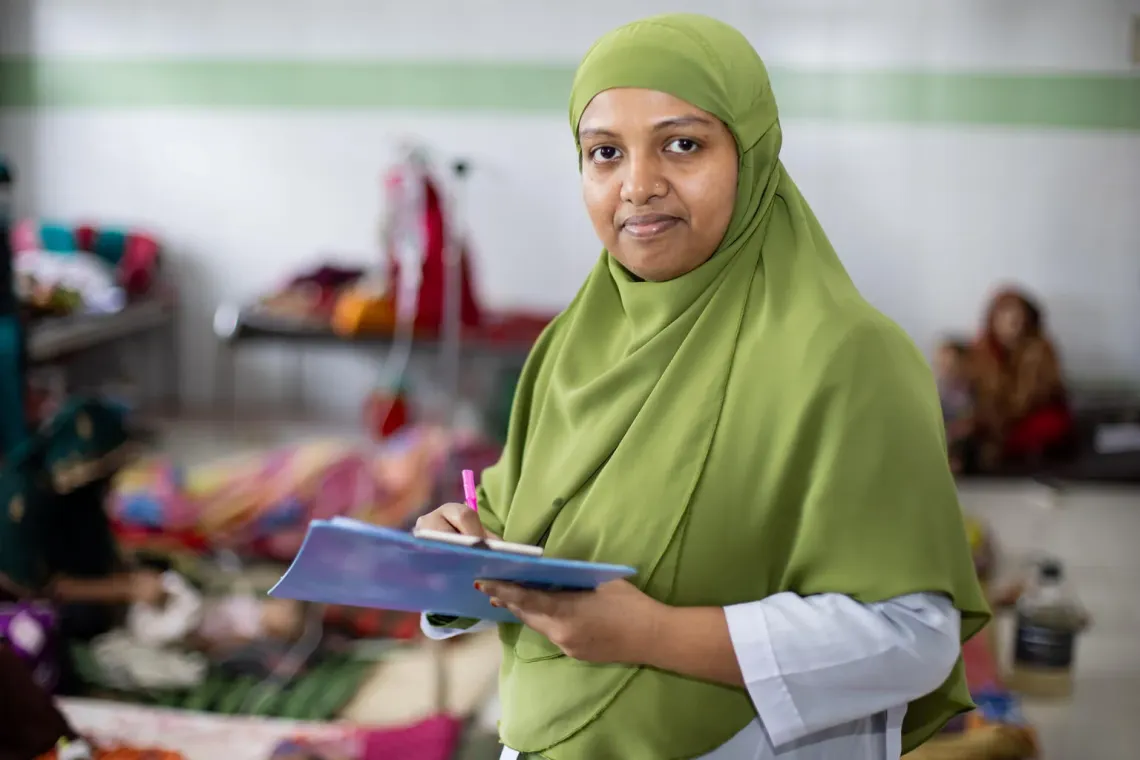
"We were admitting eight to ten dengue patients to the pediatric ward every day during the height of the outbreak," she says.
The pediatric ward at the hospital has 50 beds. During the outbreak, health workers were attending to 170-180 patients. The 250-bed hospital was attending more than 500 patients every day at the peak.
With so many patients needing care, patients were treated on mattresses in open spaces between ward beds, hospital corridors, and verandahs. Dengue patients and general patients were cared for in the same ward. The sudden influx also left the hospital struggling with supplies of medicines and fluids.
"Some days, there was not enough time to even eat or drink," she says.
The support that came in did help. Four more doctors were appointed by the Government to help during the surge. Community members also came forward to help with donations.
UNICEF supported the Government’s efforts with technical training to health service providers on fluid management and dengue shock syndrome. In addition, some hospital supplies and logistics were provided.
One of the biggest challenges was that Barguna District Hospital is the only government hospital in the area, serving a population of around 1.2 million. With Barguna accounting for 59 per cent of dengue cases and 40 deaths reported across Bangladesh, the pressure on one hospital was, of course, immense.
For Ayesha, the numbers eventually come down to individual children.
"Every time a very sick child gets better and is discharged, I feel immensely happy," she says. "Maybe because I am a mother, every child who visits this ward feels like my own."
Outside the hospital, another group was out and about to fight dengue.
When dengue cases began climbing sharply in Barguna, 23-year-old Subah could not simply watch. Determined to do something about it, she attended UNICEF's orientation on community-based dengue awareness and management in June and joined other young people who were ready to act.
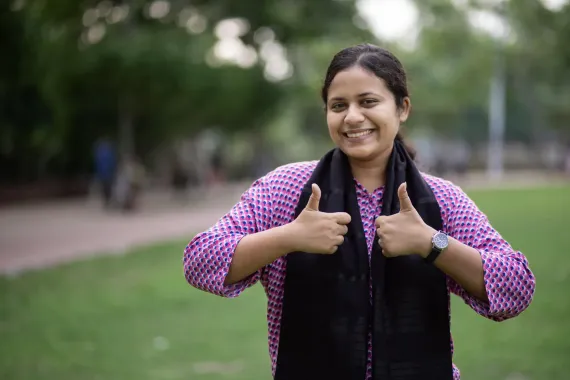
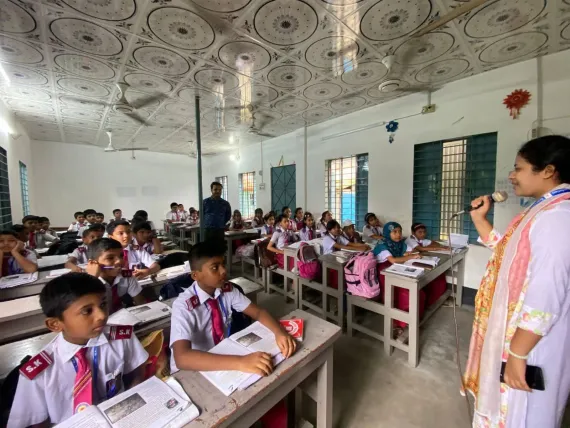
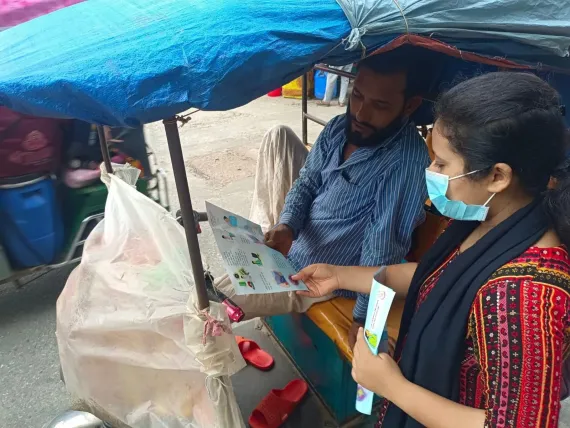

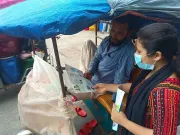
They went door to door. Collaborated with schools and informed students and teachers. Organized cycle rally for awareness. Spoke at community events. They initiated cleanup campaigns and engaged community leaders. They used social media, local community radio, miking, and community dialogue sessions to spread information and mobilize the community for dengue prevention.
Together the youth groups covered nine wards in the area.
"The situation was scary," Subah recalls. "So, watching everyone and everything come together for one single cause felt like a sundor chomotkar (beautiful magic)."
Subah and the other young volunteers were a part of a wider prevention effort that reached more than 5,500 students and family members.
For her, young people have a particular role to play when communities need to respond quickly.
"Young people are curious, passionate, and solutions oriented. We are online, connected to one another, and we influence each other. We are knowledgeable, and things we do not know; they are just a tap away."

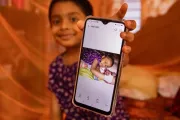

Dengue has not disappeared from Barguna. And as Ayesha rightly reminded us, hospitals cannot fight dengue alone. A child could recover and then return to a neighbourhood with multiple breeding grounds for mosquitoes. A nurse could finish one difficult shift and return to a ward that needs to admit multiple dengue patients the next day. A young volunteer could knock on hundreds of doors, but prevention still depends on what happens after she leaves.
Hospitals need a stronger capacity to manage patients. Health workers need continuous support to keep going, and communities need the information and resources to prevent the next outbreak before it reaches hospital wards, resulting in overcrowded hospitals, worried parents, sick children and tragically, more deaths.