“How can you – how will you – help us get back to school and support us to build skills so that we can work?” Geetu, 18 years.
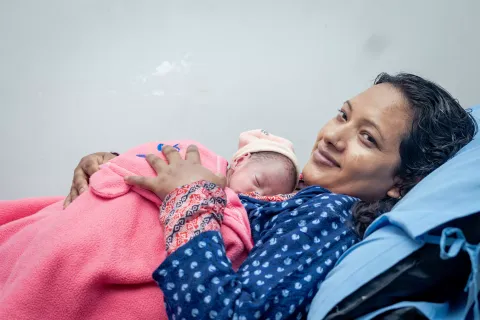
Married at 16, and pregnant shortly thereafter, Geetu endured a difficult labour. Too weak to give birth naturally, she had a caesarean section. Born weighing only 1.5 kg, her daughter required support neonatal intensive care unit (NICU). The high cost of NICU and caesarean section left her and her husband in debt. Unable to breastfeed, she struggled to afford powdered milk, leaving them without enough to eat. They did not qualify for the 500-rupee Government allowance for new parents, because they were under the legal age for marriage.
Two years later, Geetu still struggles with her health. She is in pain and winces doing basic housework or carrying her daughter.
In the year that I’ve been in South Asia, Geetu’s story reminds me of many other stories that I’ve heard.
Last year, I travelled to Pakistan, and met sisters, 17-year-old Maina and 12-year-old Laali. Their family were so poor, they could not afford to care for them. Consequently, Maina was married at 13. In the last four years, she’s suffered multiple miscarriages -- traumatic at any age, but especially frightening as an adolescent with limited medical care and mental health counselling.
I heard Geetu’s story at the recently held Regional Dialogue on Adolescent Pregnancy in South Asia in Kathmandu convened by the South Asia Association for Regional Cooperation (SAARC). She told the impressive gathering of government officials, UN agencies and partners in the room that, “Parents and communities need to get education about child marriage and why not to do it and why it’s harmful.”
Wise words.


In addition to facing hurdles to learn, get good healthcare and eat nutritious food, too many adolescent girls are also denied the opportunity to build skills and start businesses. In short, everything they need as parents to thrive and fulfill their potential. Without these opportunities, their babies are, too often, born at a disadvantage and, thus, the cycle of crippling intergenerational poverty begins again.
Laali also faced pressure to get married. She told me, "I want to go to school, but I can't because my health doesn't allow it."
Fortunately, UNICEF and our local partners were able to delay her marriage and offer her hope for a more productive future.
Meeting Maina and Laali and listening to Geetu, reinforced for me why it’s so important to unleash the promise and potential of the more than 170 million adolescent girls in South Asia. It would transform this region.
To achieve this, member states, led by SAARC, must do better for married, pregnant, and parenting girls, especially adolescent girls from marginalised communities who face restrictions and hardships from the earliest years.
For our part, UNICEF, and our partners, are committed to increasing investments and preventing girls getting married early. And, together, we’re making progress. Programmes combating child marriage and adolescent pregnancy are gaining momentum in South Asia.
In the last decade, the likelihood of a girl marrying in childhood has dropped from 46 to 26 per cent. This is due to several factors, including:
- Advocacy to encourage girls to complete Secondary school
- ‘Cash Plus’ a programme in which we deliver cash transfers to adolescent girls with services, such as education and livelihood programmes like tailoring
- Giving girls, including those who’re pregnant, micronutrient supplements to combat anemia and low birth weight
- Social behavioural change programmes that challenge social traditions and change mindsets about girls
- And an increase in vocational opportunities for girls that provide alternative to early pregnancy and motherhood in adolescence
In fact, UNICEF ROSA is part of the global programme on ending child marriage in India, Bangladesh and Nepal, through programmes such as Beti Bachao, Beti Padao (Save the Daughter, Educate the Daughter) in India, and Rupantaran (Transformation) in Nepal.
UNICEF Nepal’s Rupantaran initiative is a great example of a programme that lifts lives. Earlier this year, I visited Madesh Province, in Nepal, and saw the impact it’s having on adolescent girls.
Rupantaran provides employability skills training – a pathway to well-paid jobs or business start-ups -- to girls from disadvantaged communities. But more than that, the girls develop soft skills: confidence, courage and independence. Skills to navigate life.


If we can scale up and replicate programs like Rupantaran, we can offer a second chance to young mothers to learn and earn. So, what once looked like the ‘end of the road’ can become a turning point, one that offers health and hope; opportunity and learning; and, critically, community support.
With less than six years to go until the Sustainable Development Goal (SDG) deadline, we need to scale up such programmes. Investing in married, pregnant and parenting adolescent girls is not just the right thing to do for girls, it’s the smart thing to do for SDG success and for nations’ economic growth.
There is no doubt that being a parent and an adolescent is a tough combination. UNICEF, with our expertise, experience and support from partners, can make it better for girls like Geetu, Maina, Laali, and for millions of others like them.
Before the end of this month, the recommendations from the Dialogue will be presented to the SAARC Steering Committee for endorsement and, ultimately, implementation. Then, I hope we will be in a stronger position to answer the question that Geetu posed to us all, “How can you – how will you – help us get back to school and support us to build skills so that we can work?”