UNICEF works with healthcare professionals to strengthen mental health services in Armenia
With the support of the Government of Japan, UNICEF and the Armenian Psychiatric Association build local capacity across communities to deliver effective mental health services for children and adolescents

- Հայերեն
- English
There is limited data on prevalence of mental health and psychosocial issues in Armenia, even less among children. A national study from 2018 among school students shows a notable proportion of children and adolescents feeling signs of depression, which increases with age – from 21 per cent among 11 to 15-year-olds to 32 per cent among 17-year-olds[1]. Experts agree that the COVID-19 pandemic, followed by escalations of conflict and mass displacement, exacerbated the problem. The Multi-Sector Needs Assessment conducted by the Ministry of Labour and Social Affairs and UNICEF in 2023-2024 showed that 26 per cent of the interviewed refugee households reported at least one family member in an emotionally unstable condition.
“Mental health is fundamental to our ability to think, feel, learn, work, build meaningful relationships and contribute to the world. It is an important part and foundation of everyone’s overall health and well-being. So, when we ignore children’s right to good mental health and wellbeing, we undermine their enjoyment of all other rights,” shared Liana Hovakimyan, UNICEF Health and Nutrition Specialist. “Our experience shows that leaving the consequences of distress and trauma unattended can have significant lifelong consequences for children and adolescent girls and boys hampering their wellbeing, sense of human security and dignity, and ability to fulfill their potential.”
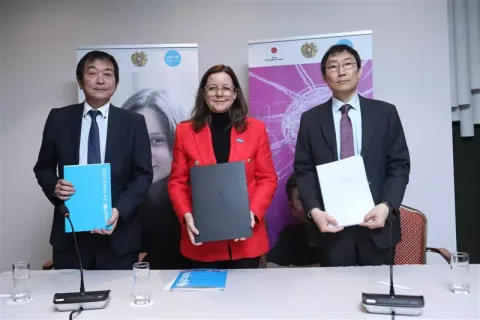
In 2025, with the support of the Government of Japan through Japan International Cooperation Agency, UNICEF embarked on a combination of immediate and long-term interventions on mental health and psychosocial support together with government and civil society partners in healthcare, education, and social assistance sectors.
One of the goals has been to train primary healthcare providers in mental health and psychosocial support and sustain their community outreach efforts to reach refugee families and vulnerable families across Armenia.
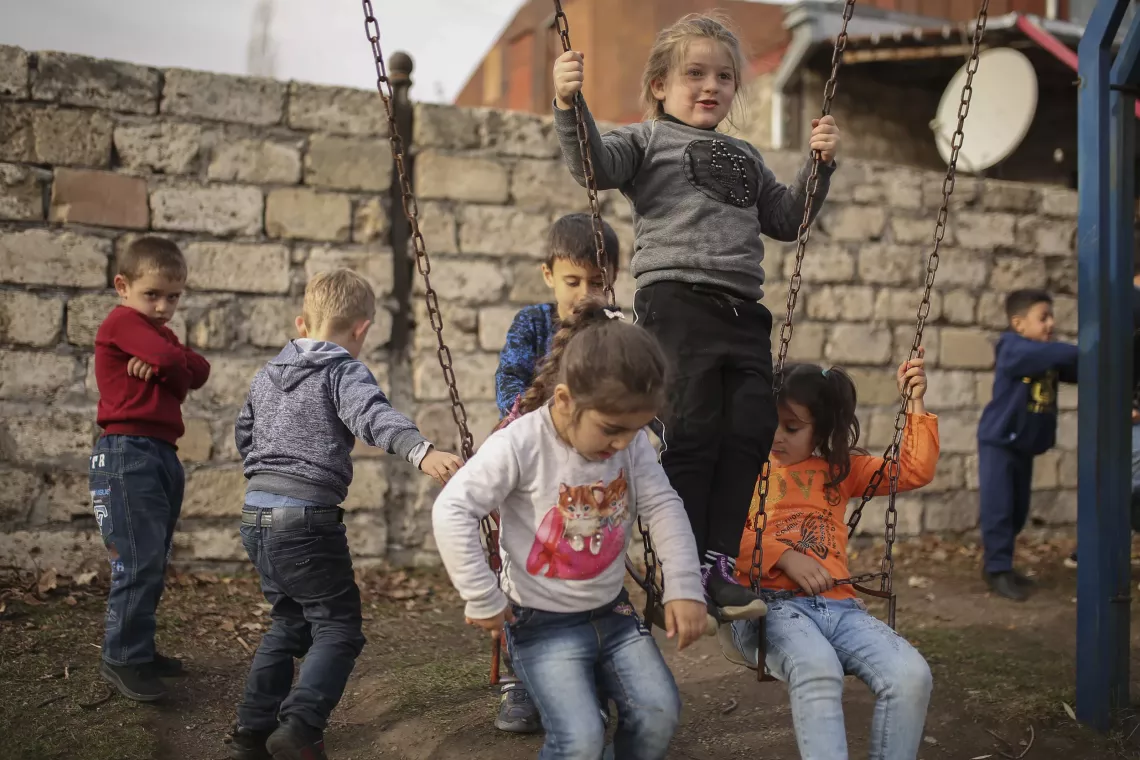
Gavar is one of Armenia’s oldest cities on the left side of Lake Sevan, surrounded by some of Armenia best nature and known for its cuisine. It’s also one of the communities that UNICEF and the Armenian Psychiatric Association have already reached through training for pediatricians and nurses that support parents through home visiting.
“We addressed a number of important areas of work, beginning with wellbeing promotion, early identification and management, as well as referral and follow-up. We also discussed with colleagues from Yerevan on how to best support children with autism, anxiety or attention deficit and hyperactivity syndrome. Together, we reviewed a number of tests that help measure the level of intellectual development in children,” recalls Valentina Tsvetkova, family doctor and pediatrician at Gavar polyclinic and the Gavar branch of Child Development and Rehabilitation Center of Arabkir Medical Center.
Dr Tsvetkova has already noted a slight increase in mental health-related diagnoses among children in her community that, to her, is a sign of the trainings having boosted the capacity of local specialists to detect problems earlier than before.
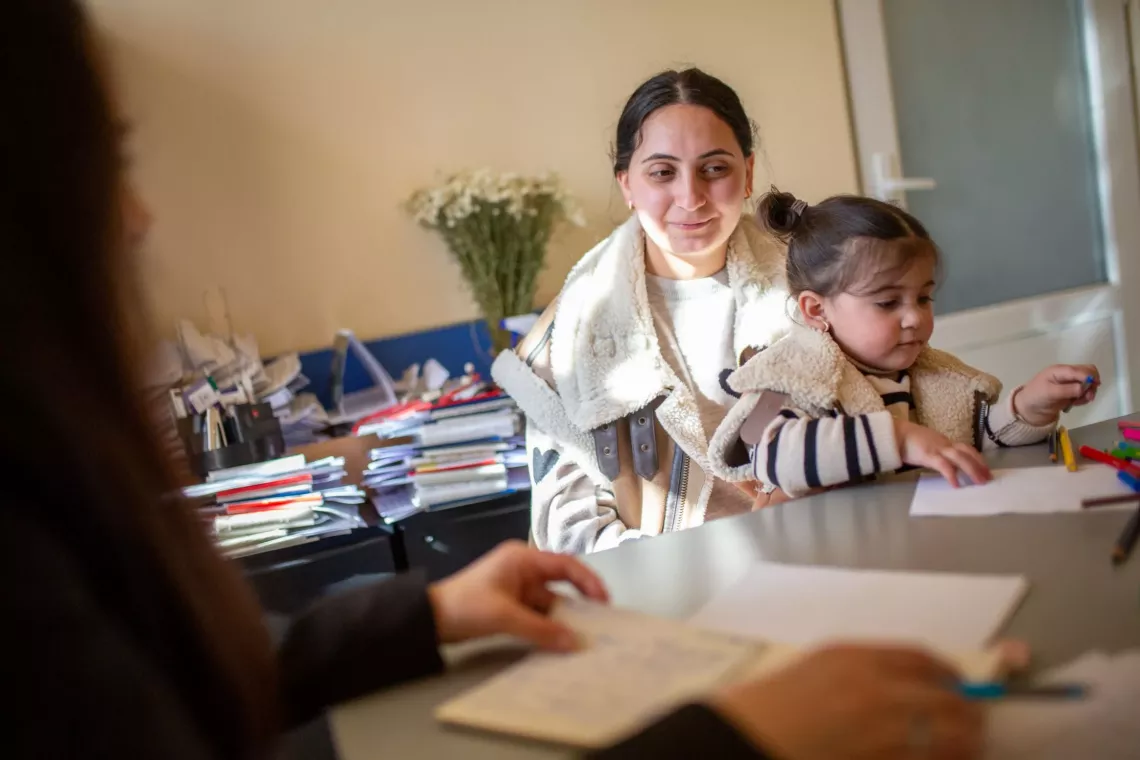
Despite this enhanced understanding and improved approach to deliver effective mental health services for children, doctors also speak of challenges that they yet have to tackle. “We often face highly emotional reactions from caregivers when faced with a diagnosis that ranges from anger to denial,” says Susanna Zalibekyan, family doctor at Gavar polyclinic. “So for me, one of the most important takeaways from the sessions was how to best nurture a cooperative relationship with caregivers and help them to come to terms.”
“It is important to find the key to healthy communication with each of them for the sake of the children, as long discussions, the no-return of the parents only do one thing – they take up time, the time that should have been spent on thorough diagnosis, prescribing an accurate treatment and following through each family,” she explains.
Dr. Tsvetkova continues, “I have a case where parents have asked me to change the diagnosis in the medical records. These cases usually prevent us from working effectively with parents so that they can better support their own children and help them reach their potential.”
Dr Tsvetkova and Dr Zalibekyan agree that supportive visits and exchanges with fellow doctors from Yerevan are true lifesavers for doctors working in the regions and remote communities, as this kind of collaboration enables the local specialists to see in practice and master many professional nuances or innovations on the spot. More importantly, professional growth in the regions eventually leads to less medical trips for parents and their children to Yerevan.
“Leaving aside the financial difficulties of travelling to Yerevan from Gavar, it is a real challenge for young children with diverse health problems to travel for several hours. They get tired, sometimes it negatively affects their condition,” adds Dr Tsvetkova.

As the training sessions continue to reach more communities across Armenia, together with the Ministry of Health and the Armenian Psychiatric Association, UNICEF is also planning to develop and introduce referral mechanisms to ensure collaboration and a wider continuum of mental health services for children and adolescents. The referral mechanisms will work not only between community-based education, social services and primary healthcare facilities, but also between primary healthcare facilities and specialized mental health clinics.
[1] National Research on Health Behaviour of School-aged Children 2017-2018. “Arabkir” Medical Centre - Institute of Child and Adolescent Health, 2019.