Vayk’s first youth center expands opportunities for adolescents and young people across 16 communities

- Հայերեն
- English
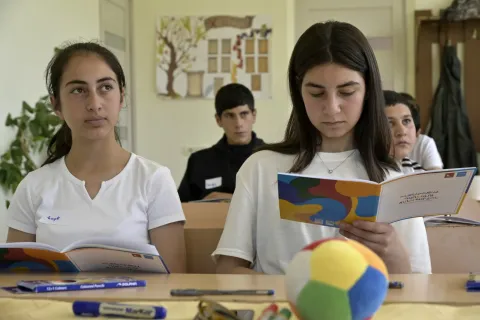
VAYK, 6 May – Adolescents and young people from across the 16 settlements of Vayk community will now have expanded access to youth services, including mental health and psychosocial support, through the newly opened “Alternative” youth center. Established by UNICEF and the Armenian Progressive Youth NGO, in partnership with the Ministry of Education, Science, Culture, and Sports of the Republic of Armenia, and with financial support from the Government of Japan, the center serves as a key community-based platform to support the mental well-being, resilience, and social inclusion of adolescents from both host and refugee communities.
The center is part of a broader, multi-sectoral partnership by the Government of Japan, the Japan International Cooperation Agency (JICA) and UNICEF to strengthen mental health and psychosocial support systems in Armenia, particularly in response to the needs of ethnic Armenian refugees and vulnerable host communities. Through this programme, UNICEF and partners are working to ensure that children and adolescents are better supported across health, education, social protection, and community systems, with services increasingly available closer to where they live.
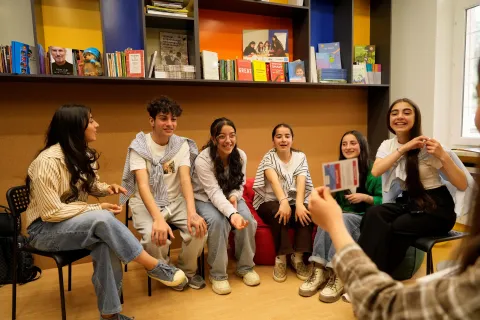
As the first one in Vayk community and one of the very few in the Vayots Dzor region, this center addresses a critical gap in access to safe spaces that promote psychosocial well-being, particularly for adolescents who have faced displacement and those with limited opportunities for development and participation. It serves adolescents and young people aged 13 to 35, providing them with a safe and inclusive environment to build coping skills and strengthen their emotional well-being through mentoring and counseling. The center will also offer capacity building programmes, leadership and entrepreneurship education, intellectual and recreational activities, enabling adolescents and young people to actively contribute to local development and envision a future within their own community.
The center will operate under the “Alternative” methodology developed by the Armenian Progressive Youth NGO - a proven, scalable model already successfully implemented in three locations across Armenia. Each year, thousands of young people benefit from this approach, which is grounded in non-formal education, participatory practices, psychosocial well-being and youth empowerment. By offering a safe space alongside practical learning, mentorship, and opportunities for civic engagement, the methodology has demonstrated strong impact in strengthening young people’s skills, confidence, resilience, and active role in shaping their communities.
The opening ceremony brought together representatives of state institutions, local self-government bodies, international organizations, young people, and community residents. In his remarks, Grigor Yeritsyan, President of Armenian Progressive Youth NGO, emphasized: “This center introduces a sustainable model of youth work in Vayots Dzor—one that combines learning, participation, and real-life opportunities. Our focus is to ensure that young people here are not only engaged, but equipped to take initiative, build solutions, and contribute to their community’s long-term development.”
Artur Martirosyan, Deputy Minister of Education, Science, Culture and Sports of the Republic of Armenia (TBC), highlighted: “The establishment of youth centers such as this is directly aligned with the priorities of the state youth policy. It enables the practical implementation of the Law on Youth Policy at the community level, creating mechanisms for participation, skills development, and stronger engagement of young people in local decision-making processes.”
H.E. Mr. AOKI Yutaka, Ambassador of Japan to the Republic of Armenia, emphasized: “Japan remains committed to supporting children and young people in Armenia by promoting their safety, well-being, and opportunities to thrive, in close cooperation with UNICEF and the Government of Armenia.”
Hasmik Aleksanyan, UNICEF Adolescent Development Officer, noted: “UNICEF sees community-based youth centers like this as essential platforms for supporting adolescents’ psychosocial wellbeing as a foundation for learning, participation, and a successful transition to adulthood. By convening government institutions, local authorities, civil society, donors, and young people themselves, we help ensure that national youth policies are translated into inclusive, high-quality services on the ground.”
Mkhitar Matevosyan, Head of Vayk Community, stated: “For Vayk, this center is of great importance. It creates new opportunities for our young people within the community, helping them access services, develop their potential, and see a future here. This is a key step in strengthening our community and supporting our youth.”
The ceremony concluded with a guided tour of the center, during which guests explored its facilities and engaged directly with young people from the community. A ribbon-cutting ceremony by local and refugee youth symbolized their essential role in shaping the youth center as a hub for well-being, resilience, and community connection.
###
For editors [about the programme]:
From 2025 to 2027, with the support of the Government of Japan and the Japan International Cooperation Agency (JICA), UNICEF is implementing a nationwide programme in Armenia to strengthen mental health and psychosocial support (MHPSS) services for children, adolescents, and caregivers, particularly those affected by displacement and vulnerable host communities. The initiative aims to reach around 300,000 children and adolescents and up to 150,000 parents, while building the capacity of more than 5,600 frontline professionals across the health, education, and social protection systems. The programme focuses on improving early identification, referral, and access to quality mental health services, while expanding community-based support platforms, such as youth centers, and strengthening national systems to ensure sustainable, inclusive, and accessible care for children and young people.
Within the framework of the programme, UNICEF works with the Ministry of Education, Science, Culture and Sports of the Republic of Armenia and Parenting School NGO to strengthen the knowledge and skills of youth and community workers in the areas of mental health, psychosocial support, stress management, self-support, and self-care. In 2025-2026, 300 professionals working with adolescents and young people have been trained, improving their understanding of age-specific characteristics of adolescents and young people and ability to distinguish between normative age-related behaviors and mental health challenges. In 2026, partners will further organize more in-depth sessions for youth workers to strengthen their role as first points of contact for mental health awareness, promotion, and referral.
Media contacts
About UNICEF
UNICEF promotes the rights and wellbeing of every child, in everything we do. Together with our partners, we work in 190 countries and territories to translate that commitment into practical action, focusing special effort on reaching the most vulnerable and excluded children, to the benefit of all children, everywhere.
For more information about UNICEF and its work for children, visit www.unicef.org.