Healing together: 12 stories of coping with displacement
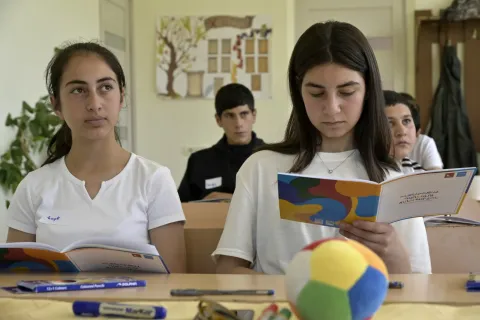
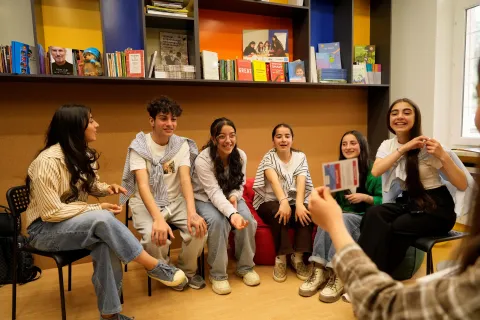
Over 130 refugee children and their families received psychological support through group art therapy, thanks to UNICEF and partners.

- Հայերեն
- English
In September 2023, more than 100,000 ethnic Armenians, including 30,000 children, were forced to flee their homes and sought refuge in Armenia. Although a warm welcome greeted them, many are still counting the cost of their displacement, having left all they hold dear behind.
When sudden and painful changes occur, it is crucial to find ways of expressing our emotions and experiences in order to support our mental health and well-being.
That is why UNICEF, together in partnership with the TEGH Foundation launched the Պարունակում (‘contain’) project to help 131 refugee children to cope with loss, uncertainty and the challenges of adapting to a new environment.
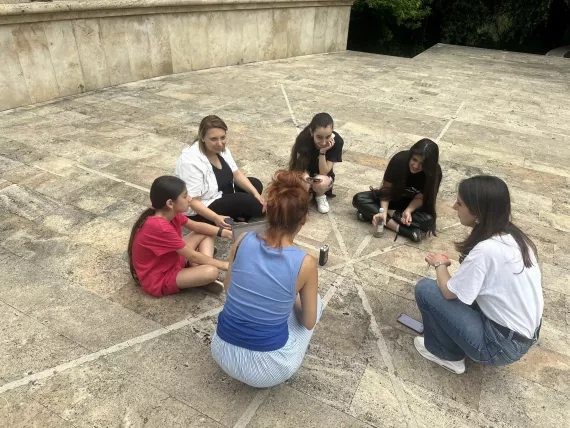
Over the course of five months children worked in groups with psychologists and artists on art projects, enabling each participant to become a co-author of their new life journey.
One year later, we proudly present the creative works of 12 groups of children who participated in the project. Each piece reflects the group’s concerns and emotions, their paths to overcoming these challenges and the solutions they have found for a brighter future.
‘Dbya lyav’group in Achajour
This group learned to work with clay and to express their emotions through it. Together, they decided to sculpt a chain of clay hands. Upon each interlinking hand, the children wrote personal messages of goodbye and letting go ("it's good to have you", "there will be no replacement for you", "I am looking for a replacement for you", "I will miss you", "you are important", “you were there for me", "I will not forget you"). Then, they smashed the clay hands and wrote a new message with the dust – ‘dbya lyav’ (‘toward the good’) – before blowing the dust away. The work is like performance art.
In this way, the children expressed their experience of loss and then moved on, hoping for the best.
‘Today is Friday’ group from Dilijan
Over the five months, children in this group experimented with singing. They chose the song ‘Today is Friday’, because the day of their meetings was Friday.
Their interpretation of the song is that although they shared positive moments together and were happy, much of their discussions were about absence, loss and not being home, so they tried to express sad and negative feelings too, showing that loss is part of life. They tried to combine different emotions in the song.
‘Tree’ project from Dilijan
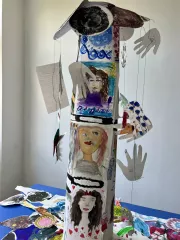
This second group of children from Dilijan also experimented with different painting techniques and materials. They created a collage-style installation, featuring their own pictures and expressions. The resulting ‘tree’ represents their group and its atmosphere of solidarity. The writing on the tree calls for solidarity and care. They decided to display the tree in the school and other public spaces of Dilijan including two cafes. They plan to continue the journey of the tree.



Zorakan-based ‘We need to love each other till we’re alive’ group
This group tested various singing techniques and exercises, learned songs and chose a song about their home village.
Through their style of singing, they demonstrate the initial difficulty of singing together, listening and trusting each other. Clenched, gnawing teeth convey being closed-off and the difficulty of starting. Then, during the song, something happens – a wall crumbles and the children start to open up. It is as if after enduring hardship, relief has arrived.
The song is about love for their homeland, with the message: “Let's love each other till we’re alive.”
‘Expansion’ group from Zorakan
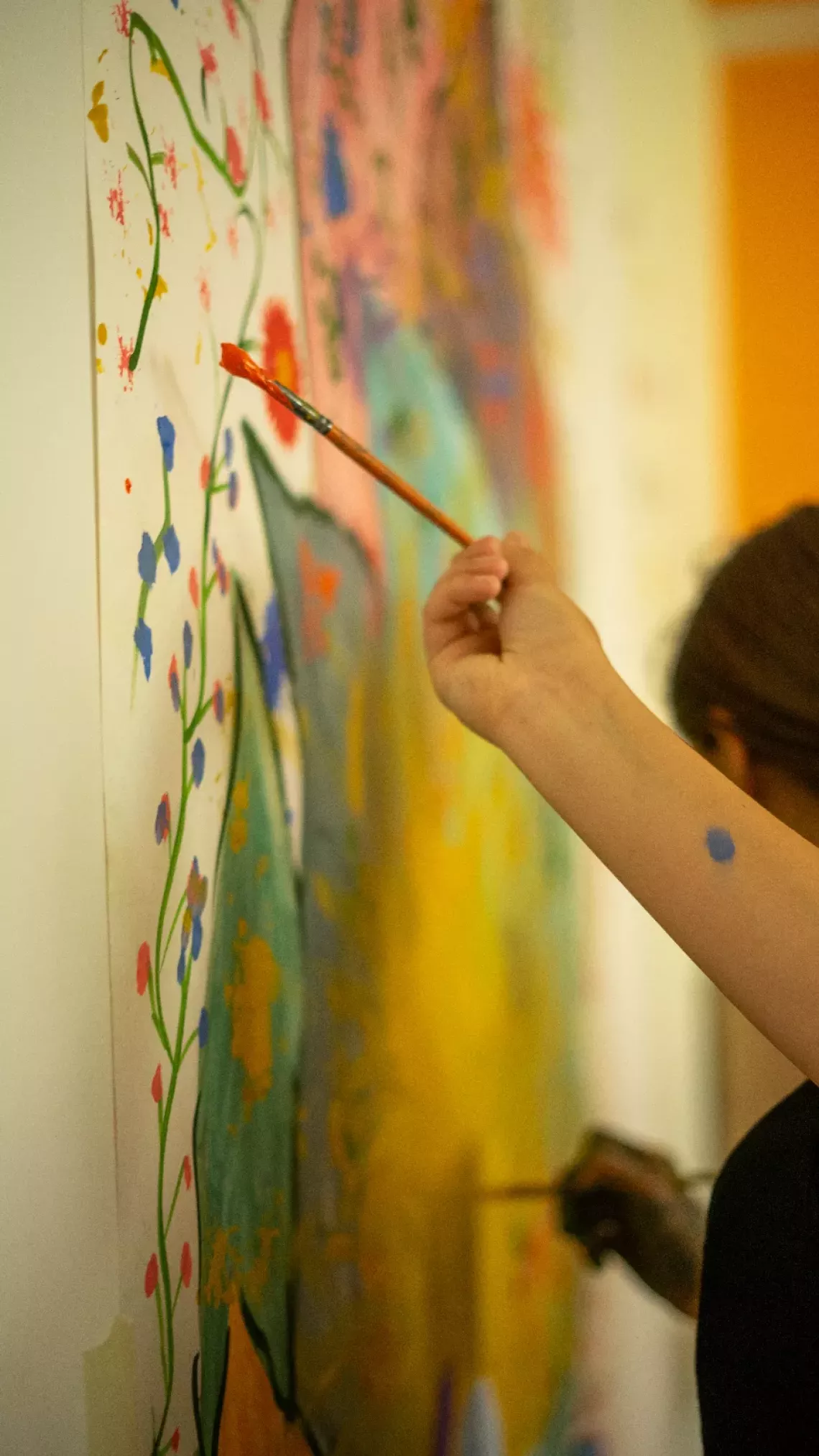
The group experimented with different painting and collage techniques for over five months.
The resulting work is a group painting, which is a chair depicting a color palette and a pencil in hand (as a sign of a key exercise in psychological work), from which a colorful, blooming image emerges. It seems like something magical will happen when you sit in the chair.
The picture with its layers seems to be a transition from a very clear and standard image to a colorful, diverse, and detailed image.

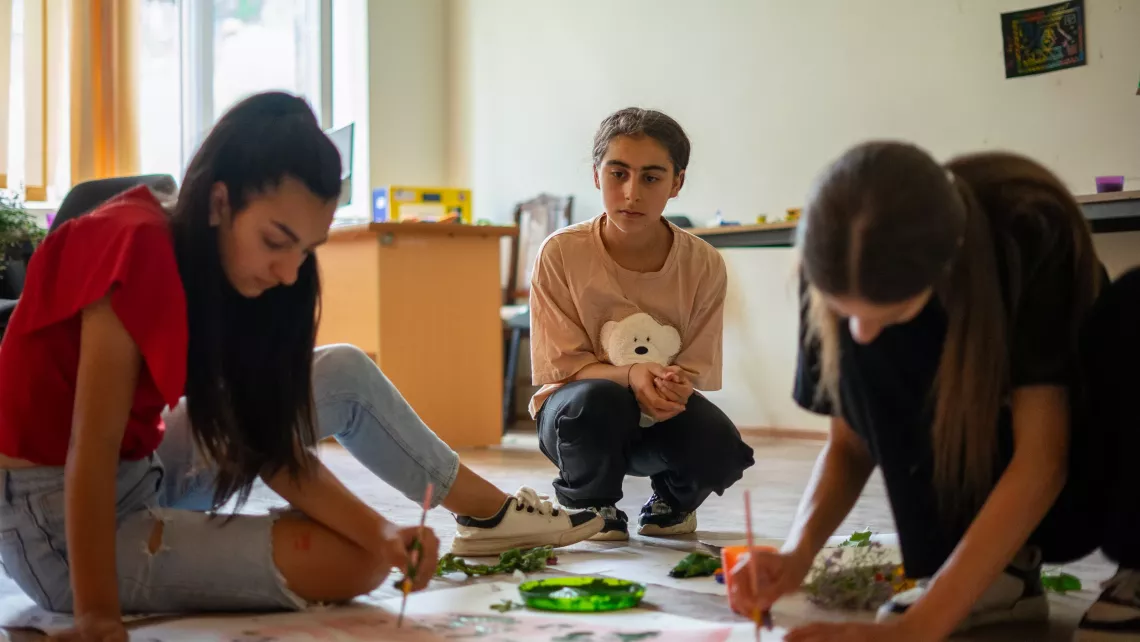

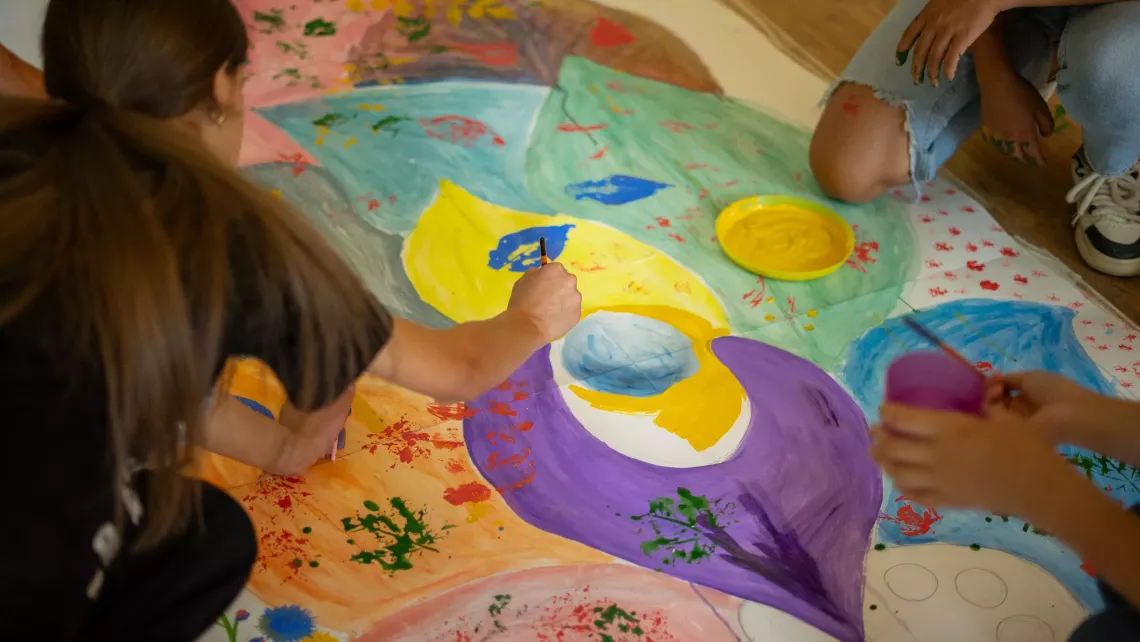


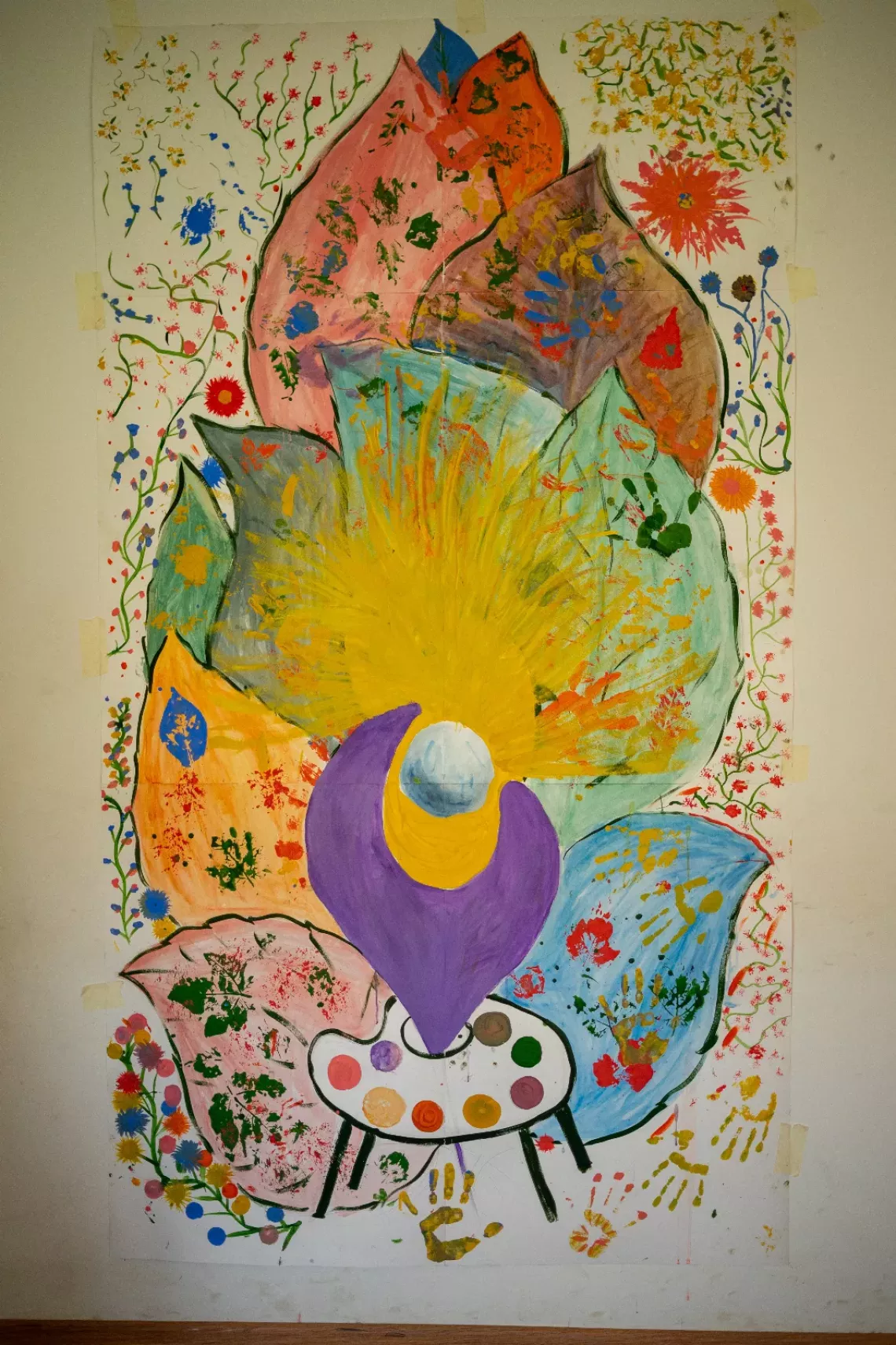
Through this work, children show their pursuit of freedom and how imagination can be an important way of resolving problems.
Artashat-based ‘My game my rules’ group
The group worked on a rug for five months, using various techniques, including sewing, appliqué, threading and dyeing.
Through the rug, the children conveyed their feelings, thoughts, dreams and worries about being together and alone, as well as their reactions to the outside world.
The rug offered them a safe space and freedom to create their own rules, while recognizing and experiencing the differences between your own identity and that of the surrounding world. During their final meetings, the children invented games with different rules and played together on the rug.
Azatamut group, entitled ‘Save our souls/help’
Children learned to work with clay alongside psychological workshops. They decided that their final work would be a sun, the rays of which are individually unique and at first sight seem incompatible with the others. Next to each beam, they wrote expressions describing themselves or the group in the local dialect ("tsuvim a", "shash mash", "revm chi", "smart", "mineak", "quiet").

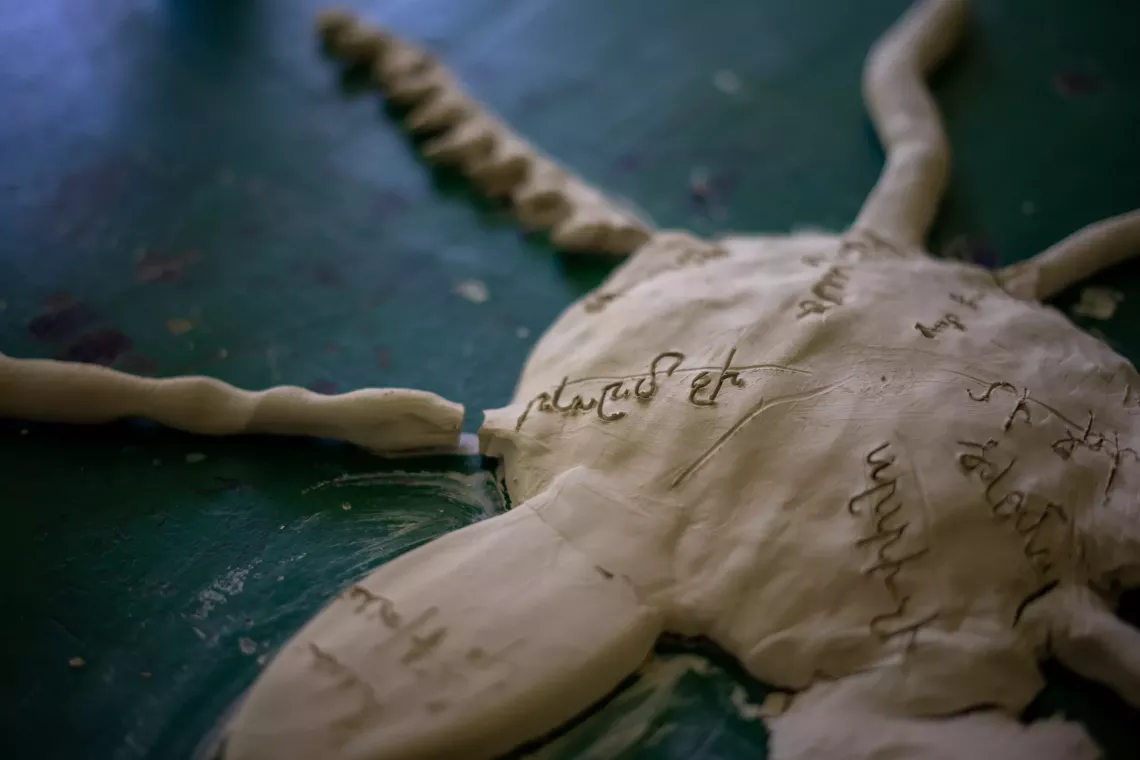

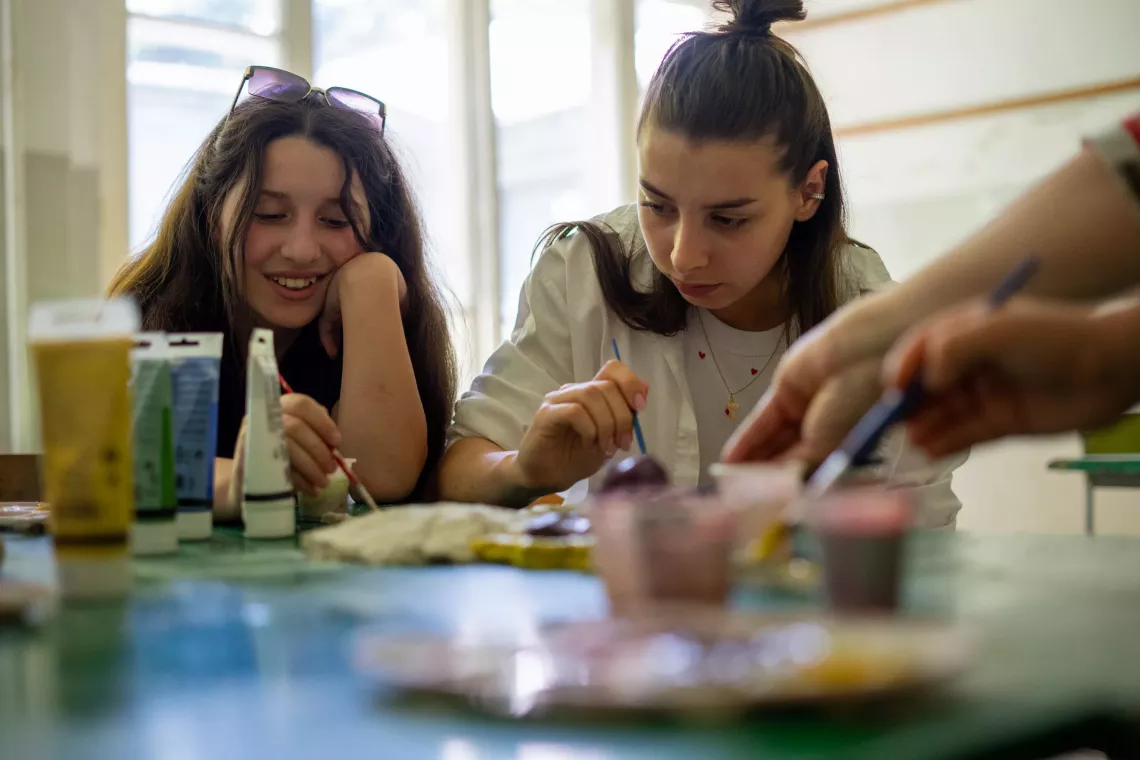

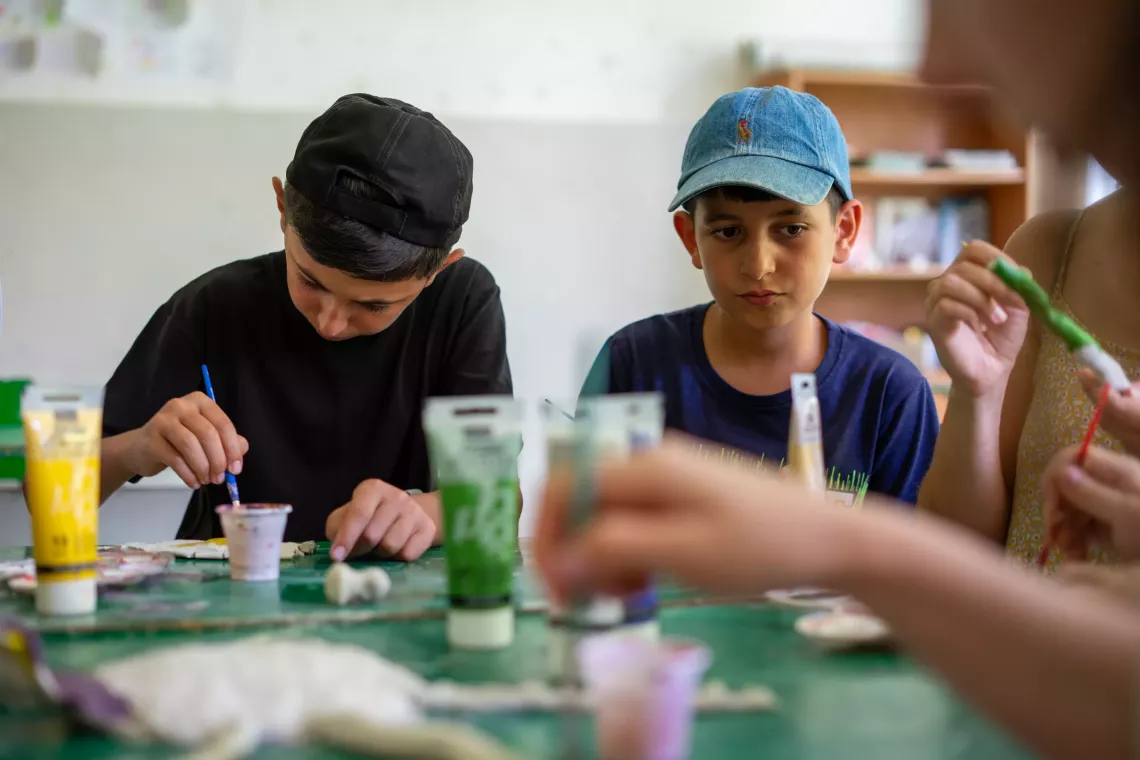

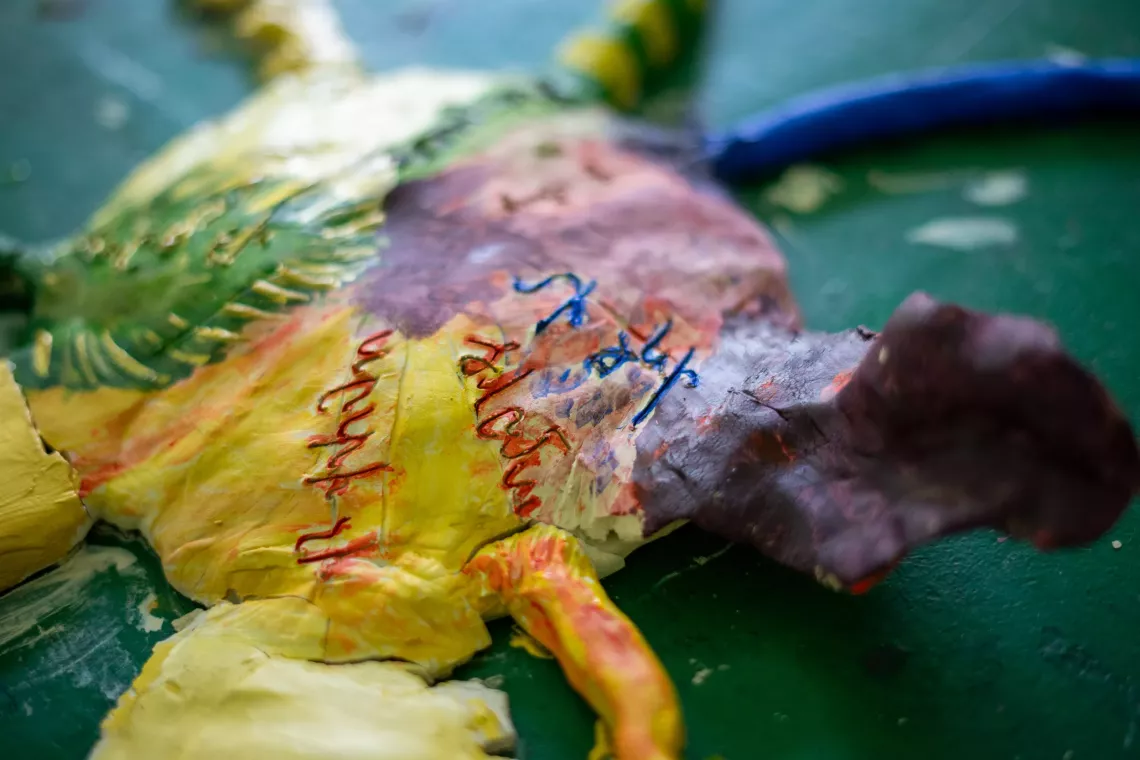
Through this work, the children aimed to show that despite our individual differences, it is possible to unite and become one whole and unique sun.

‘The cat and the dragon’ group from Martuni
The children developed characters from animals in acting and theatre arts sessions. They imagined the problems those animals may face, and the final work was an improvised performance, during which two incompatible characters with incompatible motivations appeared in the same space. During the performance, these animals tried to find common ground and, as a result, they found out that if they help each other and are kind to each other, they can coexist and leave peacefully together.
Masis group ‘Connection’
This group worked on two rugs and a rope. The first rug is a chaotic, contradictory carpet with traces and silhouettes on it. The second rug is more harmonious, with calm images and transitions. These two carpets are like two different realities, the connection between which seems to be broken. There is also a woven rope, which signals the desire to connect these two realities together.

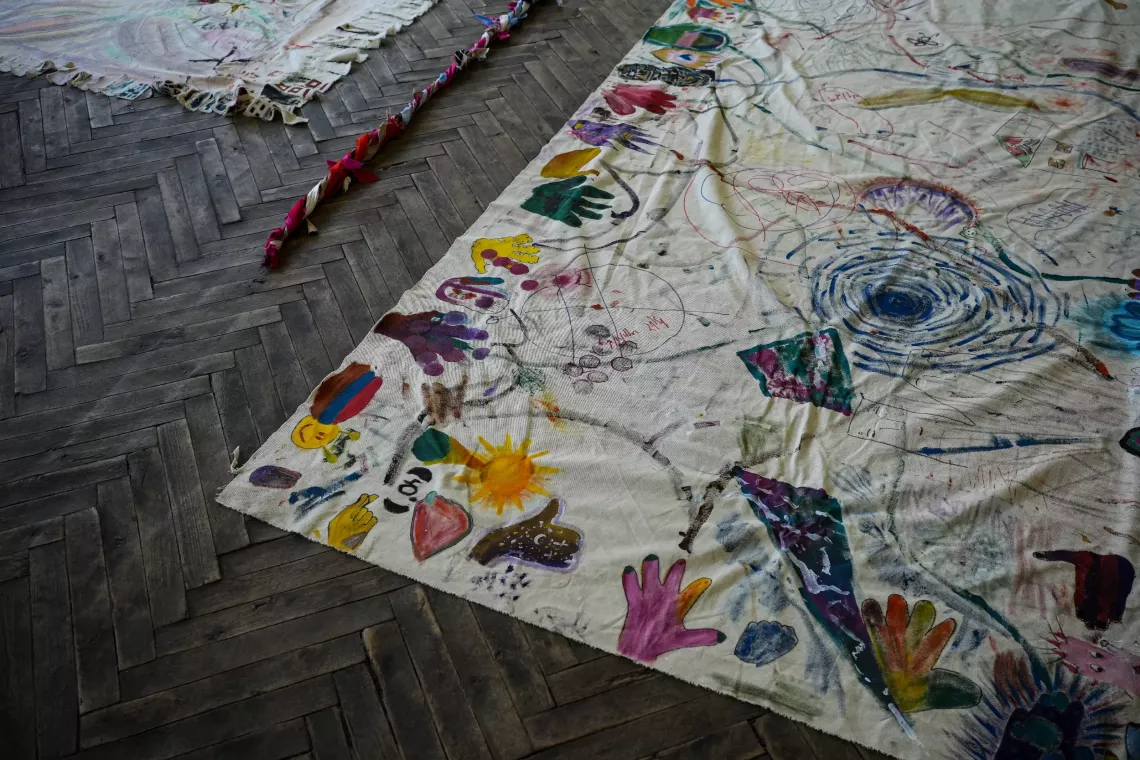

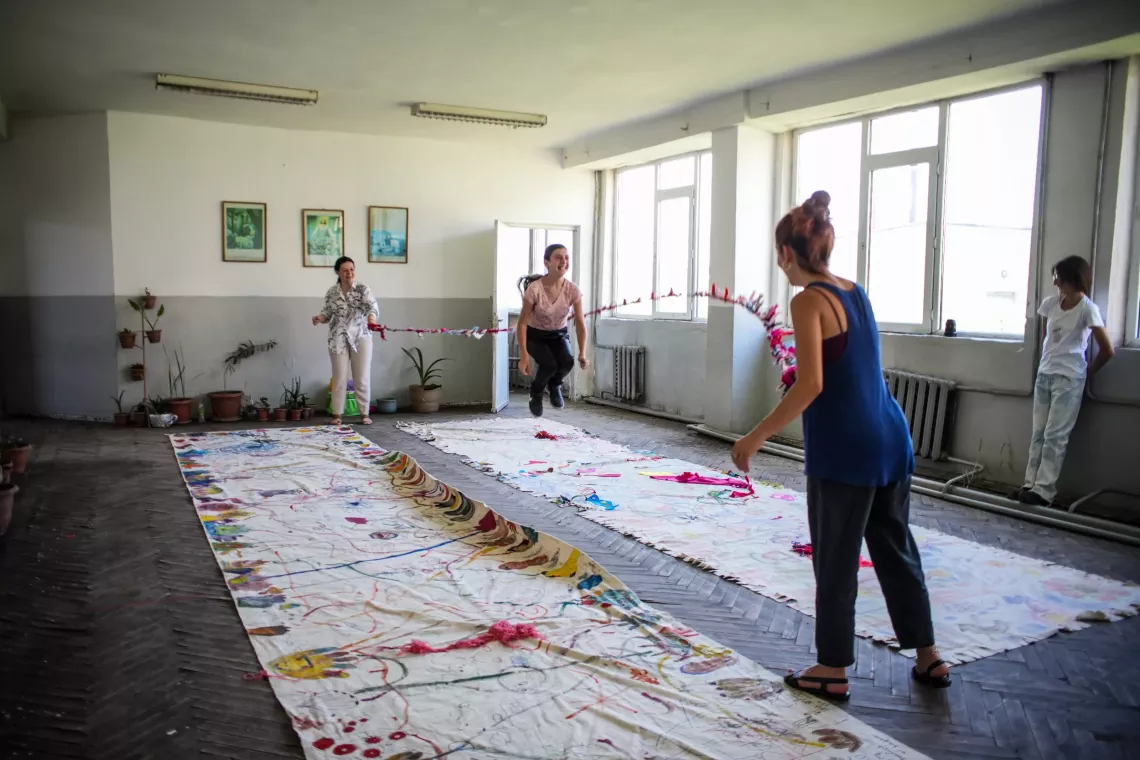

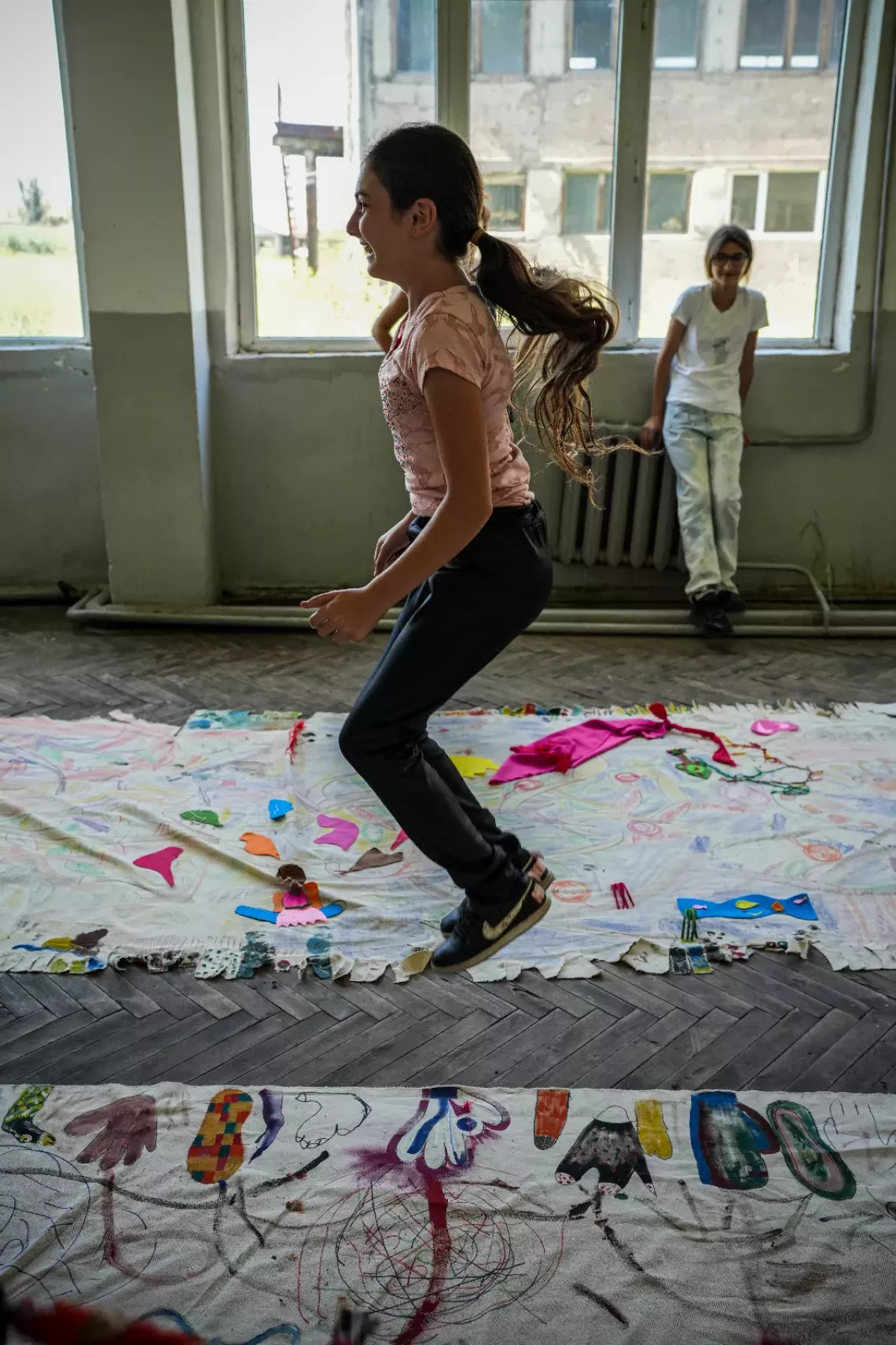

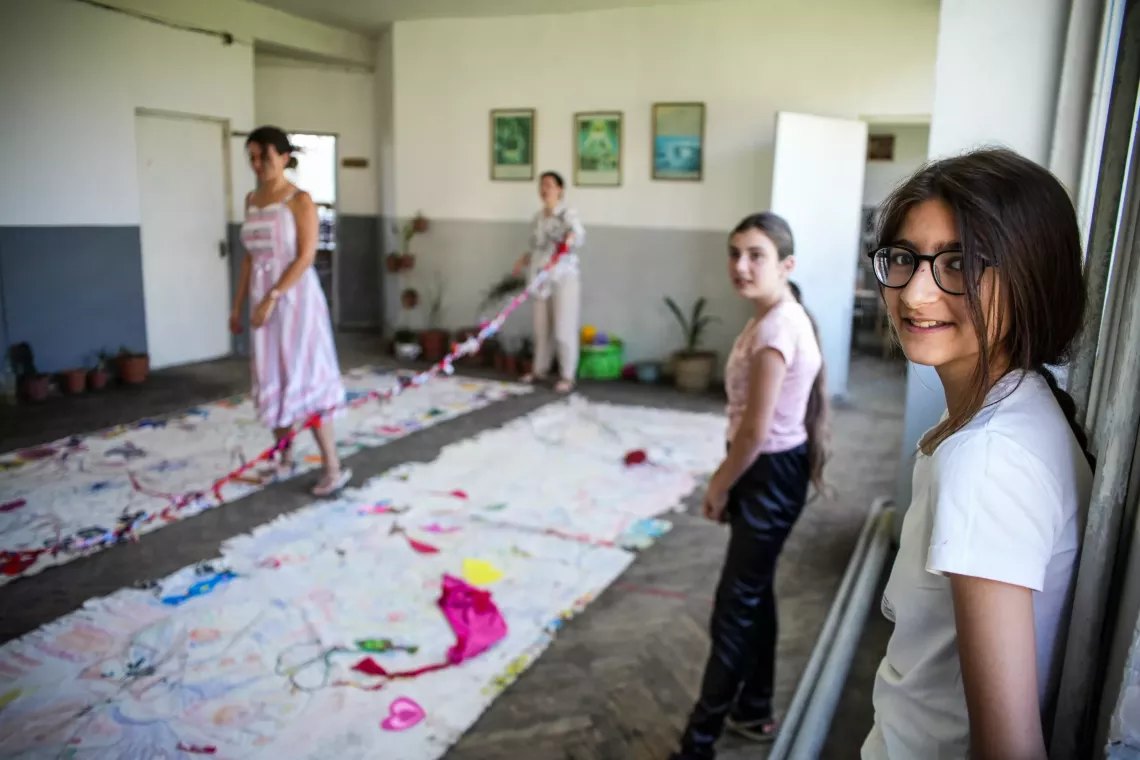
In the final meeting, the group tried to tie the two mats together with a rope but failed. They then decided to play with the rope between the two rugs, as if accepting the disruption on one side and the desire for connection on the other. In the empty space between the two realities, a game formed and became a bond.

Agarak ‘One person, two lives’
The group experimented with photographic art, expressing different ideas through photography. They decided to create a collage from the photos they took, showing the contradictions they encounter in their daily lives, both within themselves and in society. In the centre of the collage is a woman and around her are the two environments in which she might want to be. On one side is a luxurious life full of precious things and, on the other, a simple life without makeup and luxuries. Through collage, the group shared its experience of recognizing and giving voice to its own contradictory sides.
Agarak-based group ‘Roundabout’
Over the course of five months, the group experimented with acting and theatre art techniques in parallel with the psychological sessions. A partially improvised performance was chosen as the concluding work. The performance was about a crime or a terrible incident, and the search for its culprits. Through this work, the group looked to discuss the issue of aggression and intolerance, in both individuals and systems. During the performance, the process of being rejected for being different, rejecting ourselves for being different and then rejecting others for being different leads to a dead end or a scenario that continually repeats itself.