Finding a way to tell their stories
How creative storytelling is helping refugee and host community adolescents in Armenia express difficult emotions, connect with their peers and seek support

- Հայերեն
- English
Alla Ayvazyan, 17, is always exploring something new. One month she is learning how to play the guitar, the next month she is studying Japanese. Alla dreams of climbing mountains and becoming a cultural historian, but what fascinates her the most are people: what they experience, what they feel, the stories they carry. Some stories, she knows, are much harder to tell than others.
For many adolescents, difficult emotions do not easily become words. Anxiety, loss, displacement, bullying or the pressures of growing up may be deeply felt but difficult to explain, even to parents or friends. For refugee adolescents, this becomes even harder as you watch your entire family grapple with loss. And when you seek closure in the digital world, it becomes even harder to find a safe space where you feel included or understood without blame or pity. Sometimes a photograph, a drawing, a video or a piece of music can become a useful way to express what is happening inside. This was the idea behind TelInk.


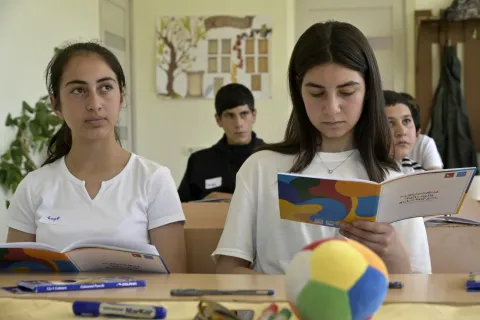
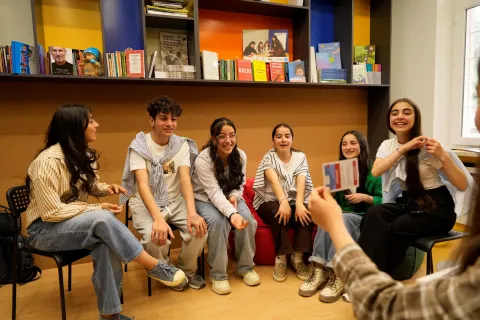
In Armenian, Թել (pronounced: tel) means thread. Every story begins with a thread, and while stories can be different, all of them go back to one thread: the desire to weave a story. Combine it with ink and you get the TelInk three-day media literacy and digital storytelling camp, put together by UNICEF and Media Initiatives Center with the support of Afeyan Foundation to support refugee and host community adolescents to weave their own digital stories of expression.
The aim was not simply to support young people to express themselves but provide them with a safe space to find creative means for making sense of difficult experiences and emotions, build confidence in sharing one’s voice, identity, and perspective.
“For many adolescents, this form of engagement is also a way to increase self-awareness and emotional literacy, discover shared experiences with peers, and become a source of inspiration for others through sharing personal stories or simply building a sense of belonging and imagining future possibilities and aspirations,”
“Creative approaches can play an important role in psychosocial support. Adolescents often do not have the language to explain complex emotions directly. Creative expression can help them externalize those feelings, look at them from another perspective and communicate experiences that may otherwise remain hidden. The important element is the safe and supportive environment around that expression,” highlights psychologist Faina Seyranyan.

At the camp, Alla learned simple techniques for turning complex emotions into stories. She also realized that a long-held dream of starting a podcast was not as distant as she had thought. But listening to other adolescents brought another realization.

“I realized that just as others’ stories gave me the strength to face my hardships, mine could also help them,”
Together with her peers, Alla created a podcast about depression from a young person’s perspective. With a psychologist supporting the sessions, participants also discussed the difference between emotional distress and clinical depression and learned when professional help may be needed. “We want other adolescents to know they are not alone. And we want adults to understand what we go through, sometimes in silence,” says Alla.
Liana Yeghishyan, 19, understands that silence well. She was 13 when her family had to flee their homeland to seek refuge in Armenia. At the time, she says, the loss felt as though life itself had stopped. During TelInk sessions, Liana chose photography to tell her story, using images from her own archive to trace life before and after displacement

“Many displaced children become withdrawn and reserved. I went through all of that. I carried my past with me and shut myself off,”
Sharing her multimedia story, Life Goes On, was at first difficult for her. But hearing others speak about similar experiences helped Liana see her own story differently.
“I am not the first, nor the last. Many of my peers have lived through the same experience. It is hard, but we must live and create our future; silence is not a solution,”

Over the past year, more than 20 TelInk workshops and camps were organized in different regions of Armenia. “We met over hundred young people across the country, each with a different experience and a different story to tell. But one thing we saw again and again was how much they needed a space to open up,” says Narine Safaryan, Training Manager at Media Initiatives Center. “Young people told us that storytelling helped them speak about things they had kept inside, overcome insecurities and break the silence around difficult experiences. And there was something almost magical about watching that change happen: the young person we met on the first day was often not quite the same person by the third. They were more open, more confident and more willing to share their voices.”
During adolescence, children may not always realize or share that they are struggling. For many, photography, drawing or writing become an outlet for closure and starting a new page in life.