Building a circle of support: Strengthening support within communities
Across Armenia, UNICEF is strengthening the skills of frontline workers so children and families, including refugees, can find psychosocial support from people they already know and trust.

- Հայերեն
- English
At a school in Noratus, a village in Armenia's Gegharkunik region, children stand in a circle and stretch their arms high above their heads. “Imagine you're picking apples from a tree,” says school psychologist Sonya Hakobyan. The children reach up, then squeeze their imaginary apples tightly in their hands before slowly relaxing their fingers.
This simple grounding exercise is one of the techniques Sonya now uses when she notices that her students are anxious or tired. It helps them be grounded and release tension without singling anyone out or asking them to explain immediately what is wrong.
A psychologist and a new mother, Sonya had many of the same questions she now hears from other parents: Am I doing enough? Does taking time for myself make me a bad mother? How can I remain calm when I am exhausted?
Those questions took on new meaning for her when Sonya joined an initiative by UNICEF to strengthen the skills of frontline workers and community volunteers in mental health and psychosocial support.
“When I take care of myself, I am more patient, happier and more at peace,” she shares. Soon after the sessions, she began putting the techniques she learned into practice with her family and students. Breathing exercises became part of her routine. At school, imaginary fruit-picking became one way to help children settle when they appeared tense or overwhelmed.
Pretty soon, Sonya began holding group sessions with parents interested in learning novel approaches. She would also visit families to share materials and practical guidance.

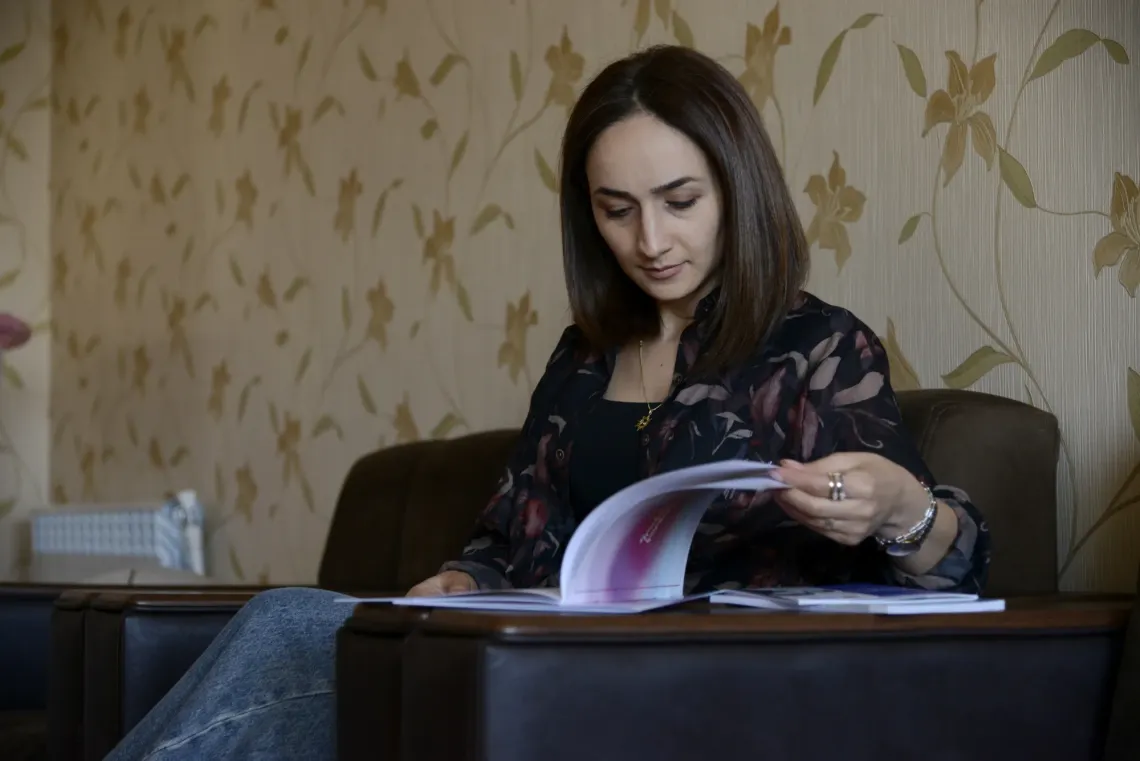
One of the parents Sonya supported is Astghik, a history teacher and mother of three. Astghik confides that, as a parent, she was subconsciously copying the strict parenting style by her own parents. One memory still stands out. When her eldest child was still young and they had guests over, she was criticized for the scattered toys around the house. Angry and overwhelmed, she gathered the toys and threw them away. Years later, she is now realizing how to rebuild her boundaries and relationships.
Now, when her five-year-old leaves toys around the house, Astghik asks her to put them away. If that doesn't work, she turns it into a game or waits and tries again. The change sounds small, but, for a child, it can mean the difference between being met with anger and being met with patience and consistency.
Conversations about discipline were among the most challenging in Sonya's parental groups. Some parents questioned whether it was realistic to remain calm in every situation. “Physical punishment felt unavoidable to many,” she shares. “As a specialist, my role was to gently question those beliefs and guide them to better understanding children’s developmental needs and positive reinforcement and disciplining methods.”
For Astghik, the lessons have travelled beyond her home and into her classroom. “As a teacher, managing anger is essential,” she says. She has also become more conscious of modelling the behaviour she expects from her students. “Phones are not allowed during class, so mine goes into the cupboard first,” she says. “My students take note of everyone and follow my lead.”
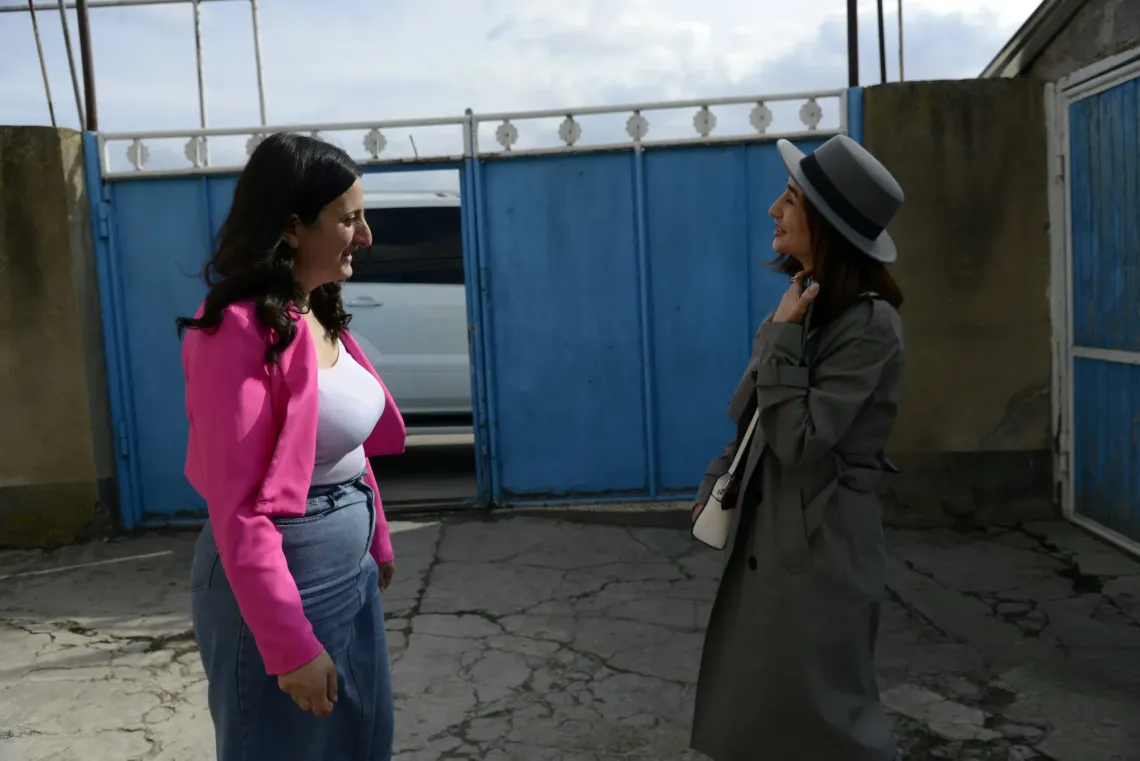
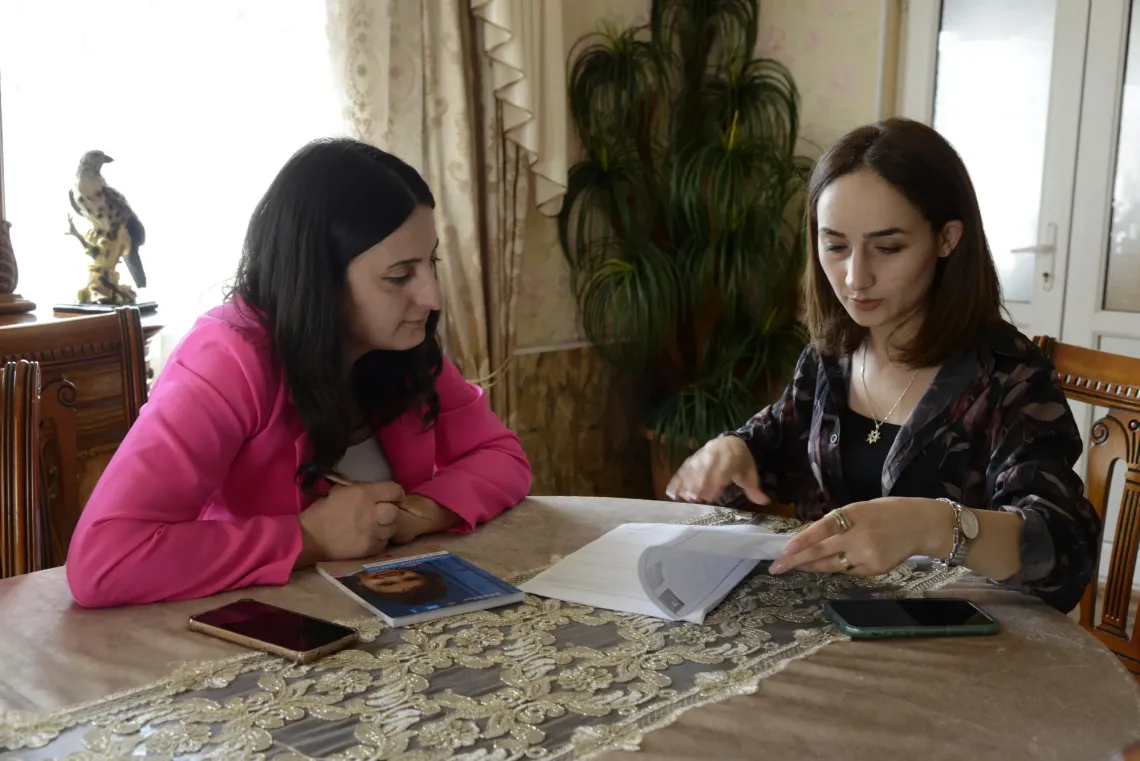
And when Astghik encounters something she does not know how to handle, she knows she can call Sonya. “Knowing there is someone who listens and supports me gives me confidence,” she says. That connection, a parent knowing whom to call, a teacher responding differently to a child, a school psychologist recognizing when more support may be needed, is what turns training into something children can experience in their everyday lives.
From 2024 to 2026, in support of ethnic Armenian refugees, UNICEF and Parenting School NGO, with financial assistance from Afeyan Foundation, provided training for over 1000 professionals and parents in psychological first aid, community-based psychosocial support, community mobilization, life skills and other practical approaches.
“At UNICEF, we want mental health and psychosocial support to be something children and families can access before challenges become crises,” summed up Viktoria Ohanyan. “That means investing in professionals and community members who are already close to children, while ensuring clear connections to specialized services when those are needed. When those skills and support remain within a community the knowledge and awareness spreads and the investment multiply.”