A peer educator uses COVID-19 experience to drive adolescents demand for health services
“The journey continues.” After turning into a health educator during COVID-19, an adolescent uses the experience to confront emerging challenges

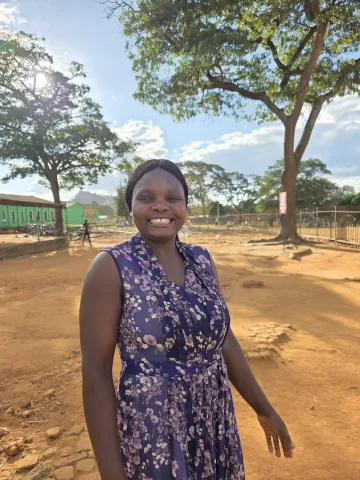
Mberengwa, Zimbabwe - When Covid-19 struck in Zimbabwe in 2020, a teenage Eliza Mbiza was filled with dread. And it was not fear of the disease that shook her, but of vaccines introduced to fight the pandemic.
“People were talking about how the vaccines had been sent to finish us off, it was scary,” said Mbiza recently.
Sickness and deaths in her community in the rural Mberengwa district in the Midlands province changed the then 19-year-old’s mind. She got jabbed, felt safer and began encouraging her close friends to follow suit.
“One by one young people began accosting me, they would ask me to accompany them to the vaccination centre. I realised that I had created a network and it was growing,” said Mbiza.
The episode influenced her to take up a new vocation as a health campaigner to change the perceptions of her peers. It’s a journey that continues in the post-COVID-19 era.
“There is still a lot of work to be done because adolescents continue to face serious challenges,” said Mbiza, now 22.
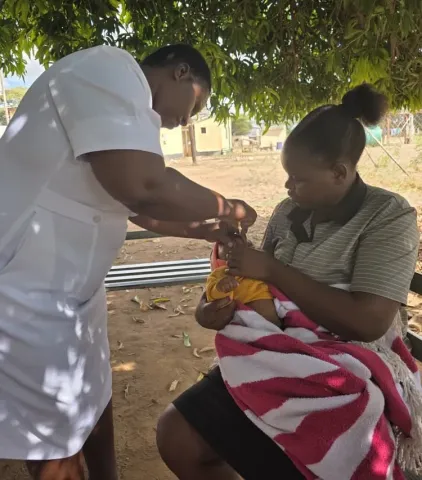
Just like she encouraged people to take up the COVID-19 vaccine, Mbiza continues with the same message, this time also pushing for acceptance and uptake of interventions such as Human Papillomavirus (HPV) vaccine, HIV testing and treatment and counselling. She also tackles the scourge of early pregnancies and the health of young mothers and their children.
“The first thing is to disseminate the correct information. Misinformation about vaccines or HIV is rampant, but people can change their attitudes and behaviours if I am there with accurate information,” said Mbiza at Mberengwa District Hospital. She freely interacted with nurses while giving them feedback from the community.

Peer-to-peer education fronted by young people such as Mbiza is part of a set of interventions being undertaken by the Ministry of Health and Child Care in partnership with UNICEF and supported by the Government of Canada to mainstream response actions that were used during the pandemic into ongoing primary health care functions.
The country has grappled with several challenges in the post-Covid-19 era, from a measles outbreak, a protracted typhoid outbreak, and a cholera outbreak that spread across all of Zimbabwe’s 10 provinces.
More than 60 percent of the country’s 15 million people are below the age of 25, according to the United Nations Population Fund. To reach this critical group and engender positive health seeking behaviours, authorities are transforming adolescents from mere receivers of services into change agents.
Adolescent health educators such as Mbiza have become a driving force to increase demand for and utilisation of quality equitable high impact maternal, neonatal, child and adolescent health interventions. Peer educators are also instrumental in using their networks to push for the adoption of healthy behaviours by children, adolescents, especially adolescent girls, young women and pregnant women, particularly from rural and urban poor areas.
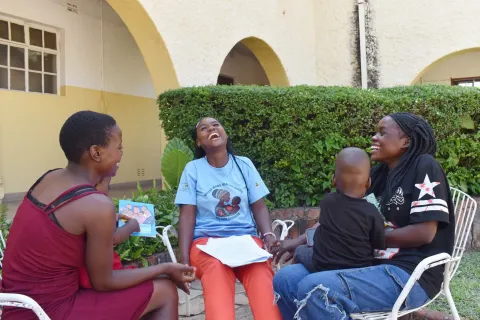
“Young girls just find it easier to talk to their peers, they are influenced more by their age mates than by older people. That’s why we talk of peer pressure. I am using peer pressure in a positive way. I am also a pillar of support to give confidence to those too shy to visit the hospital. I go with them,” said Mbiza.
A chatty and feisty character, Mbiza takes advantage of her work as an informal trader at a busy business centre and transport hub to interact with youths from different backgrounds.
In partnership with civil society organizations and youth networks, the Government of Zimbabwe and UNICEF are targeting to reach 330,000 young women, boys, and girls in Mberengwa and Bulawayo’s urban and peri-urban districts due to their high prevalence of new HIV infections and teenage pregnancies.
Peer-to-peer education fronted by young people such as Mbiza is part of a set of interventions being undertaken by the Ministry of Health and Child Care in partnership with UNICEF and supported by the Government of Canada to mainstream response actions that were used during the pandemic into ongoing primary health care functions.
The country has grappled with several challenges in the post-Covid-19 era, from a measles outbreak, a protracted typhoid outbreak, and a cholera outbreak that spread across all of Zimbabwe’s 10 provinces.
More than 60 percent of the country’s 15 million people are below the age of 25, according to the United Nations Population Fund. To reach this critical group and engender positive health seeking behaviours, authorities are transforming adolescents from mere receivers of services into change agents.
Adolescent health educators such as Mbiza have become a driving force to increase demand for and utilisation of quality equitable high impact maternal, neonatal, child and adolescent health interventions. Peer educators are also instrumental in using their networks to push for the adoption of healthy behaviours by children, adolescents, especially adolescent girls, young women and pregnant women, particularly from rural and urban poor areas.
“Young girls just find it easier to talk to their peers, they are influenced more by their age mates than by older people. That’s why we talk of peer pressure. I am using peer pressure in a positive way. I am also a pillar of support to give confidence to those too shy to visit the hospital. I go with them,” said Mbiza.
A chatty and feisty character, Mbiza takes advantage of her work as an informal trader at a busy business centre and transport hub to interact with youths from different backgrounds.
In partnership with civil society organizations and youth networks, the Government of Zimbabwe and UNICEF are targeting to reach 330,000 young women, boys, and girls in Mberengwa and Bulawayo’s urban and peri-urban districts due to their high prevalence of new HIV infections and teenage pregnancies.

In Mberengwa, young girls are vulnerable to sexual abuse due to poverty. The gold-rich area is a hotspot of artisanal miners, some who use money to lure young girls into abusive and risky sexual relations, said Mberengwa District Nursing Officer, Kudzai Kazie.
Young people, she said, are now openly discussing health issues that affect them amongst themselves, and encouraging each other to take up available services because of peer-to-peer education.
The strategy is also easing the workload of staff at Zimbabwe’s overstretched health facilities.
“Engaging young people has reduced the burden on us as clinicians because we are short-staffed and nurses might be too busy at a facility,” said.
“The trained peer educators can refer or accompany their colleagues to a facility or outreach point. They have a basic training on issues to do with sexual and reproductive health, HIV and vaccinations so people out there know them as trusted sources of information.” She said authorities have trained school health coordinators who are in charge of running health clubs at schools across the district.
For Mbiza, the peer educator, being a trusted source of health information and a change agent is turning her into a sort of community celebrity and authority who is regularly asked to speak at local health workshops, religious and other community gatherings and at some schools.
“When people argue, say about HIV and the differences between PrEP and PEP, they come to me for answers. Everyone recognises me around here, some parents even refer their children to me,” said Mbiza.
“I am popular. At least it’s for a good reason,” she said, bursting into laughter.