zimbabwe: Young mothers leading the fight against HIV — one peer at a time
In May 2025, a new chapter began in Zimbabwe’s response to HIV among adolescent girls and young women. Building on the success of Zvandiri’s Young Mentor Mother programme.

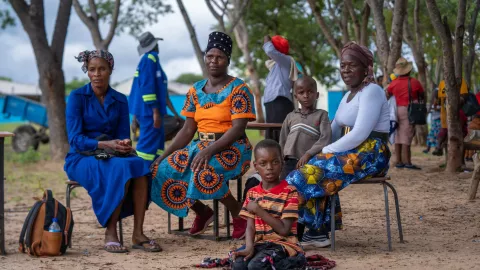
In Epworth, a young mother sits in a circle of women her own age, speaking quietly but with conviction. She is not a nurse or a social worker. She is a peer — someone who has walked the same path. And because of that, the room listens.
Her name is Molline, and she is one of Zimbabwe’s Young Mentor Mothers.
In May 2025, a new chapter began in Zimbabwe’s response to HIV among adolescent girls and young women. Building on the success of Zvandiri’s Young Mentor Mother programme — originally designed for young mothers living with HIV — the initiative has expanded to reach all young mothers aged 15–24, including those who are HIV-free. The expansion, implemented in partnership with the Ministry of Health and Child Care, the National AIDS Council and UNICEF Zimbabwe, reflects a growing recognition that prevention, mental wellbeing and early support must begin before crisis.
For young women across the country, the need is urgent. In sub-Saharan Africa, adolescent girls and young women continue to carry a disproportionate burden of HIV. According to the 2024 Global AIDS Update, 3,100 young women acquired HIV every week in 2023. Behind these numbers are lives shaped by early marriage, poverty, violence and limited access to reliable health services.

The Young Mentor Mother model offers something different: support delivered by peers who understand the realities of young motherhood. These mentors provide health education, psychosocial support and guidance on sexual and reproductive health. Just as importantly, they create safe spaces where young mothers feel seen, heard and respected.
“It feels so good to become a young mentor mother as I can connect with other young women, share ideas on HIV prevention and self-care, and support their growth while learning from them in return,” Molline explains. “I want to inspire them by sharing what I have learned and my own experiences, so that we can positively shape our lives and our babies’ futures.”
With partner support, 69 Young Mentor Mothers have been trained across Mount Darwin, Mazowe, Epworth and Hopley. Together, they will reach more than 3,000 pregnant and breastfeeding adolescents and young women, along with their babies and partners, with integrated HIV prevention and maternal health services.
To strengthen the network, four former mentors have stepped into leadership roles as Young Mentor Mother Champions, ensuring continuity and quality. Vivian, a Champion in Epworth, sees her role as both practical and symbolic.
“I am deeply humbled and excited to work alongside these young women,” she says. “Together we are building a supportive community that prioritises health, wellbeing and opportunity. Our voices matter, and when we come together, we can create real change.”
The Champions provide ongoing mentorship, helping Young Mentor Mothers deliver peer counselling, share accurate health information and connect families to HIV, mental health and sexual and reproductive health services. Their presence reinforces a simple but powerful idea: young mothers are not only beneficiaries of care — they are leaders in strengthening their communities.
Health workers see the difference. At Epworth Poly Clinic, Timothy Chiromo describes the programme as transformative. “The Young Mentor Mothers programme is assisting our communities to access essential health services, including prevention of mother-to-child transmission and sexual and reproductive health care, without major barriers. It is a powerful tool for empowerment.”
The initiative is built on collaboration. Zvandiri, the Ministry of Health and Child Care, and the National AIDS Council lead implementation, while UNICEF provides technical and financial support to ensure the model grows sustainably. Recognised by UNICEF, WHO and PEPFAR, the programme aligns with the Global Alliance to End AIDS in Children and Adolescents by 2030.

For the young mothers at the centre of this work, however, the impact is personal. It is about confidence regained, stigma reduced and futures reimagined.
Each conversation, each shared experience, becomes a quiet act of prevention and hope. And through the voices of young women supporting one another, Zimbabwe is investing not only in ending HIV, but in nurturing a generation of mothers determined to give their children a healthier start in life.