Turning Chalkboards into Touchscreens
Collins Chipasa’s drive to rewrite Zambia’s Educational Story

LUSAKA District, Lusaka Province, Zambia, July 2026 --- At St. Monica’s Girls Secondary School in Lusaka, Collins Chipasa moves between two worlds with ease; the traditional classroom where chalk once defined learning, and a digital space where knowledge now flows freely at the click of a button.
“I am currently the head of the mathematics department, which oversees both mathematics and computer studies. I am also a data operator and ICT specialist,” he says.
For Collins, teaching is no longer confined to four walls. It has become an expanding universe powered by connectivity, shaped by curiosity, and opened by opportunity.
When the internet became the second teacher
Before connectivity arrived, Collins remembers a classroom constrained by limited resources and outdated references. Learners struggled to keep pace with a fast-changing world.
“Before we had internet connectivity, it was very difficult for learners to conduct research. They had limited access to information and found it hard to learn what was happening around the world,” he says.
Today, that reality has shifted dramatically. The classroom has become a gateway to global knowledge.
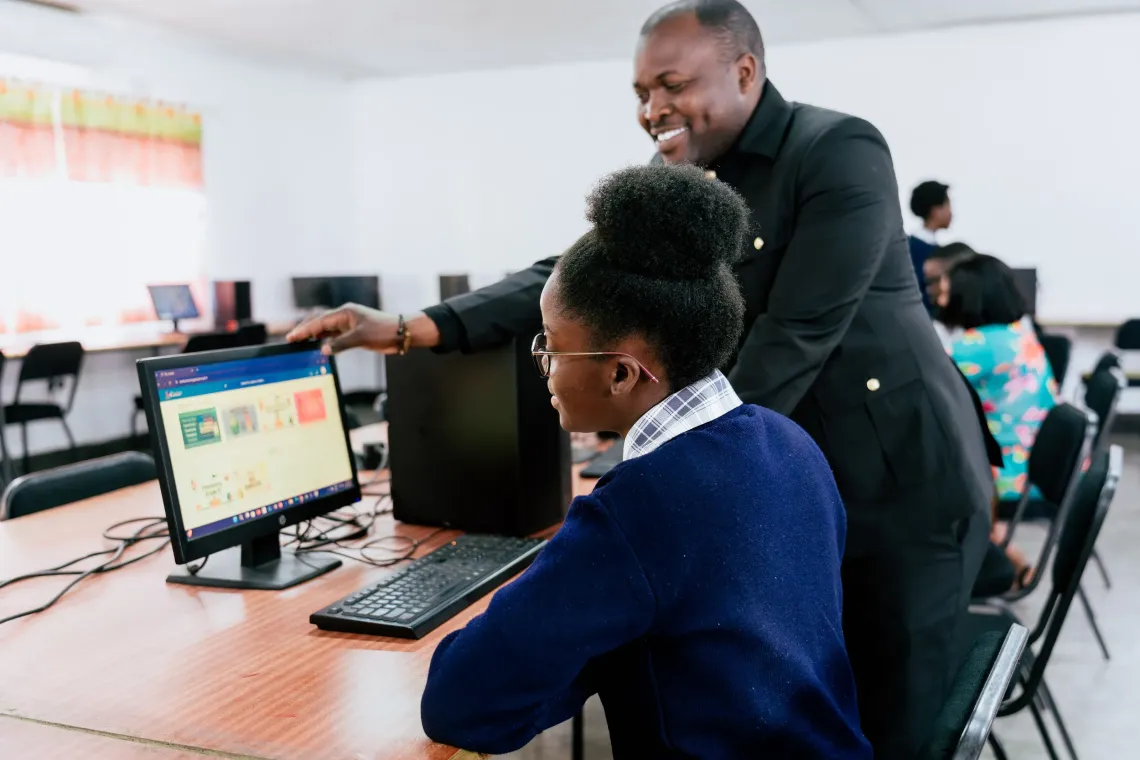
“Connectivity has transformed the way we teach. It has strengthened the homework because learners can now carry out research to support their assignments,” he adds.
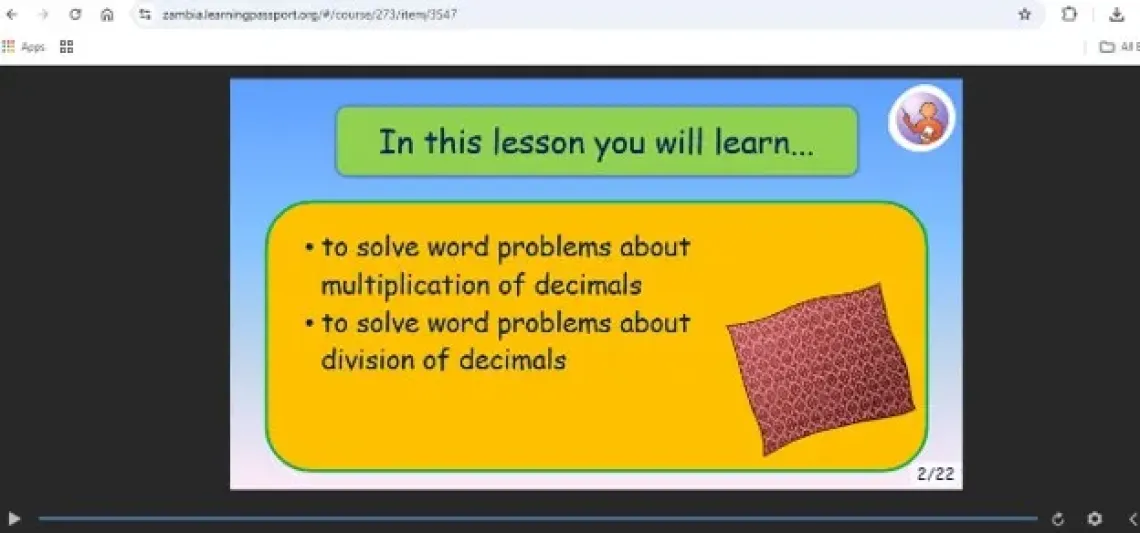
At St. Monica’s, the computer lab is no longer a facility. It is a learning lifeline.
“We also use the Zambia Learning Passport, whose content is managed by the Ministry of Education and supported by UNICEF. It provides learners with updated educational resources everyday.”
Through this platform, learners revisit lessons, watch instructional videos, and learn at their own pace.
Learners at the centre of change
“The response from our learners has been extremely positive. They are excited to use the internet and digital learning resources,” Collins says. “We have observed that learners become more engaged in their lessons. They are asking more questions, participating actively, and showing greater curiosity because they can research topics for themselves.”
Even more impactful is the sense of inclusion. The platform also ensures no learner is left behind.
“I am happy to note the videos on the digital platform have pre-recorded sign language interpreters. This shows that the digital platform is inclusive and accessible,” he explains.
Digital empowerment: a headteacher’s perspective
For Sr. Matilda Soloka, Headteacher at St. Monica’s Girls Secondary School, the transformation is both visible and deeply felt.
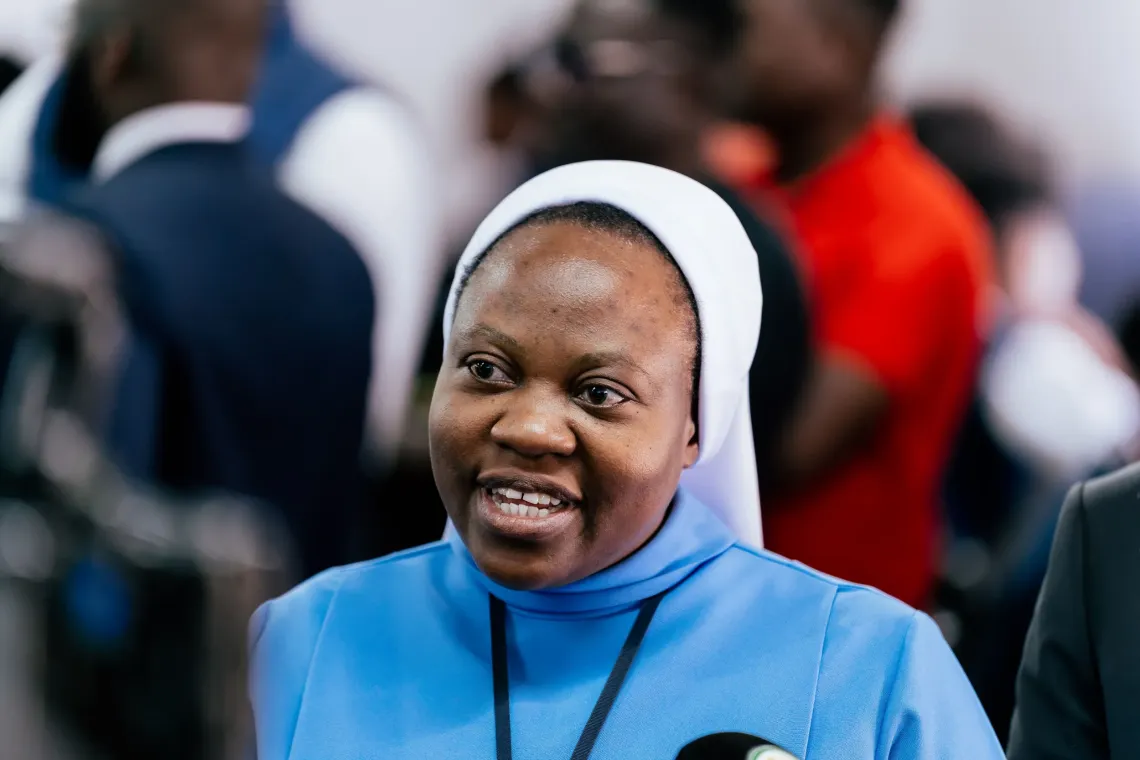
“We have been privileged to be among the first schools selected in the initial phase of the connectivity programme. This early inclusion has given our learners a strong advantage in digital learning,” she says.
She describes a school community where learning has been intensified and enriched.
“Our learners have been able to study using the learning portal, and their learning experience has been enriched. The digital platform has strengthened both teaching and independent study.”
“We are grateful to UNICEF, whose initiative implemented through the Ministry of Education has made us beneficiaries of this transformative programme,” she adds.
Strengthening teacher capacity for a digital future
Behind this classroom transformation is deliberate national investment in teacher capacity.
"We began by investing in capacity-building programmes for teachers. Through these initiatives, we are equipping in-service teachers with the knowledge and skills they need to effectively deliver blended learning," says Yvonne Mweemba Chuulu, Director of Secondary Education at the Ministry of Education.
"We began by investing in capacity-building programmes for teachers. Through these initiatives, we are equipping in-service teachers with the knowledge and skills they need to effectively deliver blended learning," says Yvonne Mweemba Chuulu, Director of Secondary Education at the Ministry of Education.
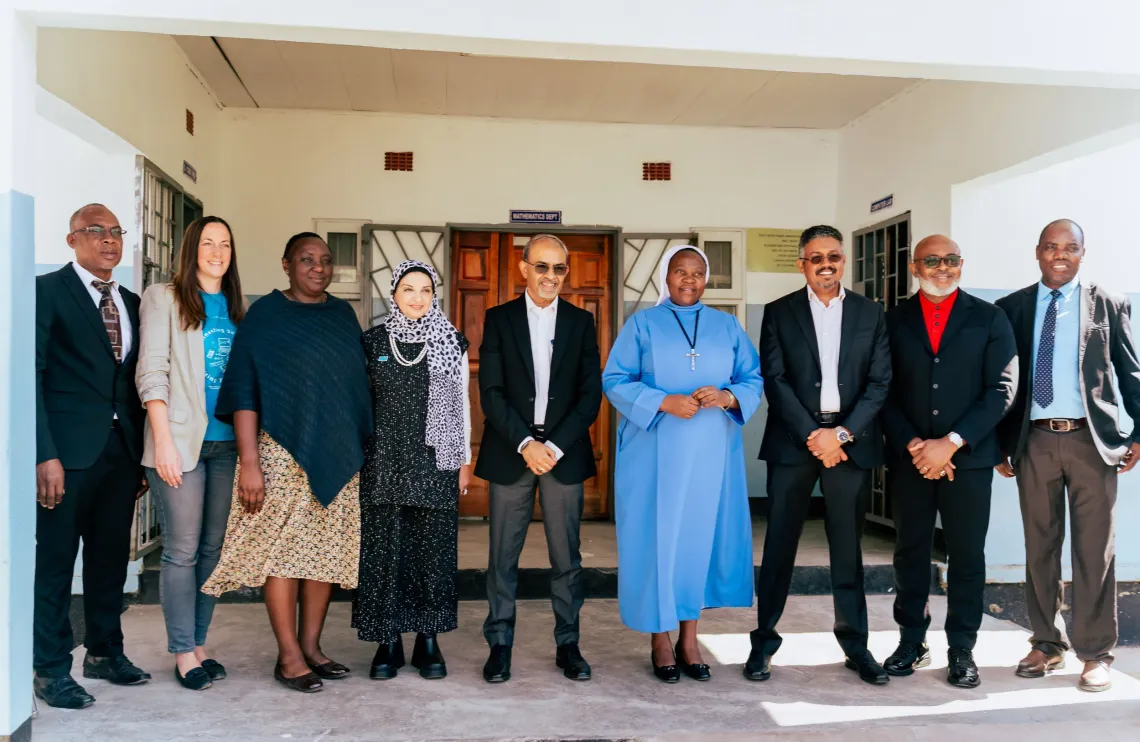
"Our goal is to ensure that every teacher is confident in integrating digital learning into classroom instruction. We want teachers to be well prepared to use technology to enhance teaching and learning."
The Ministry is focusing on reshaping how future teachers will be trained.
"We are also strengthening teacher education programmes. We are working to ensure that trainee teachers graduate from colleges and universities with the skills required to effectively deliver digital learning," she says.
"In the past, digital learning was not a core component of teacher training. We are now working to make it an integral part of teacher education so that future teachers enter the profession fully equipped for technology-enabled teaching."
"This investment will ensure that, in the years ahead, teachers can confidently deliver blended learning without requiring extensive retraining."
The urgency of digital transformation was reinforced by the COVID-19 pandemic which exposed significant gaps in digital preparedness across education systems in the country.
"The COVID-19 pandemic highlighted important lessons for the education sector. We saw that many teachers were not adequately prepared to teach using digital platforms," she adds.
"We do not want to face that situation again. Instead of teachers saying, 'I can't do this,' we want every teacher to be able to say, 'I have been trained, I know how to do this, and I can do it.'"
Achieving digital learning across Zambia requires strong partnerships, with the Ministry recognizing that Government cannot expand digital learning nationwide on its own.
"The Ministry continues to work closely with partners to help us achieve more than we could on our own. Providing digital learning and improving education is a significant undertaking, and it is not something the Ministry can accomplish alone," she explains.
"That is why we are working with partners such as UNICEF, Airtel, and cooperating partners to connect as many schools as possible across the country."
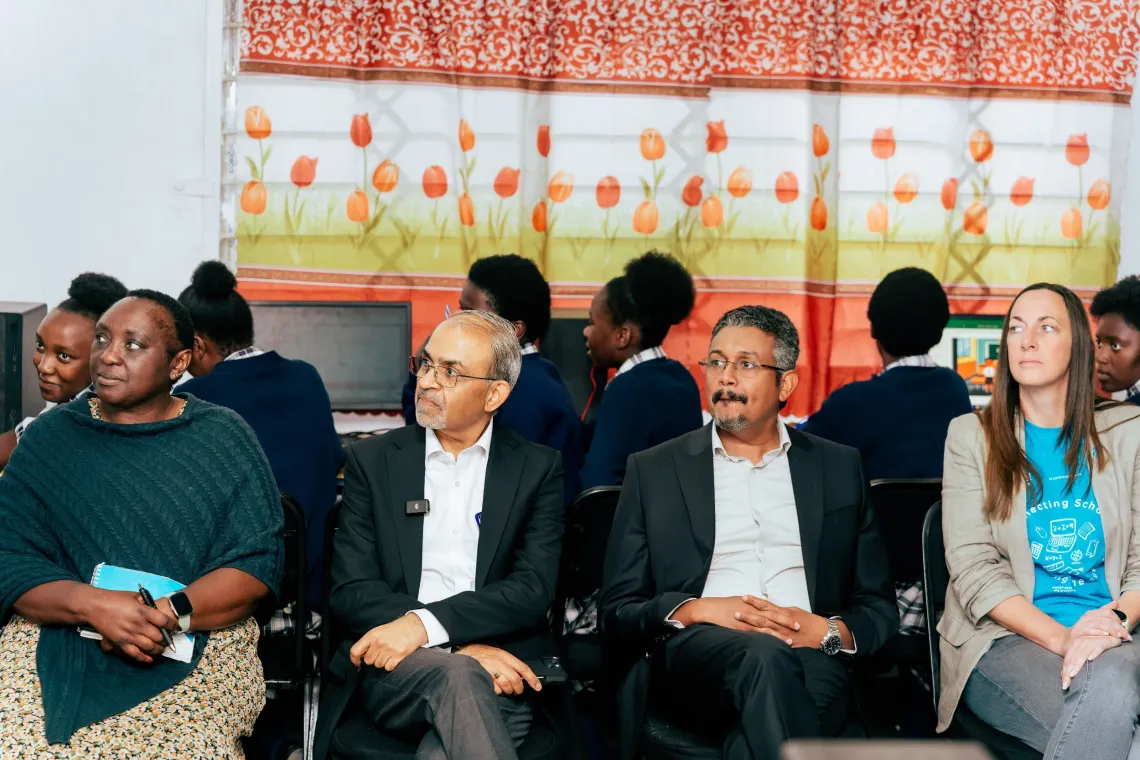
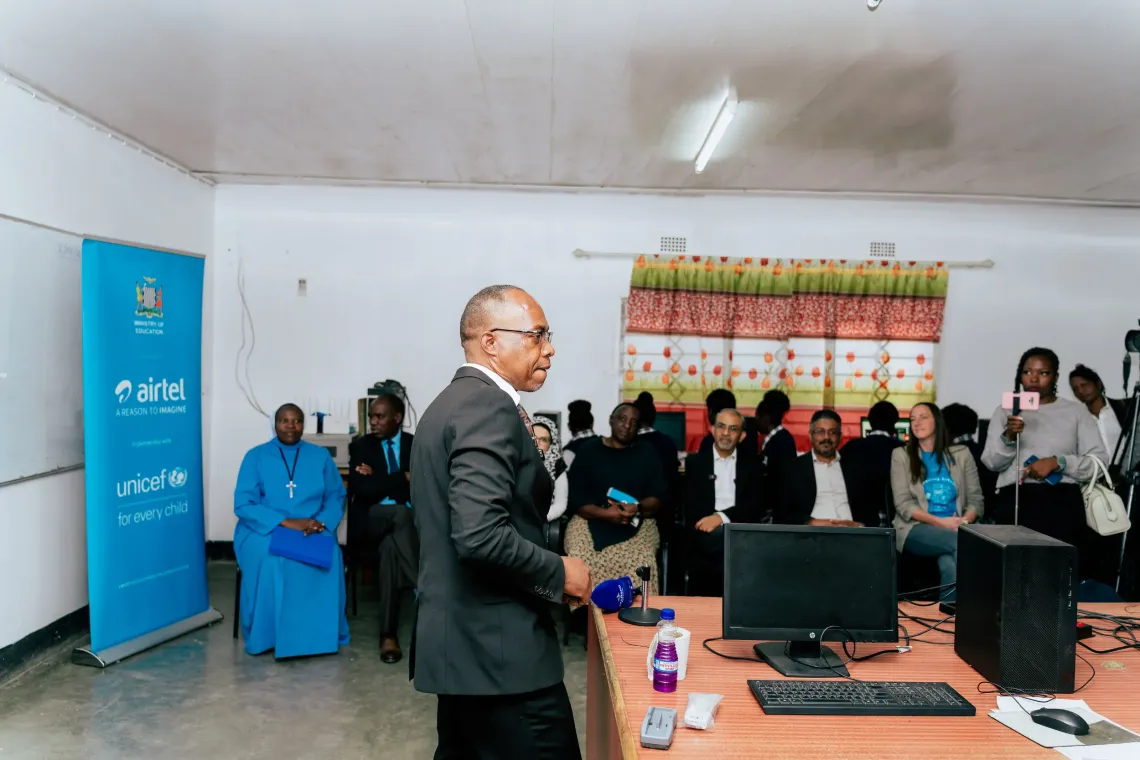
A key priority is ensuring that rural schools are not left behind in Zambia’s digital transformation.
"Our priority is to ensure that schools in rural areas are also connected. Connectivity is essential not only for learners but also for teachers."
"Whether a school is in Shangombo, Kaputa, or any other part of Zambia, once it is connected, learners and teachers can access the same high-quality educational resources available elsewhere in the country."
"Our vision is to ensure that every connected school gives learners access to diverse learning materials and opportunities, regardless of where they live. This is how we can promote equitable access to quality education across Zambia."
"When teachers have access to the internet and digital devices, they can conduct research and prepare their lessons much more effectively. They are no longer limited to a single textbook and the syllabus."
"Digital platforms provide teachers with access to a much wider range of teaching resources. We upload the required course books, reference materials, and other learning resources, enabling teachers to prepare richer and more comprehensive lessons."
"Even if a teacher does not have a physical textbook, they can still access the materials they need online. This ensures they are fully equipped to deliver quality lessons."
The benefits extend well beyond teachers. Connected classrooms open new opportunities for learners through the Zambia Learning Passport by providing equitable access to quality educational content regardless of where they live or their family’s income.
"The digital learning platform supports every stage of education, from Early Childhood Education (ECE) through to secondary school. This means learners at all levels can benefit from the same digital learning opportunities," she adds.
A partnership driving equity and scale.
At the heart of this transformation is a powerful collaboration between the Government of the Republic of Zambia, UNICEF and Airtel.
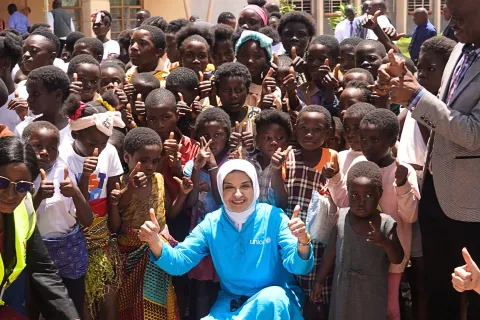
“Our goal is to connect 500 public schools in Zambia, while building teacher’s capacity to use technology effectively,” says UNICEF Representative Dr. Saja Farooq Abdullah.
The results are already visible.
“So far 4,930 teachers countrywide have been trained in digital literacy and blended learning,” she says.
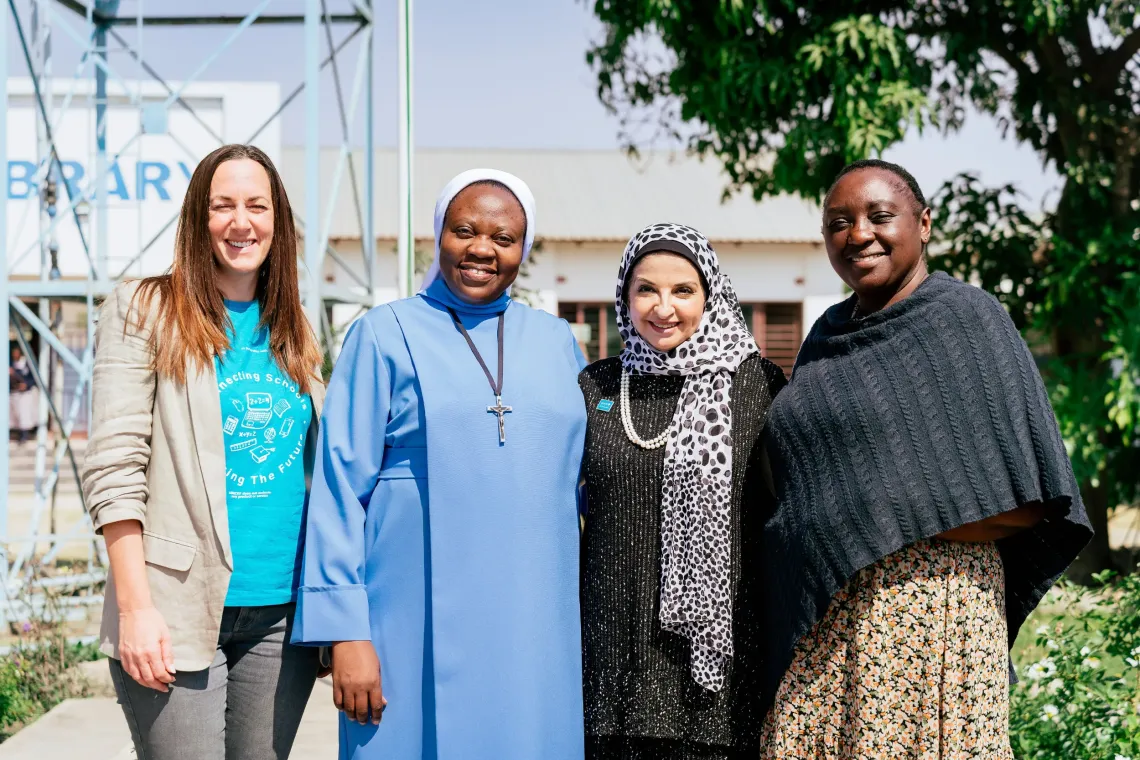
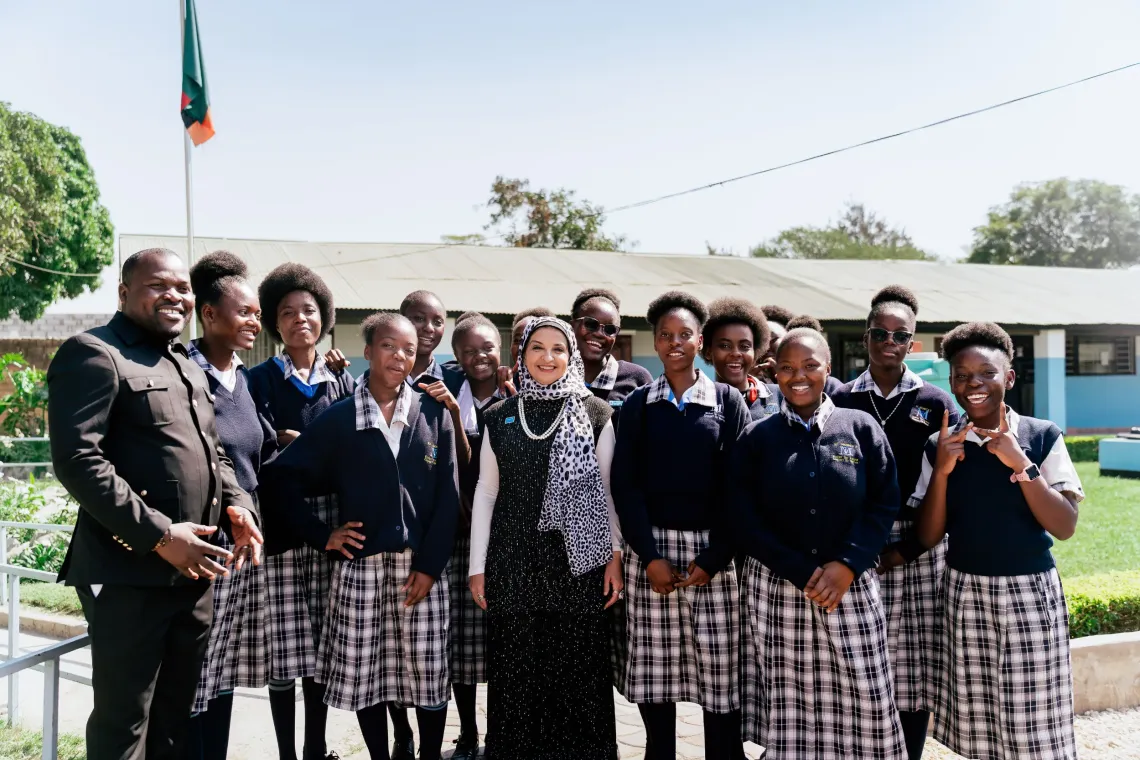
Airtel’s connectivity and UNICEF’s supported Zambia Learning Passport have become essential pillars of this ecosystem, ensuring learners can access education anytime, anywhere.
“We will train an additional 2000 teachers and further expand use of digital leaning platforms,” she adds.