UNICEF Helps Learners with Disabilities Stay in School
Cash Transfers Support Access to Education for Children with Disabilities in Zambia

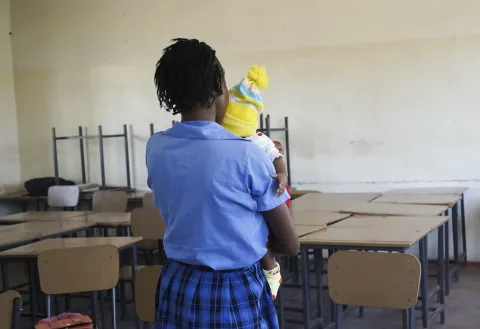
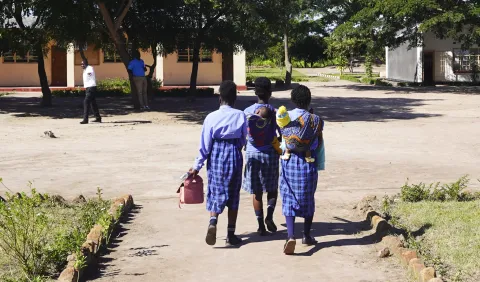
August 2023, Lusaka District, Zambia - Established in 1995, Bauleni centre in Lusaka, Zambia, is a school attended by more than 1,400 learners and houses some special units that offer support to children from disadvantaged families and children with disabilities. Apart from being a school, Bauleni provides different programmes, including a bakery, a shop, agricultural activities, and skills training. The learners with disabilities are either in a unit or in different mainstream classrooms, from early childhood up to secondary. Bauleni also conducts outreach to other districts under their Home-Based Education (HBE) programme.
With funding from the Norwegian Agency for Development Cooperation (NORAD), UNICEF, through the Ministry of Community Development and Social Services (MCDSS) provided monetary support to Bauleni school to cover pupils' school fees. With the support, Bauleni school was able to cover unmet needs of both the school and the pupils. They have bought shoes for pupils who did not have them, appropriate desks for the classrooms and painted walls to improve the learning environment.
UNICEF also provides support to MCDSS to strengthen its Social Cash Transfer programme. This programme provides cash to vulnerable households to cover basic needs and enable children to continue their education. In 2020-2021 UNICEF also supported the Ministry’s provision of Emergency Cash Transfers to respond to COVID-19 as well as bursary grants to learners with disabilities.
The cash transfer helped pupils to remain in school during the pandemic while at the same time minimizing household stress on education costs.
“I have to study hard to achieve my dreams”
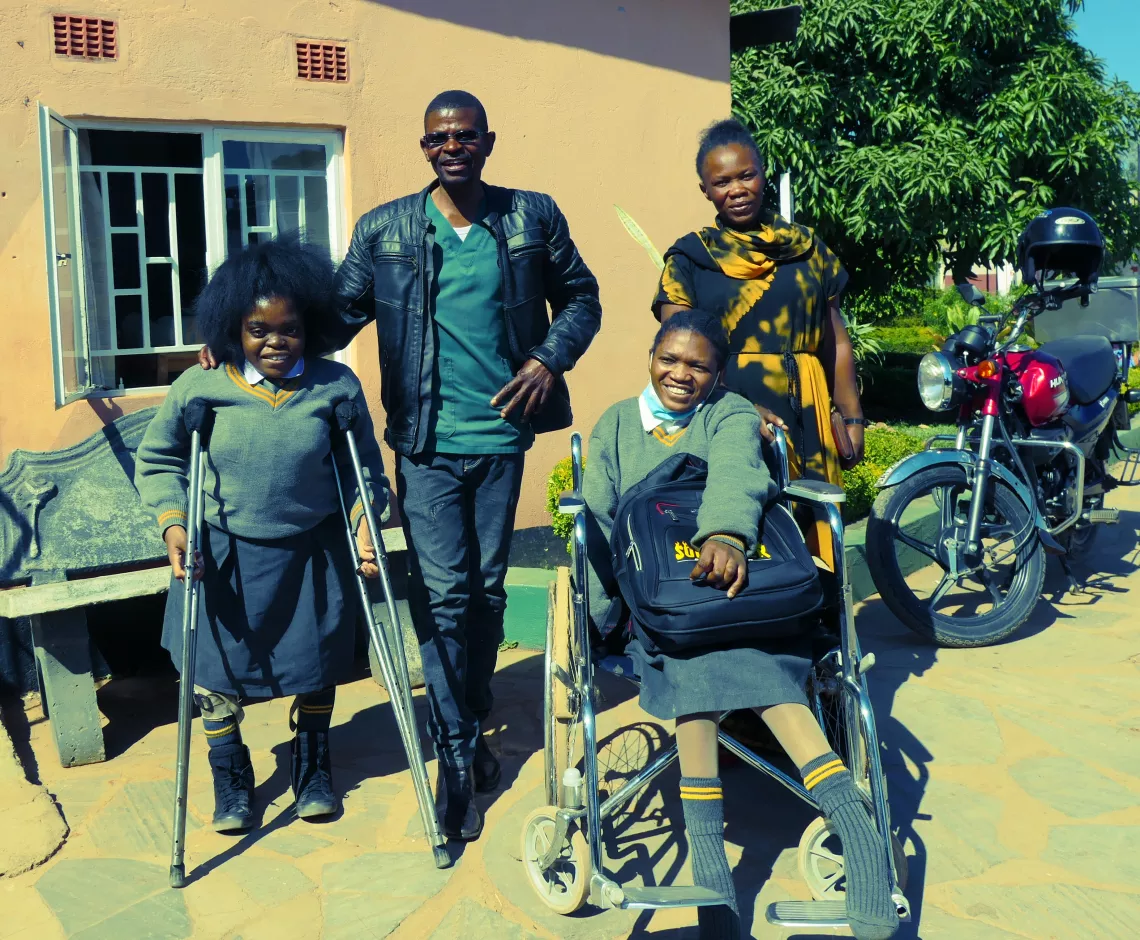
Carol, 18 years old, is one of the students who has benefited from this intervention. She started preschool at Bauleni school and is soon finishing 12th grade. Her favorite subject is English and her wish is to become a clinical officer. “I have to study hard to achieve my dreams,” she says.
From a friend, her father learned about how to register Carol for the disability card and apply for social cash transfers. For him as a caregiver, paying for school transportation was a challenge. Also, as Carol grew, she needed sanitary pads, which he could not afford. With the cash transfers, he is able to ensure that Carol can attend school. Carol also needed leg braces and crutches for walking. She was using wooden crutches and they were not of good quality. With the cash, her father was able to buy her the devices she needs. Because of the braces on Carol’s legs, she also needs specific clothing and the cash helped her father to buy her clothes. It was the school that informed him of where to go for Carol’s medical follow ups and where to get her leg braces and crutches.
Rhoda, who is 13 years old and in grade 10, is also receiving the support of cash transfers. “I used to have a challenge taking care of Rhoda. I was not able to work or take care of the home.” says Rhoda’s mother.
Bauleni school informed her about the social cash transfer programme and about the importance of sending Roda to school. “Taking Rhoda to school on my back was too difficult. Even though we received a wheelchair from the school, the roads outside of the school are not accessible.” Now she is able to pay for transportation so Rhoda can attend school regularly. She tells us that she has seen a big change in Rhoda. “I am in awe of how empowered Rhoda is. She can even give me advice and influence my decisions.”
According to the 2015 Disability Survey, 4.4 per cent of all children aged 2-17 have a form of disability. There are significant gaps in services for children with disabilities. The head teacher at Bauleni school is frustrated that though they provide a range of vocational training programmes, no companies will employ youth with disabilities. “Some come to school even after the training programme is finished because they want to do something meaningful by cleaning or helping in other ways. We pay them a small allowance but I wish they were able to get jobs.”
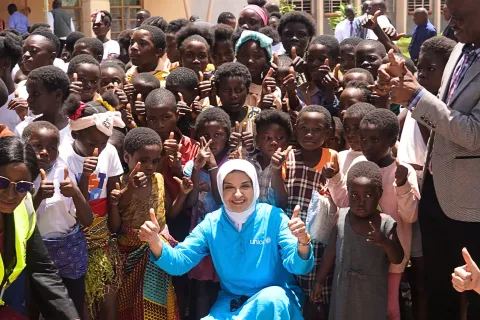
UNICEF Zambia continues to work with the Government and other partners to improve access to services for children with disabilities. Registration of persons with disabilities for the disability card, access to social cash transfers and access to education for children with disabilities are top priorities.
“We have seen the impact of the Social Cash Transfer to cover disability related costs so children with disabilities get equal opportunities to realize their potential. We aim to continue to support the programme and support the Government to increase its coverage to more families with children with disabilities.” says Daniel Kumitz, Chief of Social Policy at UNICEF Zambia.
*** END