Drought in Shang'ombo
A story of survival, resilience and an urgent need for action

Driving a rugged 984 kilometers from Lusaka takes you to Shang’ombo, a district that was once relatively unknown but is affectionately dubbed “ShangCity” by its residents. This nickname reflects their unique sense of humor amidst the challenges they face. The striking landscape and harsh terrain reveal the realities of life in Shang’ombo, a district severely impacted by drought in Western Zambia. Home to over 75,000 people and nestled along the borders of both Angola and Namibia, Shang’ombo stands as a testament to resilience and community spirit.

Drought conditions in Shang’ombo have been intensified by shifting weather patterns and climate change, significantly impacting the entire region. On-the-ground observations reveal that the scarcity of rainfall has left children and their families grappling with severe shortages of food and water. For the communities in Shang’ombo, this drought represents a double tragedy. They have faced two consecutive years of no rain, and as they look to this year’s weather predictions, they cling to hope for a much-needed return of rainfall.

This terrain illustrates the difficulties of accessing remote communities. The journey to Shang’ombo is laden with obstacles, reflecting the isolation experienced by those already facing hardships. Yet, driven by our commitment to “leave no child behind,” and thanks to the United Nations CERF, the European Union and SUNII donors, UNICEF is determined to reach every malnourished child under five years of age with life-saving supplies and services, no matter who they are or where they live.

In the communities of Shang’ombo, the drought has ravaged the land, threatening their very survival. I met farmers who have relied on their land for food and pasture for generations, yet now they face harrowing conditions that seem insurmountable. After two consecutive years of total rainfall failure, the situation is dire; not a single household has recorded a harvest. Families and their children are reduced to foraging for wild fruits, seeds and dried ginger to survive.

In Mambolomoka Health Center, located 33 kilometers away from the district and Shang’ombo Rural Health Center, situated within the district, we discovered worrisome trends of rising malnutrition and illness. The ongoing drought has severely impacted not only agricultural production but also the health and future of Shang’ombo's children. At both facilities, malnourished children and mothers were attended to and provided with critical health services, highlighting the urgent need for intervention and support. UNICEF has provided nutrition commodities including Ready-to-Use Therapeutic Feed and support towards the training of Community Health Volunteers who conduct sessions on Maternal Infant and Young Child Feeding through cooking demonstrations.

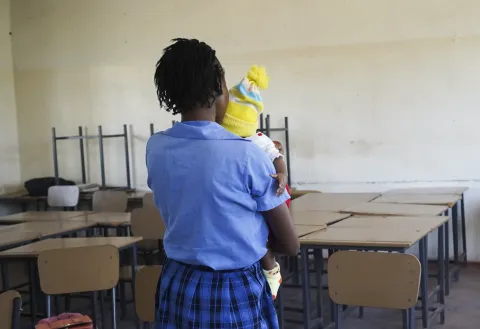
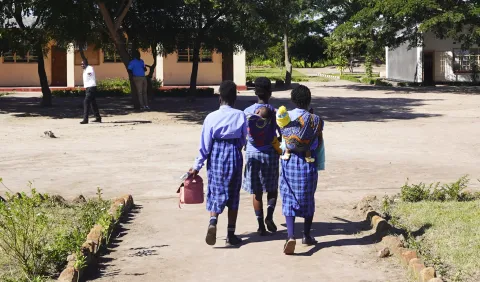
The effects of this drought extend beyond agriculture, deeply affecting communities and in particular, the well-being of children. Rising malnutrition rates have jeopardized educational opportunities, as families are forced to prioritize survival over schooling. During my interactions with families in the district, many shared their struggles, explaining that they cannot send their children to school five days a week because the kids must help gather food for the household.
At Siwelewele Basic School, located about 30 km from the district, staff confirmed these troubling realities. They reported that some children are too fatigued from their efforts to help their families to attend school regularly. Even when students do make it to class, hunger often prevents them from fully engaging in their lessons. This cycle of malnutrition and disrupted education poses a significant threat to the future of these children and the community.

In the early hours of the day, often before dawn, children from the community—like this brother and sister—arrive at the Shang’ombo market by 5:00 AM. They remain throughout the day, diligently picking up dropped kernels of maize from traveling grain traders who journey from distant places like Kaoma and Kasempa. Whatever they collect becomes a crucial part of their household diets. One of the children shared that on some days, they roast the maize in a pan before adding water and salt—this simple meal often constitutes all that they must eat. While some children come independently, others are sent by their parents or caregivers. Unfortunately, this activity not only keeps them out of school but also exposes them to various forms of vulnerability and potential abuse as they navigate interactions with strangers in the bustling market environment.

Amid the ongoing crisis, a spirit of hope emerges as community members unite to seek collaborative solutions. UNICEF-supported initiatives like water catchment systems and drought-resistant farming methods through the SUNII programme are gaining traction. It is inspiring to witness the active involvement of men in community programmes that educate them on recognizing the signs and symptoms of malnutrition and stress in children, alongside strategies for intervention. With UNICEF support, participants also engage in cooking demonstrations, learning how to prepare traditional dishes that can diversify their diets with locally available ingredients.

At Siwelewele Basic School, the Agricultural Club has initiated a vegetable garden designed to supplement the school’s feeding programme, which aims to provide students with at least one meal a day. Despite facing challenges from pests exacerbated by the scorching weather, the diverse assortment of vegetables grown will play a crucial role in addressing the children's nutritional needs. This initiative not only promotes better health and well-being among learners but also encourages higher school attendance, helping them to better adapt to the changing climate.

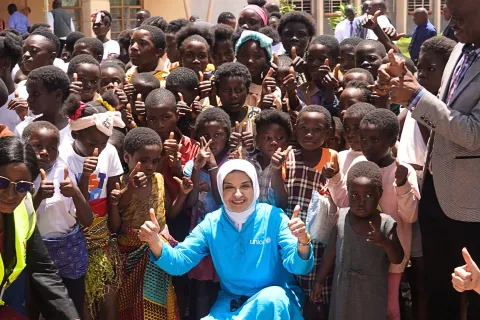
Despite the formidable challenges that lie ahead, the unwavering resilience of the people of Shang’ombo is truly inspiring. Their tireless efforts to combat the effects of the drought are commendable, but they cannot overcome this crisis alone – they need our support. Together, we can help secure a brighter future for them.
As UNICEF Zambia, we extend our heartfelt gratitude to the United Nations Central Emergency Fund, the European Union and SUNII donors, whose steadfast partnership has been invaluable in supporting the children and families of Shang’ombo and other districts as they strive to rebuild their lives in the face of adversity. Let us stand together and ensure that hope triumphs over this hardship.
Niitumezi ahulu (thank you very much).