Clean Hands, Safe Births
UNICEF-supported WASH helps to prevent infections and improve maternal and newborn health

CHINSALI District, Muchinga Province, Zambia – May 2026 ---Tucked away in the heart of Chinsali District, Nkula and Nambuluma Rural Health Centres (RHCs) are lifelines for hundreds of families. Nkula RHC alone sees over 560 patients and delivers around 10 babies every month, while Nambuluma RHC serves an even larger community. Nearly 1,800 patients pass through its doors monthly, with about 20 newborns welcomed into the world at Nambuluma.
In August 2025, UNICEF with support from the Government of the Republic of Korea and the European Union’s Nexus Energy and Water Programme for Zambia (NEWZA), an initiative under the European Union’s Global Gateway strategy, the Ministry of Health trained 24 healthcare workers in Water, Sanitation and Hygiene Facility Improvement Tool (WASH FIT) across 17 facilities in Chinsali District.
WASH FIT is a practical, quality improvement tool developed by the World Health Organization and UNICEF that helps health facilities assess, prioritise, and systematically improve WASH and Infection Prevention and Control (IPC) services. It empowers health workers to identify gaps, implement targeted actions, and sustain safe, dignified care for patients and staff. In these trainings, UNICEF Zambia applied a newly adapted WASH FIT tool, developed with funding from the United Nations Office for the Coordination of Humanitarian Affairs – Central Emergency Response Fund (OCHA CERF), to help healthcare facilities incorporate climate considerations into their assessment and planning processes. Today, the impact is already transforming service delivery, and Nkula and Nambuluma RHCs stand as powerful examples.
Before WASH FIT Implementation: A Struggle for Hygiene and Safe Care
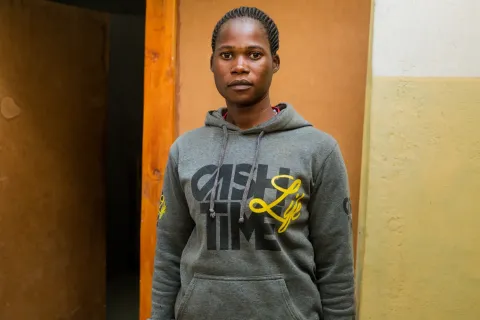
A witness to life before WASH FIT, Bernand Mwansa, Chief Environmental Health Officer had this to say…
Not long ago, these clinics faced daunting challenges. Without water, new mothers were unable to bathe after giving birth. Health workers struggled to keep hands clean or wash soiled linen, raising the risk of infection for mothers, babies and staff. Without clear routines or reliable supplies, even basic hygiene was a daily chore. Weak waste management systems added to the risk, threatening the safety and dignity of everyone who entered.
It was clear that something had to change. The need for safe water, proper hygiene, and infection prevention was urgent, not just for comfort but for survival.
After WASH FIT Implementation: Water, Systems, and Accountability
Through UNICEF’s efforts and in collaboration with partners, change is underway to improve WASH Services in health care facilities - directly preventing infection and protecting lives. At Nkula RHC, the installation of a solar-powered water scheme marks a turning point, promising clean, sustainable water on tap and a safer environment for all. Backed by support from a local Non-Governmental Organization (NGO), the facility now benefits from an alternative power source, guaranteeing that essential health services uninterrupted, even during power outages.

Before, mothers couldn’t bathe after delivery, and washing blood-stained linen was a constant struggle because of water shortages. With the new piped water scheme, these challenges will soon be a thing of the past.
William Kachingwe who oversees the facility, also reported major improvements in hand hygiene, cleanliness, and operational standards.
We now have Standard Operation Procedures (SOPs) displayed at every handwashing station and points of care, reminding us of the steps and key moments for hand hygiene. We wash or sanitize our hands after every patient, and the cleaning schedule has greatly improved hygiene and cleanliness in the facility,” he said.
Leadership Driving Change: Nambuluma RHC
At Nambuluma RHC, the impact of WASH FIT has been equally transformative. “After the WASHFIT training, I oriented all facility staff, including general workers. We conducted a facility assessment as a team and developed improvement plans that now guide decision-making across all nine WASHFIT domains,” Mweemba Aldrin, Environmental Health Technologist, explained.

Using these plans, the facility successfully lobbied for additional water storage drums from local partners, ensuring toilets remained functional even though piped water is intermittent.
“Simple actions, guided by our improvement plans, helped us expand handwashing stations to every care point. The change is truly visible,” said Banda Philimon who is in charge of the facility. “Before WASH FIT, there was only one handwashing station. Today, all six points of care have fully functional handwashing facilities, made possible through partnerships mobilized by the facility—improving hygiene, safety, and the quality of care for both patients and staff.”
"WASH is like the twin brother of Infection, Prevention and Control. Without it, IPC cannot survive," explained Bernard Mwansa, Chief Environmental Health Officer at the Chinsali Provincial Health Office.
“In the past, IPC was seen as the sole responsibility of Environmental Health Technologists, but today clinical staff are fully engaged. Gloves and hand rub are now available at every point of care, and compliance has improved dramatically, protecting both patients and staff from infections. The changes we are seeing here are transforming care and setting a new standard for health facilities across the province.”
Building Safer Clinics
These successes show what is possible when committed partners, passionate health workers and engaged communities unite around a shared vision. The WASH FIT approach goes beyond new taps and toilets; it builds lasting systems and a culture of safety. Nkula and Nambuluma rural health centres are proof that strategic investment in WASH and IPC saves lives. With continued support and collaboration, clinics are becoming safer, mothers and babies are healthier, and hope is growing in rural Zambia.