

Zambia steps up early action to protect children from El Niño
On International Day for Disaster Risk Reduction, the Government of the Republic of Zambia and UNICEF call for early action to protect children from drought, floods and disruption to essential services
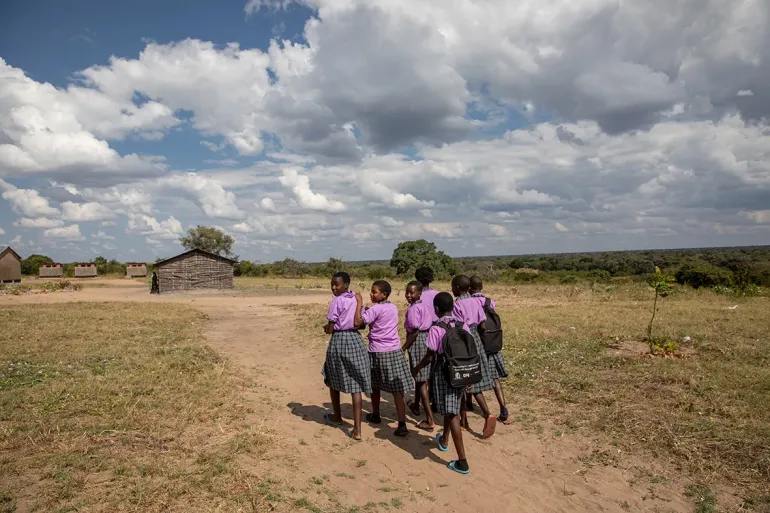
LUSAKA, 13 October 2026 – With a very strong El Niño expected to shape the 2026/2027 rainy season, the Government of the Republic of Zambia and UNICEF are calling for urgent early action to protect children as prolonged dry spells threaten the southern and central parts of the country and flooding risks rise in northern provinces, according to the recently released 2026/2027 national seasonal rainfall forecast.
Across Eastern and Southern Africa, more than 40 million children in eight countries are expected to experience unusually wet or dry conditions between October and December this year due to El Niño, according to a UNICEF analysis. The climate pattern is expected to strengthen during the last months of 2026, with consequences for children likely to extend into 2027.
In Zambia, the prolonged dry spells that are expected, particularly across southern Zambia, are likely to increase drought risks and potential impacts on children’s food security, nutrition, health and access to water. In parts of northern Zambia, including Luapula, Northern and Muchinga provinces, above-normal rainfall is expected, increasing the risk of flooding, contamination of water sources and disruption to essential services, including health care and education.
UNICEF climate-risk data show that an estimated 4.2 million children in Zambia (39.9 per cent) live in areas exposed to drought, mostly in southern and central Zambia, while about 200,000 children (1.9 per cent) live in areas exposed to riverine flooding
“We know the risks we are facing, and we do not have to wait for a crisis to act,” said Mathews Musukwa, Senior Communications Officer, Disaster Risk Management Division (DRMD). “Our preparedness and anticipatory action planning allows Government and partners to use national forecasts to strengthen preparedness at local level and protect communities before the most severe impacts are felt. The forecast indicates the patterns and risks ahead, and now is the time to prepare and act together.”
The DRMD has just recently finalised the 2026/2027 El Niño Cluster Readiness, Preparedness and Anticipatory Action Plan, with support from line ministries, the United Nations and partners. The Plan uses the latest forecasts and risk information to prepare before hazards become disasters, including preparing essential supplies and services, strengthening local preparedness and supporting communities to act early. Government and partners are also strengthening disease surveillance, emergency logistics and safe-water systems to help keep essential services functioning through climate shocks.
“Droughts and floods threaten children’s most basic rights – to food, safe water, health and education,” said Tinkhani Msonda, UNICEF Deputy Representative in Zambia. “But we have the data and evidence to act before these hazards become crises. By preparing early, we can reduce their impact and protect children when they need it most.”
Anticipatory action means using forecasts to trigger pre-agreed actions and funding before a hazard strikes, so that support reaches families before the worst impacts. With funding from the European Union's Humanitarian Aid (DG ECHO), Zambia is building this approach into its national preparedness. Evidence shows that every US$1 invested in anticipatory action can save up to US$7 in avoided losses and benefits.
Families and communities also have a critical role to play. Parents, caregivers, farmers and community leaders are encouraged to follow official weather and agrometeorological updates and act early on Government guidance; protect household food and water supplies and follow agricultural advice in areas facing prolonged dry spells; and, in flood-prone areas, protect water sources, keep children away from floodwaters and flooded crossings, and take precautions against waterborne diseases.
The Government of Zambia and UNICEF call on partners, local authorities, civil society, communities and families to act now to protect the most vulnerable children from the impacts of El Niño. A predictable crisis does not have to become a disaster. The window to act is now.
ENDS
Note to editors:
About El Niño: El Niño is a natural climate pattern that warms parts of the Pacific Ocean and disrupts weather systems worldwide. Across Eastern and Southern Africa, more than 40 million children in eight countries are expected to experience unusually wet or dry conditions between October and December this year due to El Niño, according to a UNICEF analysis. The climate pattern is expected to strengthen during the last months of 2026, with consequences for children likely to extend into 2027. The analysis combines the European Centre for Medium-Range Weather Forecasts (ECMWF) seasonal forecast issued in September 2026 with WorldPop child population data. An El Niño footprint based on historical events from the International Research Institute for Climate and Society (IRI) at Columbia University, identified areas likely to be affected. Children were counted only where both the seasonal forecast and historical El Niño patterns indicate wetter- or drier-than-average conditions, using a 70 per cent probability threshold. The forecasting system was also evaluated against 24 years of satellite precipitation observations. For more information on the global outlook and the potential impacts of the 2026/2027 El Niño on children globally, see UNICEF’s global El Niño Fast Facts: UNICEF Fast Facts: Over 347 million children in nearly 100 countries will be exposed to one of the strongest El Niño events on record
Zambia hazard-exposure data: The Zambia-specific figures of approximately 4.2 million children living in areas exposed to drought and 200,154 children living in areas exposed to riverine flooding are drawn from UNICEF’s Global Child Hazard Database, used in the Children’s Climate Risk Report 2026. The drought figure is based on the Standardized Precipitation Index (SPI). These figures measure children’s underlying geographic exposure to individual climate hazards. They are not forecasts of the 2026/27 El Niño and should not be interpreted as the number of children expected to be affected by El Niño. UNICEF’s global advocacy analysis similarly describes Global Child Hazard Database figures as measures of children living in areas where hazards occur and explicitly distinguishes exposure from predicted caseloads.
Zambia-specific El Niño projections: Localized estimates of the number of children expected to be exposed specifically to the 2026/27 El Niño in Zambia are not currently available. Seasonal forecasts and risk analyses will continue to be updated as new information becomes available.
About anticipatory action in Zambia: Zambia's anticipatory action work is coordinated by DRMD, Office of the Vice President, with funding from the European Union's Humanitarian Aid (DG ECHO), and implemented with partners including the UN.
For more information, please contact:
Maria Fernandez | Chief of Advocacy & Communications, UNICEF Zambia | [email protected]
Mathews Musukwa | Senior Communications Officer, Disaster Risk Management Division - Office of the Vice President | [email protected]
Media contacts
About UNICEF
UNICEF promotes the rights and wellbeing of every child, in everything we do. Together with our partners, we work in 190 countries and territories to translate that commitment into practical action, focusing special effort on reaching the most vulnerable and excluded children, to the benefit of all children, everywhere.
For more information about UNICEF and its work for children in Zambia, visit www.unicef.org/zambia.
Follow UNICEF Zambia on Twitter, Facebook and Instagram


