More than 7.3 million children in Zambia exposed to multiple overlapping climate threats, new UNICEF report warns
With seven in ten children in Zambia exposed to at least two overlapping climate threats and more than 25 per cent exposed to three or more climate threats, urgent action is needed to strengthen climate resilience and protect children’s rights
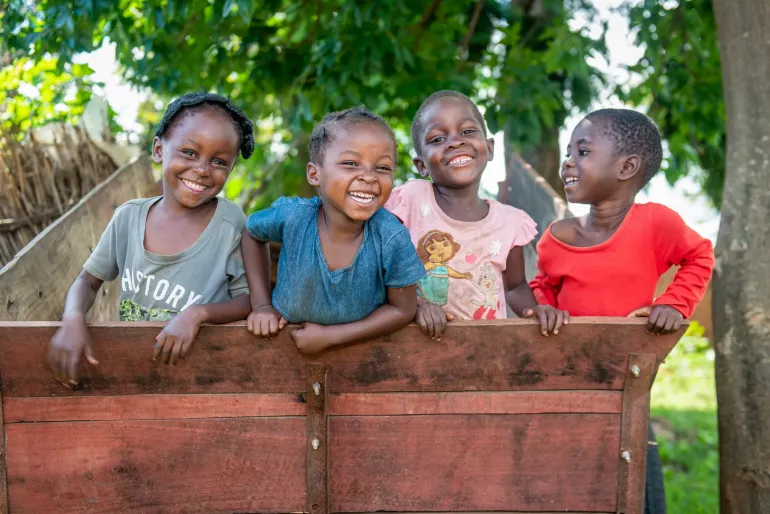
LUSAKA, Zambia,17 June 2026 – More than 7.3 million children in Zambia – around seven in ten children in the country – are exposed to at least two overlapping climate threats, according to UNICEF’s new global Children’s Climate Risk Report 2026 and data launched today.
The data informing the report finds that an estimated 10.22 million children in Zambia (98 per cent) are exposed to at least one climate threat, while approximately 25 per cent of children are exposed to three or more overlapping climate threats. Droughts, heatwaves, fires, river floods, extreme heat, and wind-driven dust are among the most prevalent climate threats affecting children across the country. These findings highlight how climate change is compounding existing vulnerabilities that children face and is placing increasing pressure on essential services such as healthcare, education, water and sanitation, nutrition and child protection.
The Children’s Climate Risk Report 2026 uses the latest available data to map children’s exposure to eight of the most frequent climate threats, including coastal floods, droughts, extreme heat, fires, heatwaves, riverine floods, sand and dust storms, and tropical storms. For the first time, the report reveals exactly where – and how intensely – multiple and overlapping climate threats are affecting children and the essential social services they rely on, helping governments take concrete action to protect children.
“This analysis can help governments and decision-makers plan better and invest more effectively in resilient services,” said Catherine Russell, UNICEF Executive Director, for the official launch of the report. “When we strengthen health and education systems, and improve infrastructure with children in mind, we protect them from today’s climate threats and help secure their future.”
“The report emphasizes, once again, that children in Zambia are particularly vulnerable because of climate change and that this is affecting their lives, health, learning and future opportunities,” said Dr. Saja Farooq Abdullah, UNICEF Representative in Zambia. “As climate shocks become more frequent and severe, investing in climate-resilient health, education, water and social protection systems is critical to safeguarding every child’s rights.”
Other key findings in the report highlight that in Zambia, approximately 1.5 million children are threatened by drought conditions alone, and that around 2.2 million children are
exposed to the combined hazards of heatwaves and fires, while a further 1.2 million children face the triple threat of drought, heatwaves and fires.
The data also shows that climate risks in Zambia are highly clustered: the majority of children exposed to drought are also exposed to additional threats such as heatwaves and fires, intensifying the severity of impacts on their health, nutrition and wellbeing.
The report also identifies drought, heatwaves and fires as among the most significant overlapping climate threats facing children in Zambia, mirroring broader global trends where these hazards increasingly occur together and intensify risks to children’s health, nutrition, education and wellbeing.
Across the world, climate threats are becoming more frequent, intense and overlapping, affecting children in both low- and high-income countries. Children living in contexts where climate shocks intersect with poverty and limited access to essential services face the greatest risks and are often the least equipped to recover from their impacts.
In Zambia, over 87 per cent of schools lack at least basic sanitation services. Most of these have only limited services, while 16 per cent (four in every twenty-five schools) have no sanitation service at all. Coverage is stronger for the other WASH services: at least 84 per cent of schools have basic water services and 83 per cent have basic hygiene services. Set against existing vulnerabilities in essential services, these gaps underscore the need for accelerated investment in climate-resilient social services — including schools — that can withstand future shocks and protect every child in Zambia1.
In addition to the eight most frequent climate threats, the report analyses children’s exposure to air pollution and malaria, two risks that are highly sensitive to the effects of climate change. Globally, nearly every child is exposed to air pollution, while one billion children are exposed to malaria. In Zambia, nearly every child is exposed to the risk of malaria, adding another layer of vulnerability for children already facing multiple climate-related threats.
The report also presents a framework to analyse the different types of risks children face, based on their exposure to climate shocks and their vulnerability, determined by access to essential social services such as healthcare, clean water, education and more.
UNICEF is working with the Government of Zambia and partners to strengthen climate-resilient services for children, including health, education, water and sanitation systems,
disaster preparedness and early warning mechanisms, while supporting communities to better anticipate and respond to climate-related shocks.
To protect children’s rights from climate threats and adapt to growing environmental changes, UNICEF is calling on the Government of Zambia, businesses and relevant actors to:
· Reduce emissions and strengthen climate action through a just and inclusive transition. This requires accelerating the shift to renewable energy, investing in climate-smart agriculture, sustainable irrigation, and reforestation, and scaling up access to climate finance and technology transfer. Priority investments include clean energy for schools and health facilities, climate-resilient infrastructure, and the conservation of forests and water catchments. However, significantly increased global financial and technical support is essential for Zambia to deliver on its Nationally Determined Contributions (NDC) commitments and address a climate crisis already affecting more than 10 million children.
· Protect children from the increasing impacts of climate change and disasters. Adaptation and disaster risk reduction efforts must prioritize child-critical services. UNICEF calls for the integration of child-focused measures into national and sectoral plans, climate-resilient schools and health facilities, strengthened food and water security, child-friendly early warning systems, and expanded shock-responsive social protection. These actions are urgent, as 91 per cent of schools lack basic sanitation and overlapping threats such as droughts, heatwaves, and fires continue to threaten the wellbeing of millions of children across the country.
· Empower children and youth as agents of change. This requires integrating climate education and green skills into schools, supporting youth leadership and innovation, ensuring meaningful participation in climate decision-making, and equipping policymakers and private sector leaders to incorporate child and adolescent perspectives into climate policies and financing. By providing young people with the knowledge, opportunities, and platforms to lead, Zambia can build a more resilient, green, and inclusive future.
Note to editors:
To better understand the potential severity and frequency of climate threats throughout a child’s life, the methodology uses a probabilistic model based on a 100-year return period. This approach captures extreme climate events that are highly likely to occur in any given year and highlights the most significant hazards children are exposed to.
The CCRR 2026 looks at children’s exposure to eight climate hazards: coastal floods, droughts, extreme heat, fires, heatwaves, riverine floods, sand and dust storms, and tropical
storms, as well as two climate-sensitive hazards such as air pollution and vector-borne diseases; while considering inherent vulnerabilities of children across seven dimensions: water, sanitation and hygiene (WASH), nutrition, protection, health, education, poverty, and child survival.
This report includes updated data and models covering a broader range of hazards and vulnerabilities, compared to UNICEF’s 2021 The Climate Crisis is a Child Rights Crisis report. The analysis now encompasses most countries and territories – including Small Island Developing States – and utilises a pixel-level multi-hazard approach, providing higher-resolution data at a gridded scale. Hazard data are now available for areas as small as 100 square kilometres in each country, with some hazards mapped at a 100-metre resolution.
*Landlocked Developing Countries (LLDCs) are developing nations that lack territorial access to the sea. Often, the development of LLDCs is constrained by isolation from world markets and high trade costs.
*Fragility: According to the OECD, it is the combination of exposure to risk and insufficient resilience of a state, system and/or community to manage, absorb or mitigate those risks. In this report, countries classified as experiencing extreme or high fragility are grouped together and referred to as “fragile.”
*Small Island Developing States (SIDS) are a distinct group of nations characterized by their small size and remote island geography. SIDS’ unique vulnerabilities include their small size, remoteness, narrow resource and export base, and exposure to external economic shocks.
Link to the Children's Climate Risk Report here. Multimedia materials available here.
For further information, please contact:
Sarah Olympia Talon Sampieri | UNICEF Zambia | [email protected]
Media contacts
About UNICEF
UNICEF promotes the rights and wellbeing of every child, in everything we do. Together with our partners, we work in 190 countries and territories to translate that commitment into practical action, focusing special effort on reaching the most vulnerable and excluded children, to the benefit of all children, everywhere.
For more information about UNICEF and its work for children in Zambia, visit www.unicef.org/zambia.