Zambia Calls for Stronger Action to Support Breastfeeding
The Ministry of Health, UNICEF, WHO and partners urge for greater investment in proven interventions that help more mothers breastfeed successfully and improve children’s health
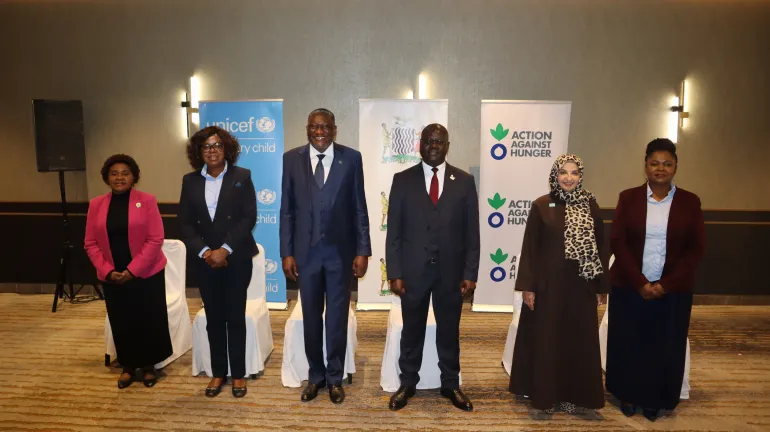
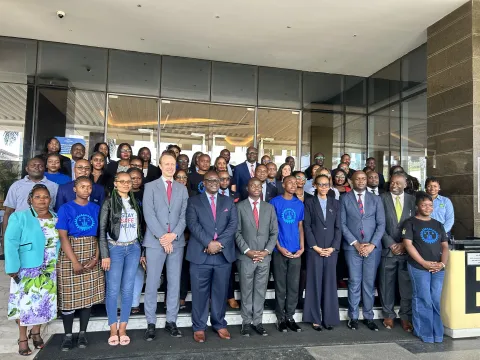
LUSAKA, Zambia, 31 July 2026 --- With breastfeeding rates declining despite years of progress, Zambia today launched World Breastfeeding Week with a renewed call for greater investment in proven interventions that help mothers breastfeed and give every child the best possible start in life.
Led by the Government of the Republic of Zambia through the Ministry of Health and the National Food and Nutrition Commission (NFNC), together with UNICEF, the World Health Organization (WHO) and Action Against Hunger, partners called for greater investment in health systems, policies and community support that enable mothers to continue breastfeeding and help children survive, grow and thrive.
Commemorated under the theme “Breastfeeding for a Sustainable Start in Life: Strengthen What Works,” this year’s campaign highlights that breastfeeding is far more than a health practice. Breastfeeding is one of the smartest investments a country can make in child survival, nutrition, learning, human capital and lifelong wellbeing.
Yet, recent evidence shows Zambia is losing ground on key breastfeeding indicators. Exclusive breastfeeding among infants under six months declined from 73 per cent in 2014 to 64 per cent in 2024, while breastfeeding within the first hour of birth fell from 76 per cent in 2018 to 68 per cent in 2024. These trends underscore the need for renewed investment and collective action to ensure mothers receive the practical help they need to breastfeed as long as recommended.
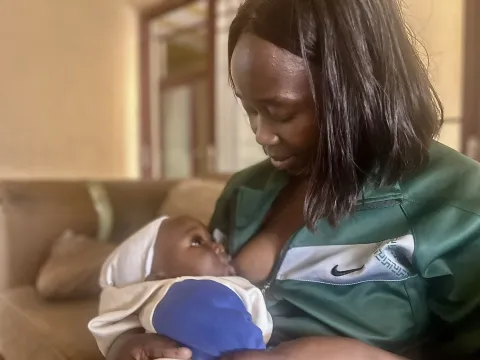
Breastmilk provides babies with the nutrients they need, protects them from common childhood illnesses and also benefits mothers’ health. When mothers are supported—from skilled counselling to Baby-Friendly health services—more children can benefit from breastfeeding. Global evidence shows that every US$1 invested generates around US$35 in economic benefits through lower healthcare costs, better educational outcomes and a more productive workforce.
“Breastfeeding is one of the greatest gifts we can give a child. But mothers cannot do it alone. Every mother deserves the information, support and enabling environment she needs to breastfeed successfully. By investing in mothers today, we are investing in healthier children, stronger families and a more prosperous Zambia,” said Dr. Saja Farooq Abdullah, UNICEF Representative on behalf of UNICEF and WHO.
The Ministry of Health acknowledged that while Zambia has made significant progress over the years, the recent decline in key breastfeeding indicators highlights the need to strengthen proven interventions across the health system and beyond.
“The decline in exclusive breastfeeding and early initiation reminds us that progress cannot be taken for granted. We must strengthen what works by investing in quality maternal and newborn services, skilled breastfeeding counselling, Baby-Friendly health facilities, and policies that enable mothers to breastfeed successfully. Together with our partners, we are committed to ensuring that every child in Zambia has the healthiest possible start in life,” said Dr. Kennedy Lishimpi, Permanent Secretary – Technical Services, Ministry of Health.
Partners emphasized that breastfeeding is a shared responsibility. Families, fathers, grandparents, health workers, employers, policymakers, communities and the media all have a role to play in creating an environment where mothers can successfully breastfeed.
“No mother should have to navigate breastfeeding challenges alone. When families, communities, employers, health workers and policymakers work together, mothers are better able to breastfeed for as long as recommended. Removing barriers and creating supportive environments will help more children benefit from breastfeeding,” said Mary Khozi, Country Director, Action Against Hunger.
World Breastfeeding Week is a reminder that breastfeeding is a shared responsibility. By removing barriers and investing in what works, Zambia can help more children survive, grow and reach their full potential.
For more information, please contact:
Twaambo Siavwapa, Head of Communications and Public Relations, Ministry of Health, [email protected]
Sarah Olympia Talon Sampieri, Chief of Advocacy & Communications (OiC), UNICEF Zambia, [email protected]
Gift Sitenge, Programme Management Officer, WHO, [email protected]
Linda Nyelechi, Programme Lead Coordinator, Action Against Hunger, [email protected]
###
Media contacts
About UNICEF
UNICEF promotes the rights and wellbeing of every child, in everything we do. Together with our partners, we work in 190 countries and territories to translate that commitment into practical action, focusing special effort on reaching the most vulnerable and excluded children, to the benefit of all children, everywhere.
For more information about UNICEF and its work for children in Zambia, visit www.unicef.org/zambia.
Follow UNICEF Zambia on Twitter, Facebook and Instagram