Where Tradition Meets Tomorrow
How HRH Chieftainess Kawaza of Katete is redefining cultural leadership to end child marriage in Eastern Zambia

KATETE District, Eastern Province, Zambia --- August 2026: At sunrise in Katete district, as the first light settles over the fields of Eastern Province, HRH Chieftainess Kawaza begins her day as generations before her have done - as a custodian of culture, a guardian of her people’s traditions, and a mother to her chiefdom. But today, her role carries another mantle: she is also a national advocate for change, serving as a United Nations (UN) Zambia Sustainable Development Goal (SDG) Supporter for Gender Equality (SDG #6).
In many communities across Zambia, tradition shapes identity. It determines rites of passage, family roles, and the rhythm of life itself. For centuries, chiefs and chieftainesses have been entrusted with preserving these customs. Yet some traditions, particularly those surrounding child marriage - have left girls vulnerable, cutting short their education and childhoods.
For Chieftainess Kawaza, the question is not whether culture matters. It is how culture can evolve.
I am a custodian of tradition, she says, her voice steady but reflective. But culture is not meant to harm our children. It is meant to guide and protect them.
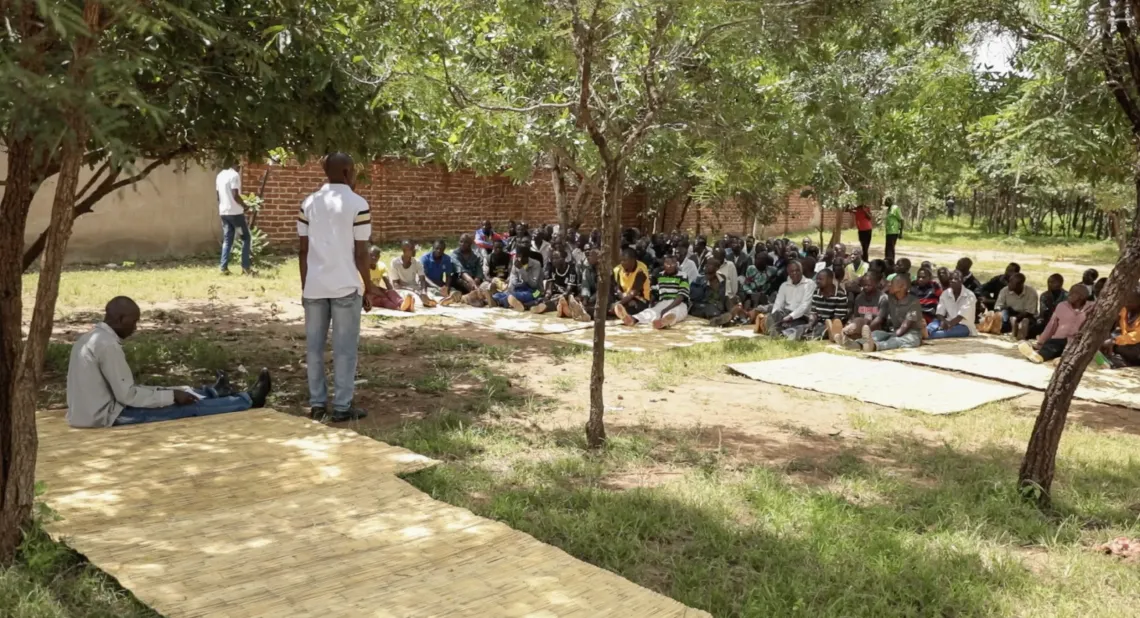
As a traditional leader in Katete, she holds authority over customary law in her chiefdom. Families seek her guidance on disputes, marriages, land matters, and community development. Her words carry weight. When she speaks, village headpersons listen. When she calls a meeting, mothers, fathers, and elders gather.
It is from this position of deep cultural legitimacy that she has chosen to confront one of the most entrenched practices affecting girls in her region: child marriage.
Eastern Province has long recorded some of the highest rates of child marriage in Zambia. Poverty, limited access to education, and long-standing social norms often converge to push families toward marrying off daughters at a young age. For some, it is seen as protection. For others, as economic survival.
Chieftainess Kawaza understands these pressures intimately. She does not approach the issue as an outsider imposing foreign ideas, but as a leader rooted in the same cultural soil.
When we speak of ending child marriage, we must also speak of opportunity. If a girl is in school, if a family sees hope in her education, they will think differently about marriage.
Her advocacy, therefore, does not begin with condemnation. It begins with conversation.
Under the leadership of HRH Chieftainess Kawaza, the community's education and child protection structures have achieved measurable progress in protecting girls from child marriage and keeping them in school. Their efforts have included:
- To date, 38 girls have been withdrawn or prevented from entering child marriages and successfully reintegrated into school.
- 658 children boys and girls are being supported to return to school through the work of the community education sub-committee.
- Increased reporting of child marriage cases through strengthened community surveillance and referral mechanisms.
- Greater collaboration between traditional leaders, schools, parents and government departments to identify girls at risk before marriages take place.
- Improved community awareness of the value of girls' education and the legal consequences of child marriage.
- Individual success stories, including girls who have completed secondary education and pursued professional careers, such as nursing, demonstrating the long-term impact of investing in girls' education.
In village gatherings, she works with headpersons to emphasize the value of keeping girls in school. She encourages parents to delay marriage and supports local by-laws that discourage unions involving minors. Through her collaboration with UN in Zambia as an SDG Supporter, she amplifies messages aligned with Sustainable Development Goal #6 - achieving gender equality and empowering all women and girls.
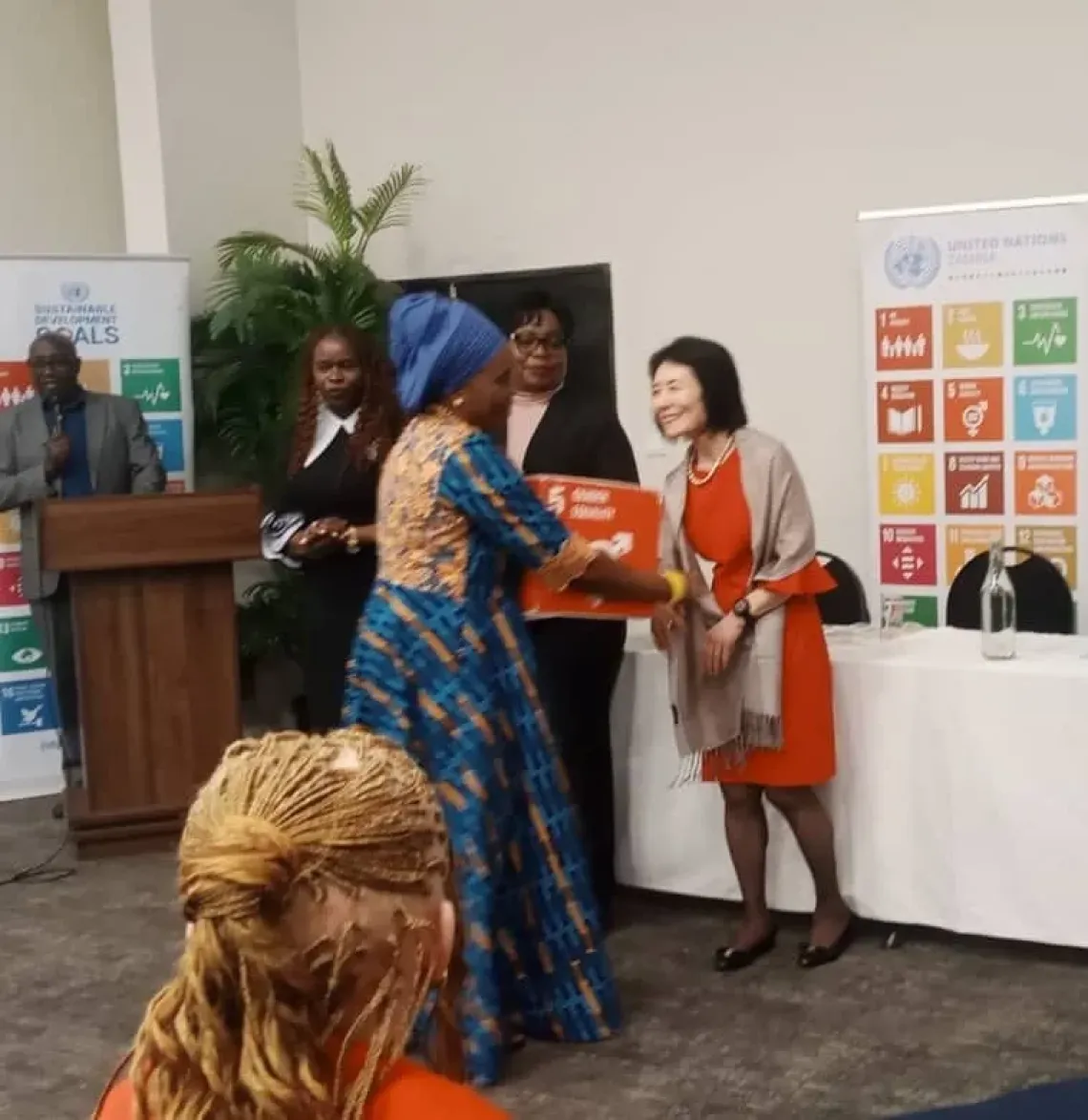
Tradition is powerful. If we use it well, it can be the very tool that protects our children.
Yet she is careful not to frame her efforts as an attack on culture. Instead, she draws from culture itself.
Traditional initiation ceremonies, once used primarily to prepare girls for marriage, are being re-examined. Under her leadership, discussions are underway about reshaping these teachings to emphasize education, health, self-respect, and future aspirations. Elders - once solely focused on preparing girls for womanhood in marital terms - are now being encouraged to include messages about leadership and rights.
Her approach reflects a delicate balance. In communities where traditional authority remains deeply respected, change imposed from outside can be met with resistance. But change led from within - by a chieftainess who embodies both continuity and transformation - carries a different legitimacy.
There are practical actions, too. Cases of child marriage brought before her court are not treated lightly. She has spoken openly about annulling marriages involving child brides and urging families to return them to school. She engages fathers directly, challenging the notion that daughters are burdens to be transferred through bride price.
Her work is not without difficulty. Some community members fear losing cultural identity. Others worry about economic realities. But Chieftainess Kawaza does not present change as abandonment. She presents it as protection.
“Our culture teaches us to value life, she says. A child must first be a child. Marriage is for those who are ready - physically, emotionally, and economically.”
In her dual role as traditional leader and UN Zambia SDG Supporter, she occupies a unique bridge between local and global worlds. International frameworks speak of rights and targets; village meetings speak of customs and community harmony. She translates between these languages, ensuring that the message resonates at home.
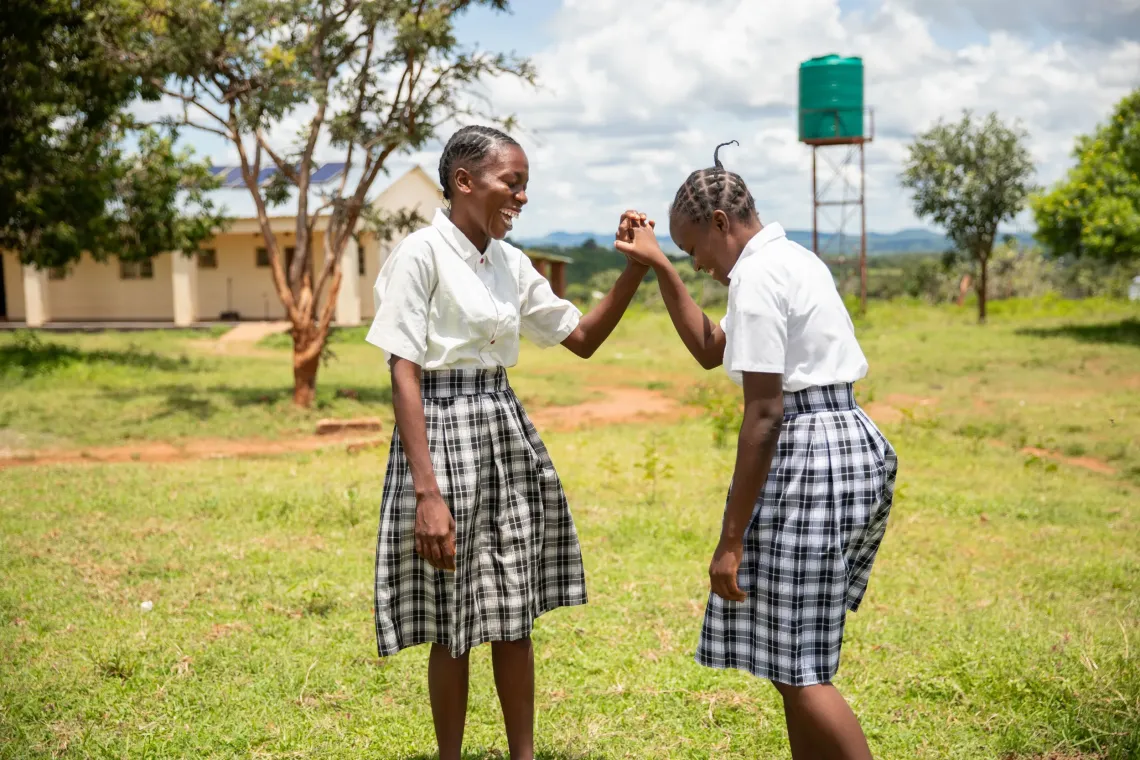
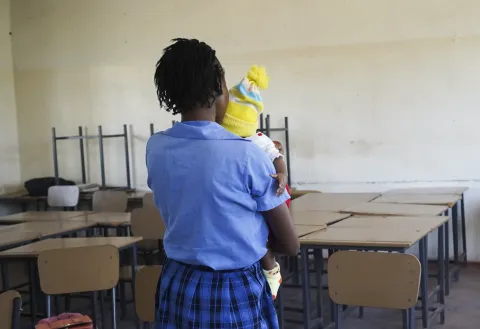
As the sun rises higher over Katete, girls in school uniforms mingle in the school yard, their laughter cutting through the morning air. For Chieftainess Kawaza, each girl carrying books instead of a baby on her back is a quiet sign of progress.
"Our greatest success is not simply stopping a child marriage. It is seeing that girl years later - educated, confident and earning a living - because someone believed she deserved a second chance,” she concludes.
Her leadership suggests a powerful truth: culture is not static. It is living, shaped by those entrusted to guard it. And in Katete district, one chieftainess is proving that tradition and children’s rights need not stand in opposition - they can walk forward together, toward a future where every girl has the chance to grow up before she becomes a bride.