Zambia Calls for Greater Investment in Water, Sanitation and Hygiene in Schools
Zambia emphasizes the importance of sustained funding to improve WASH services and support better learning conditions in schools
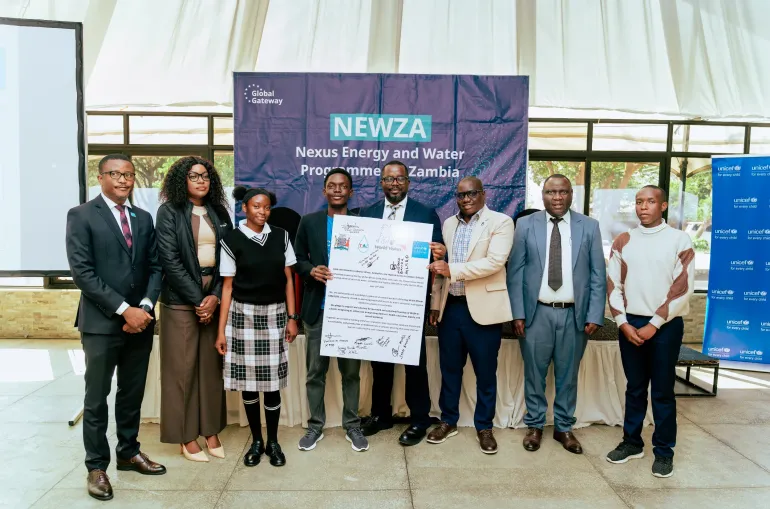
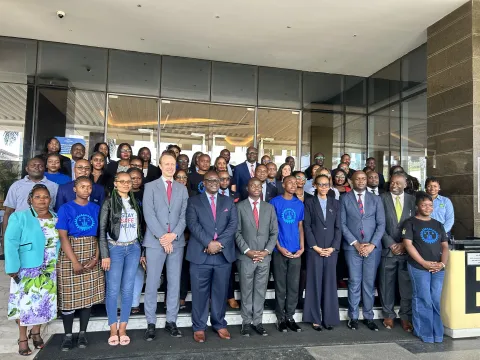
LUSAKA, Zambia,19 June 2026 – As Zambia commemorates the Day of the African Child under the theme “Ensuring Universal Access to Water, Sanitation and Hygiene for Every Child in Africa,” children and young people gathered in Lusaka for a child-led policy dialogue calling for urgent action to ensure every learner has access to safe water, adequate sanitation and hygiene in school. The dialogue brought together Government ministries, young WASH advocates, partners and stakeholders to discuss new evidence on WASH in schools and accelerate investment in safe, inclusive and climate-resilient learning environments.
The National WASH in Schools Assessment shows that only four per cent of schools in Zambia have access to basic sanitation services, while over 2.5 million learners lacking access to adequate hygiene facilities. The findings point to a clear and urgent need for dedicated financing, stronger monitoring systems, and coordinated action across sectors so that every child can learn in dignity, safety and good health.
“Access to safe water and sanitation is not only a development issue, but also a child rights issue that directly impacts human capital development. Every child deserves to grow, learn, and thrive in environments that protect their health, dignity, and future. Today’s dialogue demonstrates the importance of listening to young people and placing their voices at the centre of policymaking,” stated Mr. Bwalya Sashi, Assistant Director-Planning, from the Ministry of Water Development and Sanitation.
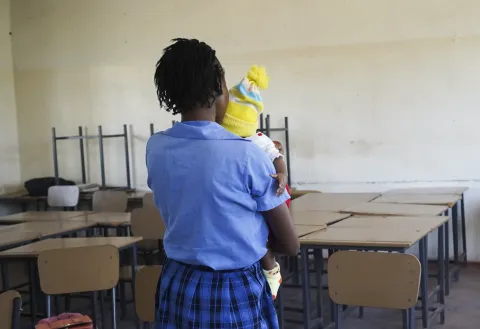
The dialogue underscored that inadequate WASH services affect children’s learning, health and dignity, with girls and children in rural areas facing particular barriers. In some communities, learners spend valuable time walking long distances to fetch water before or after school, while many girls lack the facilities and menstrual hygiene support they need to attend school regularly and confidently.
“When there is no safe water at school, we miss critical classes because we have to go and fetch water. Sometimes we just stay home,” said Felidah Tembo, a Child WASH Advocate.
“We are not just asking for change—we are part of the change. When young people are involved in decisions about water and sanitation in our schools, solutions become more realistic and sustainable, and our future is safeguarded,” added Nathan Lombe, another Child WASH Advocate.
These voices reinforced the urgency of ensuring that increased access to education is matched by investments in school infrastructure. Zambia’s free education policy has expanded opportunities for children to learn, but rising enrolment has also increased pressure on classrooms, water points, toilets and hygiene facilities.
“Expanding access to education must go hand in hand with ensuring safe, dignified and inclusive learning environments. We are committed to working across sectors to strengthen WASH services in schools, including prioritizing dedicated budget lines and accountability mechanisms, so that every learner can learn in dignity and safety,” said Mr. Maybin Luulu, from the School Health and Nutrition, Ministry of Education.
The discussion also highlighted growing pressure from climate shocks on Zambia’s water systems. The recent El Niño-induced drought has reduced water availability in many parts of the country, exposing the vulnerability of schools and communities already under strain and making investment in climate-resilient WASH systems more urgent than ever.
“We may not solve every WASH service challenge at once, but we must prioritize where impact is greatest by targeting schools, where we build the foundation for Zambia’s future human capital. In a country where over 40 percent of the population is under 15, WASH is a child issue, and children bear the greatest consequences when services fail,” highlighted Tinkhani Msonda, UNICEF Representative in Zambia.
At the close of the dialogue, young people presented a Water Assurance Pledge urging Government and partners to prioritize WASH financing, integrate dedicated WASH budget lines within the education sector, allocate resources for menstrual hygiene management, and strengthen systems to track WASH investments and service delivery in schools.
As Zambia marks the Day of the African Child, stakeholders reaffirmed a shared commitment to ensuring that no child’s education, health or dignity is compromised because of a lack of safe water, sanitation or hygiene services at school.
Note to Editors
The Day of the African Child (DAC) is commemorated annually on 16 June by the African Union and its Member States. It was established in recognition of the 1976 Soweto Uprising, during which students protested against unequal education and demanded their right to quality learning.
The 2026 DAC theme, “Ensuring Universal Access to Water, Sanitation and Hygiene for Every Child in Africa,” was adopted by the African Committee of Experts on the Rights and Welfare of the Child (ACERWC). It aligns with the African Union 2026 Theme of the Year, “Assuring Sustainable Water Availability and Safe Sanitation Systems to Achieve the Goals of Agenda 2063,” and calls for accelerated investment, political commitment, and coordinated action to ensure equitable, climate-resilient and sustainable WASH services for every child in Africa.
For more information, please contact:
Glenda Nachinga, Public Relations Officer, Ministry of Community Development and Social Services, Zambia, [email protected]
Maria Fernandez, Chief of Communications, UNICEF Zambia, [email protected]
Media contacts
About UNICEF
UNICEF promotes the rights and wellbeing of every child, in everything we do. Together with our partners, we work in 190 countries and territories to translate that commitment into practical action, focusing special effort on reaching the most vulnerable and excluded children, to the benefit of all children, everywhere.
For more information about UNICEF and its work for children in Zambia, visit www.unicef.org/zambia.
Follow UNICEF Zambia on Twitter, Facebook and Instagram