UNICEF Urges Child-Centered Climate Action Ahead of World Environment Day
In collaboration with the Ministry of Green Economy and Environment, the United Nations agency for children has presented the new Climate Landscape Analysis for Children
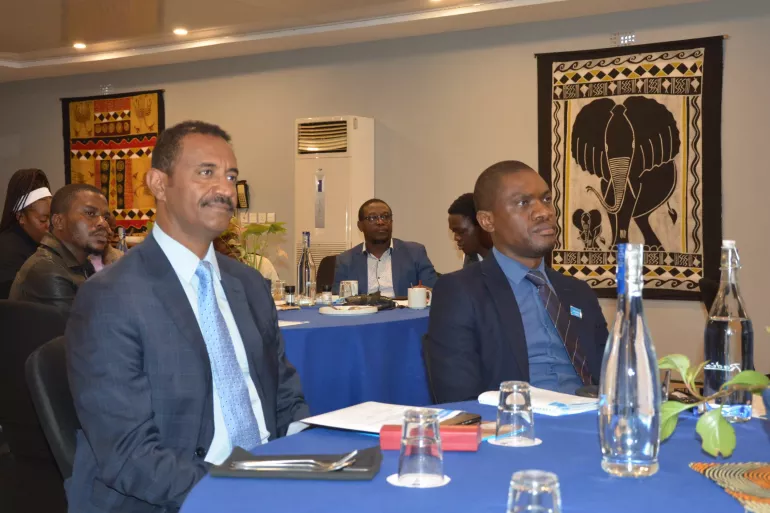
LUSAKA, Zambia, 03 June 2025 --- UNICEF Zambia today presented the Climate Landscape Analysis for Children (CLAC) report which highlights the urgent need to integrate children’s needs into Zambia’s climate policies and programming
Children are disproportionately affected by climate change due to their unique physiological and developmental characteristics, and effects on their development, health and education can be lifelong and irreversible.
Changes in weather patterns can accelerate the spread of vector borne disease causing severe death and disease in infants and young children, increase rates of food and water-borne disease that provoke excess fluid loss and drive cholera outbreaks. Rising temperatures, rainfall variability, and environmental hazards make safe water supplies more scarce, unpredictable, or polluted. The resulting loss of agricultural livelihoods and displacement constrain household food security with direct impacts on child nutrition.
“As climate shocks grow more frequent and intense, children are bearing the brunt. This report offers powerful evidence and clear, actionable steps to build a climate-resilient Zambia that puts children at the center,” said UNICEF Deputy Representative, Dr. Nejmudin Kedir Bilal.
The event, held in collaboration with the Ministry of Green Economy and Environment (MoGEE), brought together government officials, media professionals, development partners and youth to discuss how the climate crisis is impacting Zambian children and what must be done to protect their future.
“The Government of Zambia acknowledges the unique needs of children and youth and is working towards mainstreaming the distinct vulnerabilities they have and their role as key stakeholders across the United Nation Framework Convention on Climate Change (UNFCCC) agenda. We are committed to strengthening the national and sub-national government capacity to engage children and youth in planning and decision making related to climate change matters and are working with a variety of partners to equip young people with essential, practical information and skills to identify risks, and to help keep them safe in the face of climate impacts and emergencies,” said Mfumu Richard Lungu, Director Environment Department, Ministry of Green Economy and Environment.
The Climate Landscape Analysis for Children includes a concrete call to action to integrate child-sensitive approaches into Zambia’s climate policies, like the Nationally Determined Contribution (NDC) 3.0, to build resilient systems for water, sanitation, health and education. The aim is to empower children as change agents, equipping them with the knowledge and tools they need to tackle climate issues, including plastic pollution. The report also highlights the urgent need to urgently scale up climate finance and partnerships to deliver solutions that prioritize children’s needs
As the world prepares to mark World Environment Day (WED) 2025 under the theme “Ending Plastic Pollution,” UNICEF Zambia is amplifying the voices of children and young people in the fight against environmental degradation. This year’s WED theme is a global call to action to address the urgent issue of plastic pollution and its devastating impact on ecosystems, biodiversity and human health. With global commemorations being observed, the focus is on solutions that encourage individuals, communities and governments to refuse, reduce, reuse, recycle and rethink plastic use while supporting momentum towards a global plastic pollution treaty.
In line with this global advocacy drive and as part of the activities leading up to WED, UNICEF Zambia convened a two-day Content Co-Creation Workshop involving 45 adolescents and young people from diverse backgrounds. The workshop created a platform for meaningful youth engagement, where participants explored the causes and consequences of plastic pollution, discussed behavioural change and suggested policy changes, including developing creative content to raise awareness among their peers and communities.
The young participants issued a set of recommendations and a call to action, urging decision-makers to prioritize environmental education in schools, enforce plastic regulation laws, promote alternatives to single-use plastics and include youth voices in climate policy design. This call to action will be presented on 5 June during the commemoration of World Environment Day organized by the Ministry of Green Economy and Environment.
Media contacts
About UNICEF
UNICEF promotes the rights and wellbeing of every child, in everything we do. Together with our partners, we work in 190 countries and territories to translate that commitment into practical action, focusing special effort on reaching the most vulnerable and excluded children, to the benefit of all children, everywhere.
For more information about UNICEF and its work for children in Zambia, visit www.unicef.org/zambia.
Follow UNICEF Zambia on Twitter, Facebook and Instagram