Zambia prepares to act before El Niño drought and floods hit, as National Anticipatory Action dialogue opens
Government and partners come together to strengthen early action ahead of the launch of Zambia’s National Anticipatory Action Framework
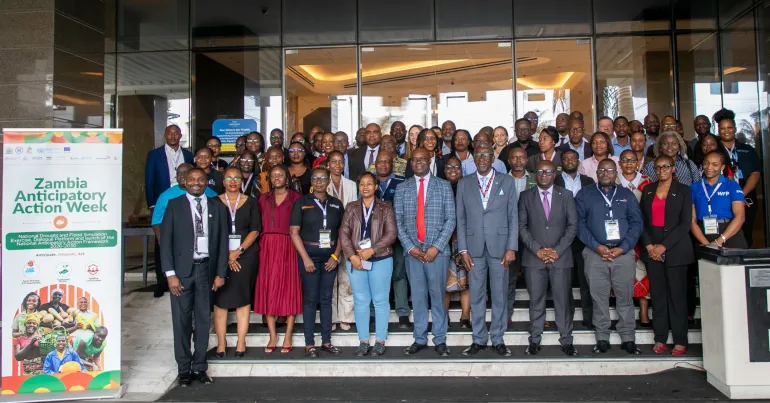
LUSAKA, Zambia, 26 November 2026 – The Government of Zambia today opened its first National Anticipatory Action Dialogue Platform, after a national simulation exercise tested how the country will act on drought and flood forecasts before disaster strikes.
Over two days, about 130 participants from the Government, the United Nations, the Red Cross Society, civil society, research institutions and cooperating partners will agree how early action is funded and delivered in the 2026/27 season, as a strong El Niño threatens southern Africa. The Dialogue Platform closes on 27 November with the launch of the National Anticipatory Action Framework 2026–2030 and Standard Operating Procedures (SOPs) by Her Honour the Vice-President.
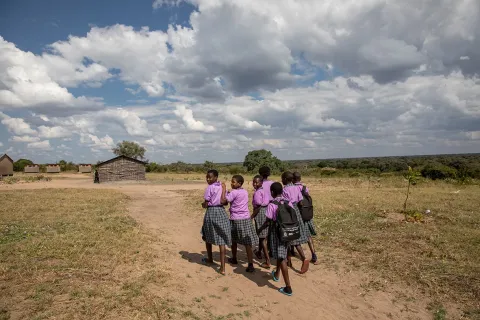
Zambia knows the cost of waiting. In 2024, an El Niño-induced drought, the worst in four decades, affected about 9.8 million people in 84 districts and left 6.6 million in need of humanitarian assistance. More than 3 million children became food insecure, and admissions for severe acute malnutrition rose by 69 per cent in a single year. This season, with a strong El Niño again forecast to bring below-normal rains to southern Zambia, around 1.2 million people are projected to face acute food insecurity. Anticipatory action means using forecasts to release funds and support before the shock hits, so families do not have to skip meals, sell livestock or take children out of school to cope.
What the exercise showed
From 23 to 25 November in Chongwe, about 80 participants from the Government, the United Nations, the Red Cross and regional partners tested Zambia’s Anticipatory Action Framework against simulated drought and flood scenarios. The exercise showed that the foundations for early action are in place, while identifying practical improvements needed to strengthen coordination and turn forecasts into timely action for communities.
Opening the Dialogue
Officially opening the Dialogue Platform on the 26 of November in Lusaka, Norman Chipakupaku, National Coordinator at the Disaster Risk Management Division (DRMD), called for anticipatory action to become a whole-of-society approach, with Government, partners and communities sharing responsibility for acting before crises hit.
“Anticipatory action represents a fundamental shift in how we manage risk: moving from reacting to disasters to anticipating and acting before hazards strike,” said Chipakupaku. “As we prepare for El Niño, anticipatory action must be treated not only as humanitarian action, but as an investment in Zambia’s development and productivity. Acting early protects lives and livelihoods, while allowing scarce public resources to be used more effectively.”
With climate-related shocks increasingly affecting livelihoods and development gains, Norman Chipakupaku called for preparedness to become a permanent feature of government planning and for partners to work together around a common call to action: “Anticipate. Integrate. Act.”
A regional effort
The Framework is designed to link to the Southern African Development Community (SADC) Multi-Hazard Regional Anticipatory Action Framework. The SADC Secretariat and the Regional Anticipatory Action Working Group supported both the exercise and the Dialogue Platform, and Zambia's lessons will be shared with other Member States.
FAO, as lead agency of a consortium with IFRC, IOM, UNICEF and WFP supported DRMD in designing and running the exercise, together with the Zambia Red Cross Society and the NAATWG. The consortium's support is funded by the Directorate-General for European Civil Protection and Humanitarian Aid Operations (DG ECHO). WHO also provided financial support for the simulation exercise, with funding from Irish Aid as part of efforts to strengthen health security and multisectoral coordination in the face of climate-related risks.
Next: the launch
The Dialogue Platform continues on Friday 27th November, when participants are expected to adopt the Lusaka Statement on Anticipatory Action and record commitments for the first year of the Roadmap. It closes with the official launch of the National Anticipatory Action Framework 2026–2030, its Standard Operating Procedures and the Roadmap by Her Honour the Vice-President, Mrs Mutale W. K. Nalumango, under the theme "Anticipate. Integrate. Act."
With the expected dry spells and rains approaching, the task is to make the system work before the next forecast arrives. DRMD has called on Government institutions, provinces, districts and partners to treat anticipatory action as a shared responsibility, and to align their plans and funding with the National Framework, so that support reaches communities before drought or floods strike. The message is clear: Anticipate the risk. Integrate early action into plans and financing. Act before disaster strikes.
Note to Editors:
About EU Civil Protection and Humanitarian Aid: The European Union and its Member States are among the world's leading donors of humanitarian aid. Relief assistance is an expression of European solidarity with people in need all around the world. It aims to save lives, prevent and alleviate human suffering, and safeguard the integrity and human dignity of populations affected by disasters and human-induced crises. Through the Directorate General for European Civil Protection and Humanitarian Aid Operations of the European Commission, the European Union helps millions of victims of conflict and disasters every year. With headquarters in Brussels and a global network of field offices, the EU provides assistance to the most vulnerable people on the basis of humanitarian needs.
About the Anticipatory Action Consortium: The Anticipatory Action Consortium brings together FAO, IFRC, IOM, UNICEF and WFP to support the Government of Zambia, through the Disaster Risk Management Department (DRMD) in the Office of the Vice President, in strengthening anticipatory action, with funding from the European Union's Humanitarian Aid (DG ECHO).
About Anticipatory Action: Anticipatory action uses forecasts and early warnings to trigger pre-agreed financing and actions ahead of a climate hazard, such as a drought or flood, to prevent them from becoming humanitarian crises and to protect lives, livelihoods and essential services.
Media contacts:
DRMD: Mathews Musukwa | Senior Communications Officer, Disaster Risk Management Division, Office of the Vice-President | [email protected]
UN: Mark Maseko | National Information Officer, United Nations Information Centre (UNIC) | [email protected]
FAO, on behalf of UN partners: Mukaba Mukaba | Communication Specialist, FAO | [email protected]
Media contacts
About UNICEF
UNICEF promotes the rights and wellbeing of every child, in everything we do. Together with our partners, we work in 190 countries and territories to translate that commitment into practical action, focusing special effort on reaching the most vulnerable and excluded children, to the benefit of all children, everywhere.
For more information about UNICEF and its work for children in Zambia, visit www.unicef.org/zambia.
Follow UNICEF Zambia on Twitter, Facebook and Instagram