Zambia launches National Anticipatory Action Framework 2026–2030 to strengthen preparedness for droughts and floods
Government and partners commit to turning early warnings into coordinated action and financing before disasters strike
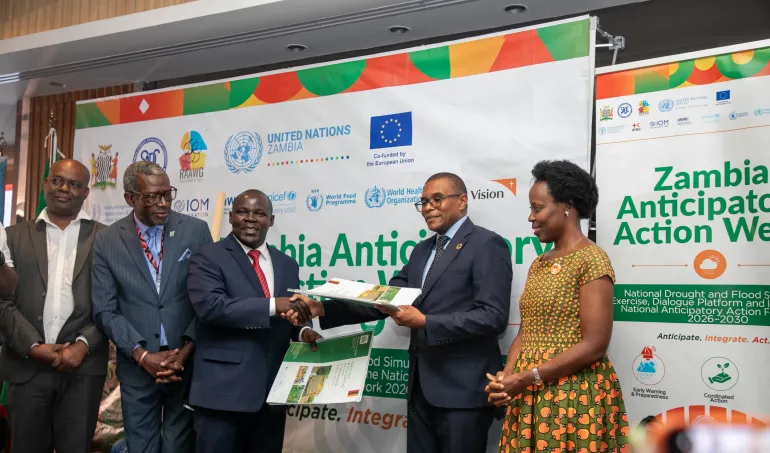
LUSAKA, Zambia, 27 November 2026 – The Government of the Republic of Zambia has launched the National Anticipatory Action Framework 2026–2030, marking an important shift from responding to disasters after they occur to acting before predictable hazards strike.
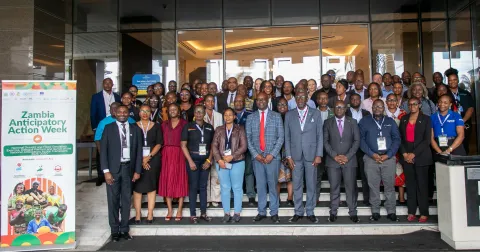
The Framework was officially launched by the Honourable Minister of Green Economy and Environment, Honorable Dr. Gilbert Siame, MP, on behalf of the Vice-President of Zambia, Dr. W.K. Mutale Nalumango, MP. The launch brought together Government institutions, United Nations agencies, the Red Cross and Red Crescent Movement, civil society organisations, research institutions, academia, and cooperating partners.
The Framework translates forecasts and early warnings into timely, pre-agreed action and financing, particularly ahead of droughts and floods. It is supported by Standard Operating Procedures and an Implementation Roadmap that define responsibilities and guide implementation from 2026 to 2030.
The National Anticipatory Action Working Group supported the development process, with guidance from the Southern African Development Community Secretariat and the Regional Anticipatory Action Working Group.
Technical and financial support was provided by the United Nations and partners, including the International Federation of Red Cross and Red Crescent Societies (IFRC), with key activities funded by the European Union through its Directorate-General for European Civil Protection and Humanitarian Aid Operations (DG ECHO)
Turning early warning into early action
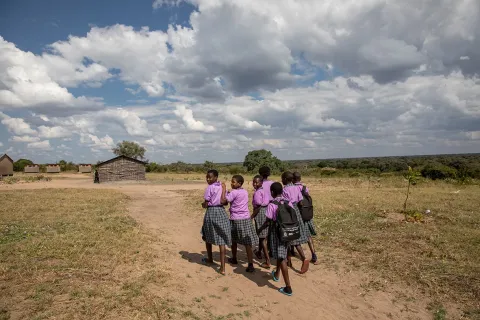
Zambia remains highly exposed to climate-related hazards that threaten lives, livelihoods, food security, essential services and national development. The 2023/2024 El Niño-induced drought affected approximately 9.8 million people across 84 districts, with 6.6 million people requiring humanitarian assistance, and 5.8 million people requiring food assistance.
The Framework establishes common processes for monitoring forecasts, identifying triggers, activating early actions and mobilising resources before a hazard becomes a humanitarian crisis. It also strengthens coordination across humanitarian players in disaster management, agriculture, water, health, social protection, meteorology and other key sectors.
“Our responsibility is to coordinate, but anticipatory action is not the responsibility of one institution. Its success will depend on the commitment of Government and all stakeholders. We recognise the financial contribution of partners, including DG ECHO, and the important regional guidance that supported this process,” said Norman Chipakupaku, National Coordinator, Disaster Risk Management Division.
Protecting development gains
The Framework is intended not only to reduce humanitarian impacts, but also to protect Zambia’s development gains. Acting before droughts and floods can help prevent crop losses, protect household assets, reduce health risks and food insecurity, and limit wider economic damage.
“With this Framework, we are launching a new way of preparing and responding to disasters. Anticipatory action is a critical development imperative. When we act ahead of hazards, we protect crops before they fail, preserve households and enable communities to continue contributing to development. Early action saves lives and money,” said the Minister.
A shared commitment to implementation
The launch builds on a National Anticipatory Action Simulation Exercise held from 23 to 25 November 2026 in Chongwe. Around 80 participants from Government institutions, the United Nations, the Red Cross, regional partners and Civil Society Organizations tested the Framework against simulated drought and flood scenarios, identifying practical gaps in coordination, decision-making and the activation of early action.
The National Anticipatory Action Dialogue Platform then brought stakeholders together to review these findings, agree on priorities and strengthen commitments to put the Framework into action.
“Delivering as one, the United Nations remains committed to supporting the Government and partners to turn anticipatory action into concrete results. Ultimately, success will be measured not only by how effectively we respond when disaster strike, but by how much loss and suffering we prevent through timely action,” said James Wakiaga, UN Resident Coordinator in Zambia a.i.
Implementation will be coordinated by the Disaster Risk Management Division under the Office of the Vice-President, working with Government institutions, provincial and district administrations, humanitarian and development partners, civil society, research institutions, academia and communities.
Putting the Framework into practice will require Government institutions and partners to align plans and resources, strengthen national financing, and ensure early warnings reach communities in time and in ways people can understand and act upon.
Note to Editors
About EU Civil Protection and Humanitarian Aid: The European Union and its Member States are among the world’s leading donors of humanitarian aid. Through the European Commission’s Directorate-General for European Civil Protection and Humanitarian Aid Operations, the EU supports people affected by disasters and human-induced crises based on humanitarian needs.
About the Anticipatory Action Consortium: The Consortium brings together FAO, IFRC, IOM, UNICEF, WFP, World Vision, and IWMI to support the Government of Zambia, through the Disaster Risk Management Division in the Office of the Vice-President, to strengthen anticipatory action, with funding from the European Union’s Humanitarian Aid programme (DG ECHO).
About anticipatory action: Anticipatory action uses forecasts and early warnings to trigger pre-agreed financing and actions before a climate hazard, such as a drought or flood, causes its most severe impacts. It aims to protect lives, livelihoods and essential services and prevent hazards from escalating into humanitarian crises.
Media contacts
DRMD: Mathews Musukwa | Senior Communications Officer, Disaster Risk Management Division, Office of the Vice-President | [email protected]
UN: Mark Maseko | National Information Officer, United Nations Information Centre (UNIC) | [email protected]
FAO, on behalf of UN partners: Mukaba Mukaba | Communication Specialist, FAO | [email protected]
Media contacts
About UNICEF
UNICEF promotes the rights and wellbeing of every child, in everything we do. Together with our partners, we work in 190 countries and territories to translate that commitment into practical action, focusing special effort on reaching the most vulnerable and excluded children, to the benefit of all children, everywhere.
For more information about UNICEF and its work for children in Zambia, visit www.unicef.org/zambia.
Follow UNICEF Zambia on Twitter, Facebook and Instagram