

Education
In Zambia, we support the provision of quality education
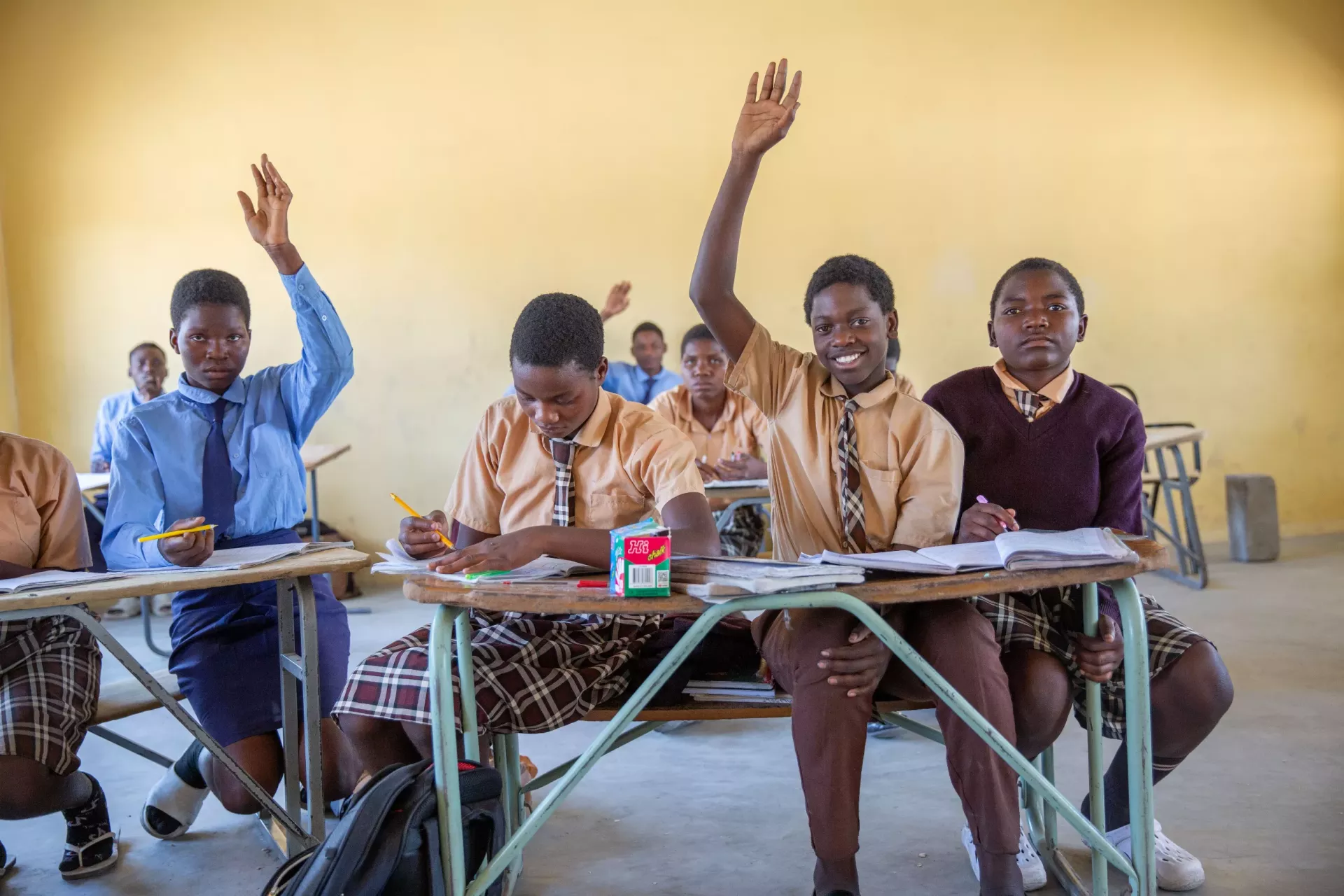
The challenge
Over the past six years, Zambia's Education-For-All Policy has revolutionized access to education, providing free schooling for children across the country. Launched at the primary level in 2018 and expanded to early childhood education (ECE) and secondary schools in 2021, this initiative reflects President Hakainde Hichilema’s dedication to enhancing educational practices and policies that empower Zambian children to reach their full potential. His commitment was recognized at the ADEA Conference in October 2023, where he was nominated as a Champion of Foundational Learning. These pivotal reforms aim to dismantle barriers to education and ensure every child’s right to learn.
Despite these advancements, numerous challenges remain in the Zambian education system. Early childhood education access is critically low, with fewer than 35% of children entering Grade 1 having experienced formal pre-primary education. Consequently, many children experience delayed entry into primary school. The education sector contends with years of underinvestment, particularly in ECE, which is the most under-resourced area. Moreover, per capita spending for children aged 0-6 is five times lower than for older youth. Quality early learning is further hindered by a shortage of qualified teachers, high teacher-pupil ratios, insufficient infrastructure, and inadequate teaching materials.
Quality of education remains a pressing issue. Overall, learners struggle to meet the minimum pass mark of 40%. In Grade 2, only 4% of students achieve the government's minimum reading proficiency, a decline from 8%. For Grade 5 learners, mean scores are 34.97% in English and 31.07% in Mathematics, with only 8.7% and 5.4% respectively reaching desired proficiency levels. Transition rates from primary to secondary school are alarmingly low at just 63%, primarily due to a lack of available spaces for graduates. Only 46.8% of secondary students progress to tertiary education, exacerbated by the barriers faced by girls, including early marriages, teenage pregnancies, and limited access to sexual and reproductive health information.
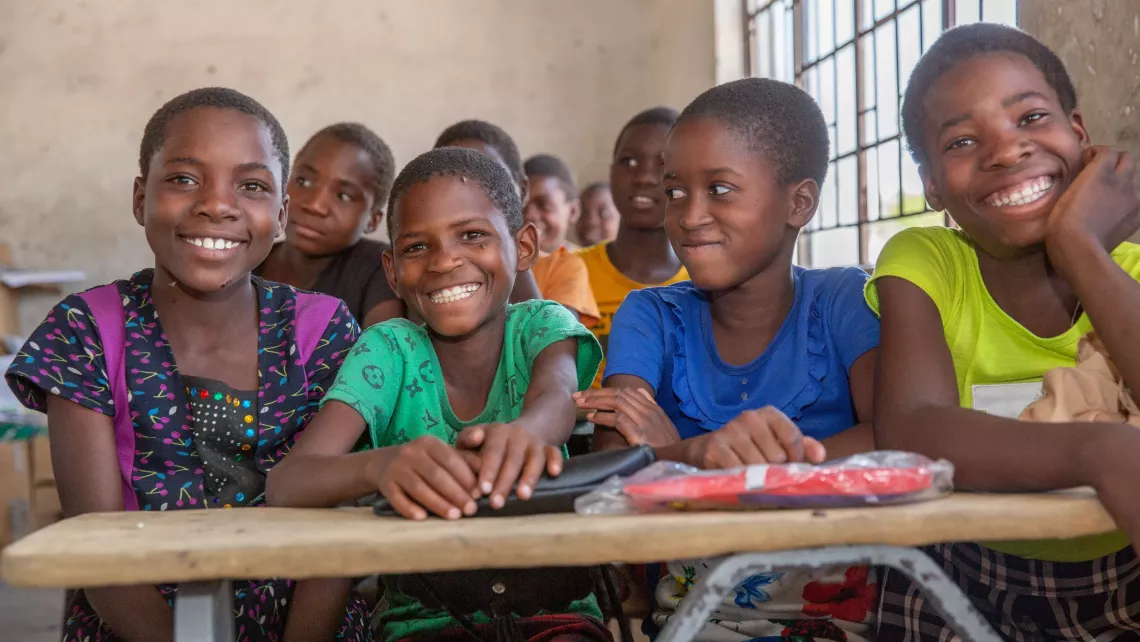
Violence in schools further disrupts learning; 63% of students report being bullied, and 97% have experienced corporal punishment. Such an environment negatively impacts academic performance and increases dropout rates. Additionally, overcrowded classrooms, a lack of textbooks, and limited access to digital learning resources hinder the transition from secondary to tertiary education. This digital divide disproportionately affects girls, children with disabilities, and out-of-school youth, perpetuating cycles of disadvantage and limiting access to vital skills necessary for future employment.
Zambia is on a path to improve education for all, but urgent action is needed to address these challenges and ensure that every child can succeed.
Education in numbers
- 11.2 per cent ECE enrolment
- 81.80 per cent Net primary school enrolment
- 1.03 Gender Parity Index (GPI) at primary school
- 0.94 Gender Parity Index (GPI) at secondary school
- 63.00 per cent transition rate to secondary school
- 1.07 Pupil-book ratio at primary
- 41.5 Pupil-classroom ratio at primary
- 56.5 Pupil teacher ratio at primary
The solution
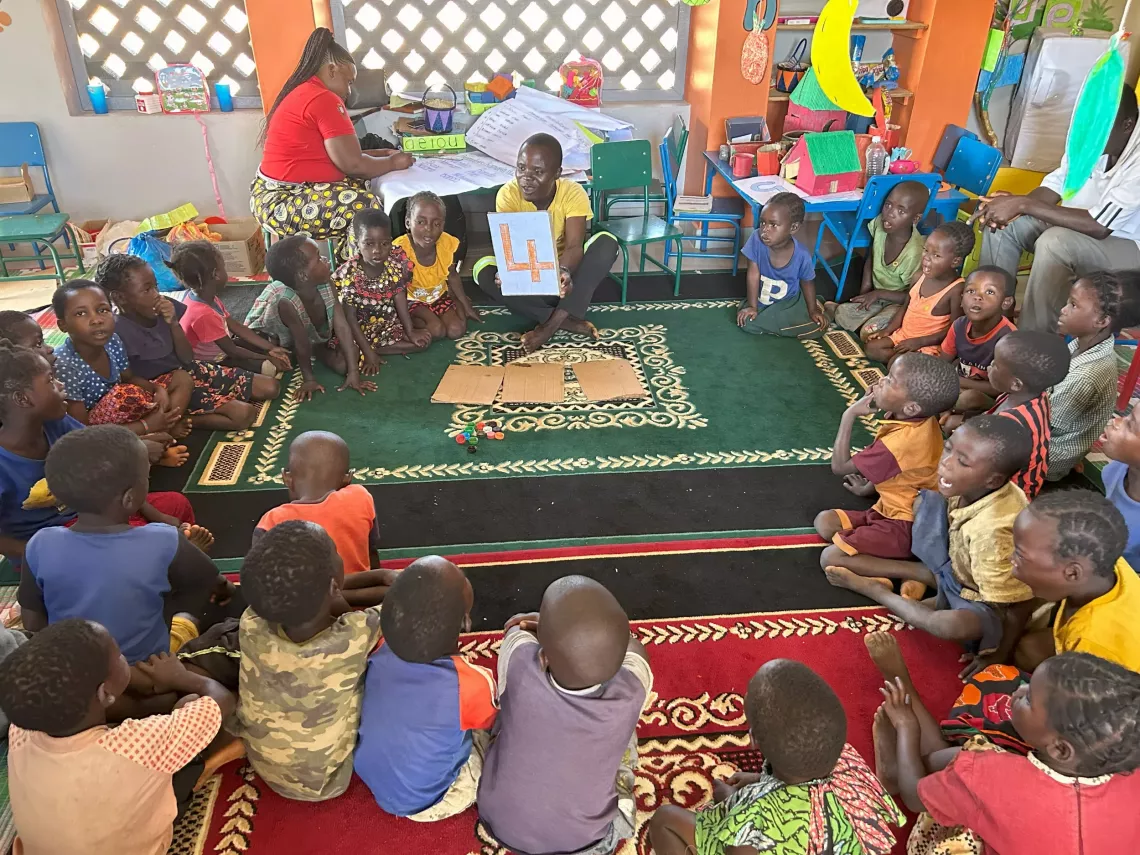
In the early years, 0-8, UNICEF Zambia’s early childhood development and education aim to build the foundation for lifelong learning by supporting optimal development across multiple sectors. Partnering with ministries such as Education, Health, and Community Development and Social Services, we implement a holistic approach anchored in the Nurturing Care Framework. Our focus is on:
- Good Health
- Adequate Nutrition: Ensuring good health and adequate nutrition.
- Security and Safety: Creating a safe, secure environment for children.
- Responsive Caregiving: Encouraging nurturing relationships.
- Opportunities for Early Learning Opportunities: Supporting developmental milestones.
Through technical assistance, we collaborate with the Ministry of Education to develop high-quality early childhood education (ECE) materials, quality assurance and assessment tools.
At the primary level, our program enhances foundational learning for grades 3 to 5 through targeted remedial initiatives, helping learners acquire essential literacy and numeracy skills. We bolster teacher training systems and improve data management to support informed policy-making and foster community engagement.
In secondary education, we prioritize keeping girls in school, recognizing the significant benefits of continued education. Building on the Girls2030 initiative, we strengthen connections between education, child protection, and health, while providing life skills, career guidance, and access to digital learning resources through the Learning Passport Zambia. Additionally, we enhance educators' skills in blended learning to better integrate technology into the classroom.
In response to emergencies, UNICEF plays a vital role in strengthening Zambia's education system against crises like natural disasters and health emergencies. As Co-Chair of the Ministry of Education's Education Cluster Group, we lead efforts in emergency preparedness and response, providing technical support for developing response plans and facilitating coordination among partners. Our commitment focuses on building a resilient education system that effectively tackles challenges and ensures sustained learning for all children.
Resources
Early Childhood Development Budget Brief 2023
Data Must Speak: Zambia Positive deviance report and project briefs (2024)
Language of Instruction (LOI) Research in Zambian Primary Schools (2024)
Final Evaluation of Catch-Up Programme 2022
2021 National Assessment Survey
Zambia Skills Landscape Analysis (2022)
UNICEF Digital Learning Landscape Analysis - Final Report