Eating better, growing stronger after the typhoons
After floods disrupted food, safe water and livelihoods in Viet Nam’s Central Highlands, UNICEF-supported nutrition services and cash assistance are helping families care for children recovering from malnutrition.

- English
- Tiếng Việt
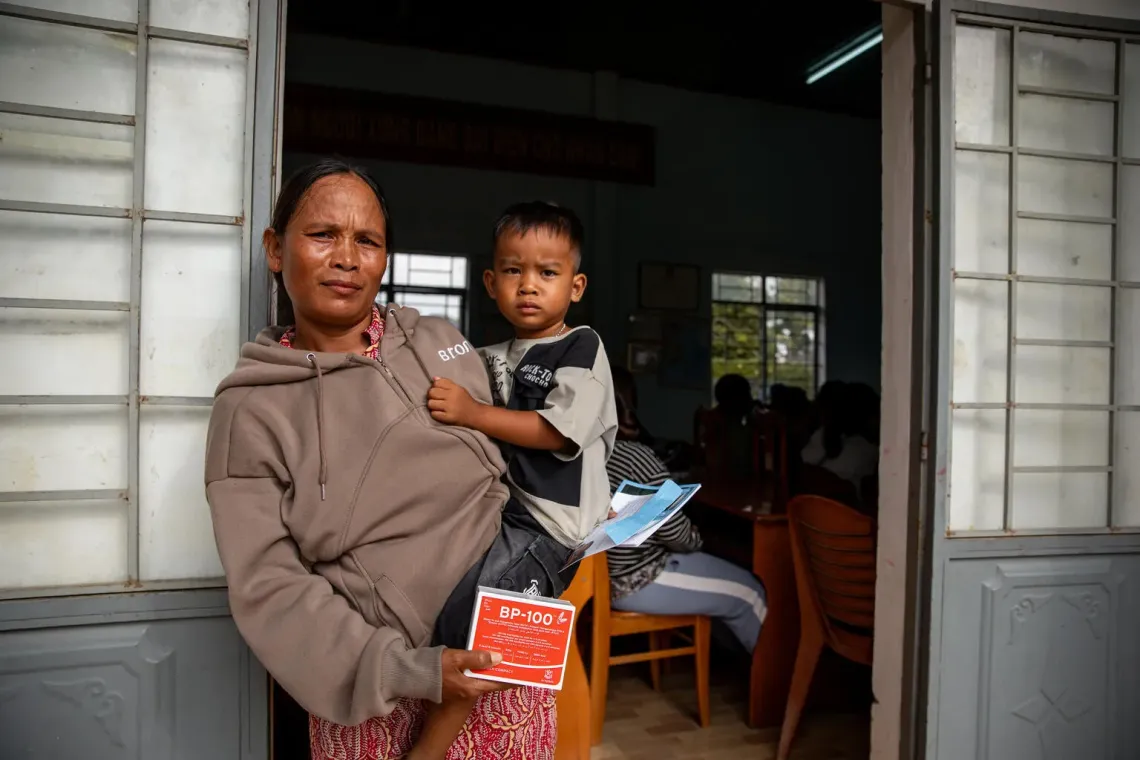
It is easy to know when H’Núi is in the room. At three years old, she has a contagious laugh and a bright presence that seems to tug smiles from even the most serious faces.
Núi means “mountain” in Vietnamese - a name given to her because she was born while her mother was living high in the mountains for farm work. From the beginning, with the steady support of her family, her village midwife and local health workers, H’Núi has been growing up surrounded by care, even when life has not always been easy.
“Since birth, she has gotten sick frequently. We made many visits to health centres and hospitals,” her mother, H’Bu, recalls. “She’s also a picky eater.”
Those worries grew when H’Núi was diagnosed with moderate stunting and moderate underweight, with her height and weight falling below World Health Organization growth standards for children her age. Without timely support, she could be at risk of acute malnutrition.
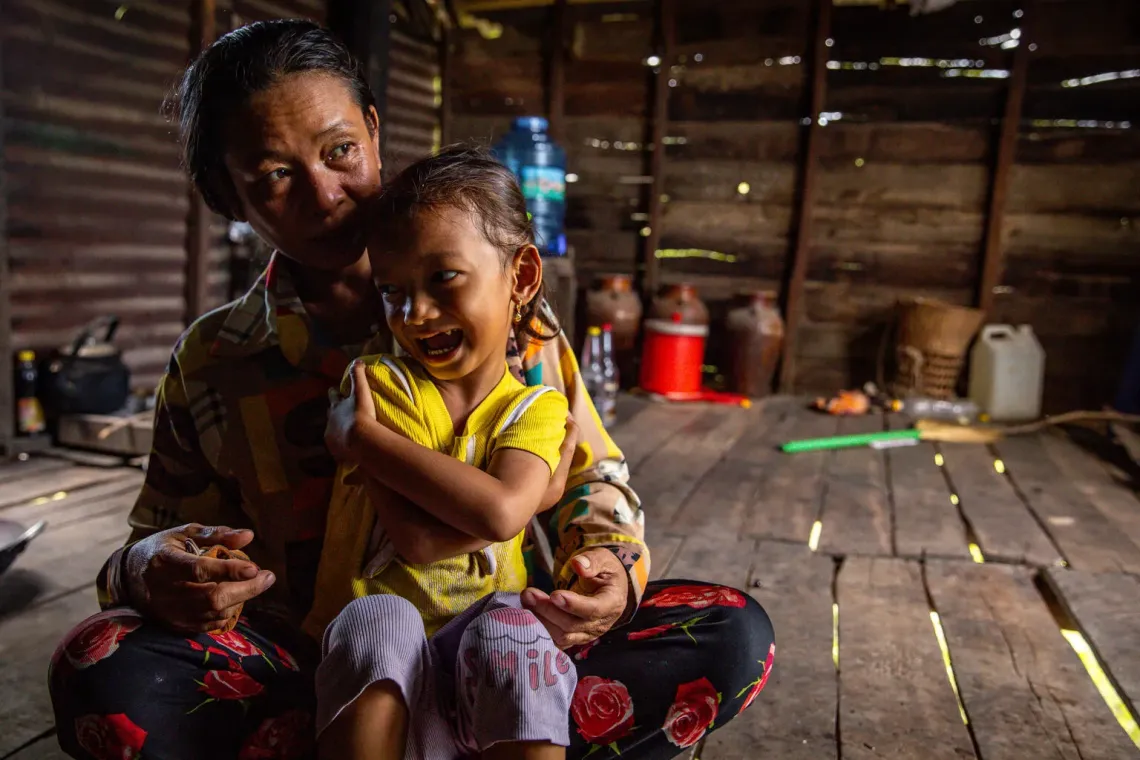
For H’Núi’s family, keeping her well-nourished has become a greater challenge since last year’s typhoons and floods hit Ia Tul commune, Gia Lai province. When the floods came, the family had to evacuate. For several days, they had little to eat and mainly relied on whatever basic food was available, with limited nutritional value.
The impact was still felt in the months that followed. Like many other J’rai families in Ia Tul commune, H’Núi’s family farm, renting a small plot of land to grow crops, while her father takes odd jobs nearby whenever work is available. With fields still recovering from the floods, putting nutritious food on the table has been difficult.
To ease some of that pressure, H’Núi’s family received support through UNICEF’s emergency Nutrition Cash Plus programme. Delivered in partnership with local authorities and Viet Nam Post, the programme supports more than 700 households with children under five who experience acute malnutrition or severe stunting in disaster-affected areas in Gia Lai provinces. Through the programme, the family received nutrition supplements and nutrition counselling from health workers, along with unconditional cash transfers to help buy food and other essentials.
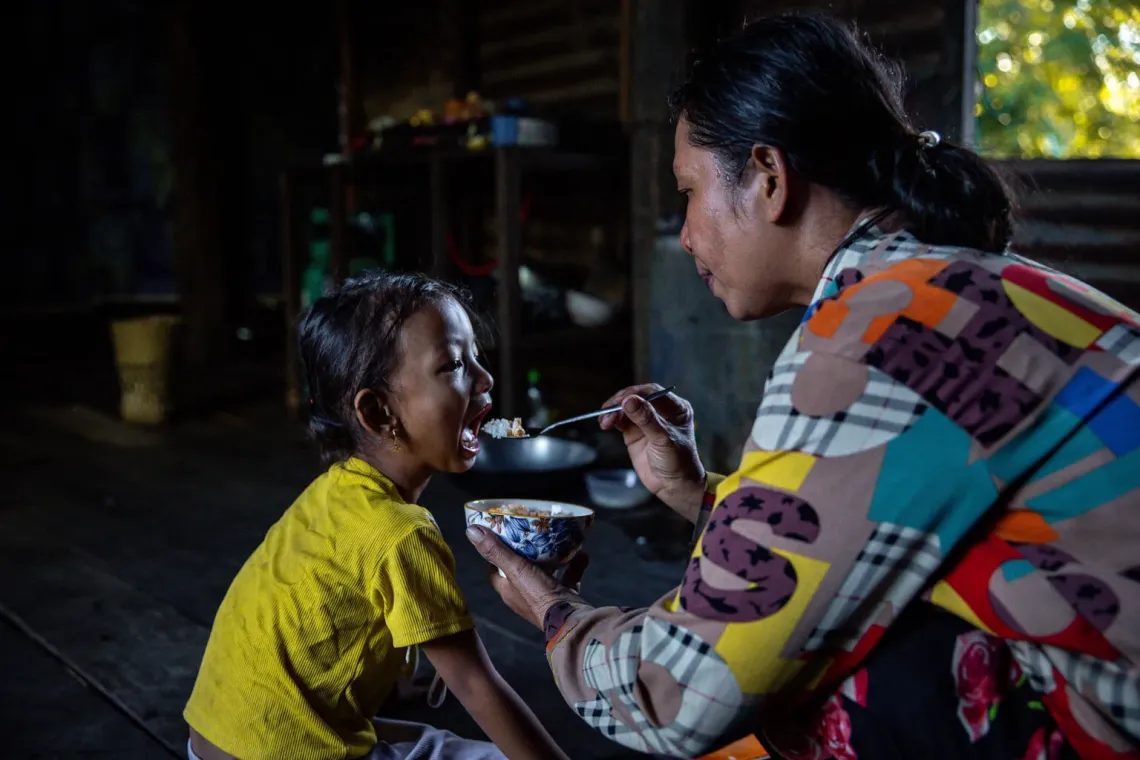
“Since H’Núi started using the supplement, she has been able to eat more,” H’Bu said. “We also used the cash to buy eggs from the local grocer. It’s her most favourite food.”
H’Núi’s family was not alone. For three-year-old Phong, the support marked a turning point. Even before the floods, his grandmother H’Nhót often worried about his poor appetite. When the floods came, the family’s crop was damaged and their well was flooded, leaving them with less food and no safe water at home.
“For several days, we had to drink rainwater to get by,” says H’Nhót.
With UNICEF’s support, Phong’s family received cash assistance to help meet immediate needs, while health workers continued to monitor his nutrition status. After being diagnosed with severe acute malnutrition, Phong also received ready-to-use therapeutic food (RUTF) - the recommended treatment for children with severe acute malnutrition who can be safely cared for at home with regular support from health workers. He took it three times a day.
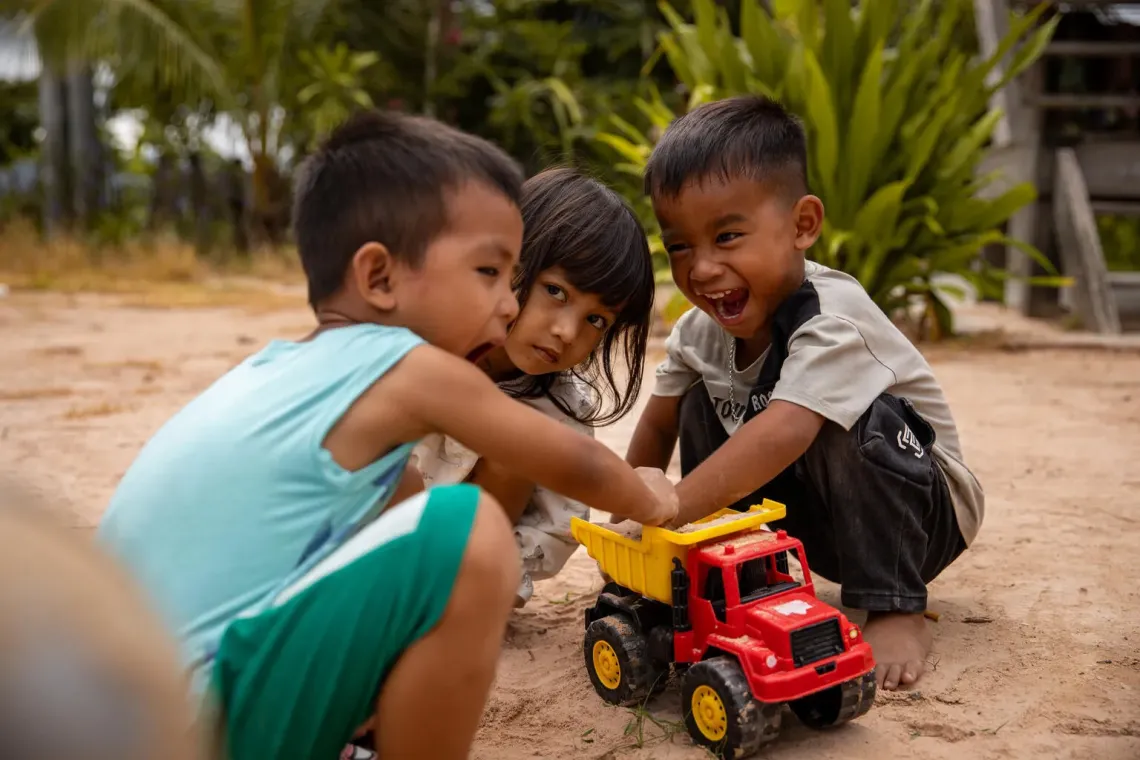
Three months later, Phong has recovered. His appetite has improved, and he now has enough energy to run and play with his cousins.
Stories like Phong’s offer hope, but recovery does not end there. Children who recover from acute malnutrition need continued monitoring, timely follow-up and support to prevent relapse, especially in communities repeatedly affected by climate shocks.
This is why strengthening local health systems is central to UNICEF’s response. Beyond providing timely support to affected children, UNICEF works with local partners to ensure that essential nutrition services available before, during and after emergencies. These services include regular nutrition screening, early identification of malnutrition, counselling, referral and appropriate care for children who need it. With this support in place, children affected by malnutrition have a better chance not only to recover, but to stay healthy and keep growing.
As another storm season nears, H’Bu thinks about what it will take to support H’Núi through the months ahead. At home, she finds hope in the small signs of progress she sees each day: her daughter eating more, playing peek-a-boo, and climbing wherever her small feet can take her.
H’Núi’s path to recovery has just begun, but these everyday moments offer a glimpse of a healthier future. “I just hope she doesn’t get sick as often and can do well in school one day,” H’Bu says.