“I have never missed a vaccination appointment”
As extreme weather disrupts access to healthcare, mobile vaccination teams bring lifesaving vaccines closer to families in Chư Gu village.

- English
- Tiếng Việt
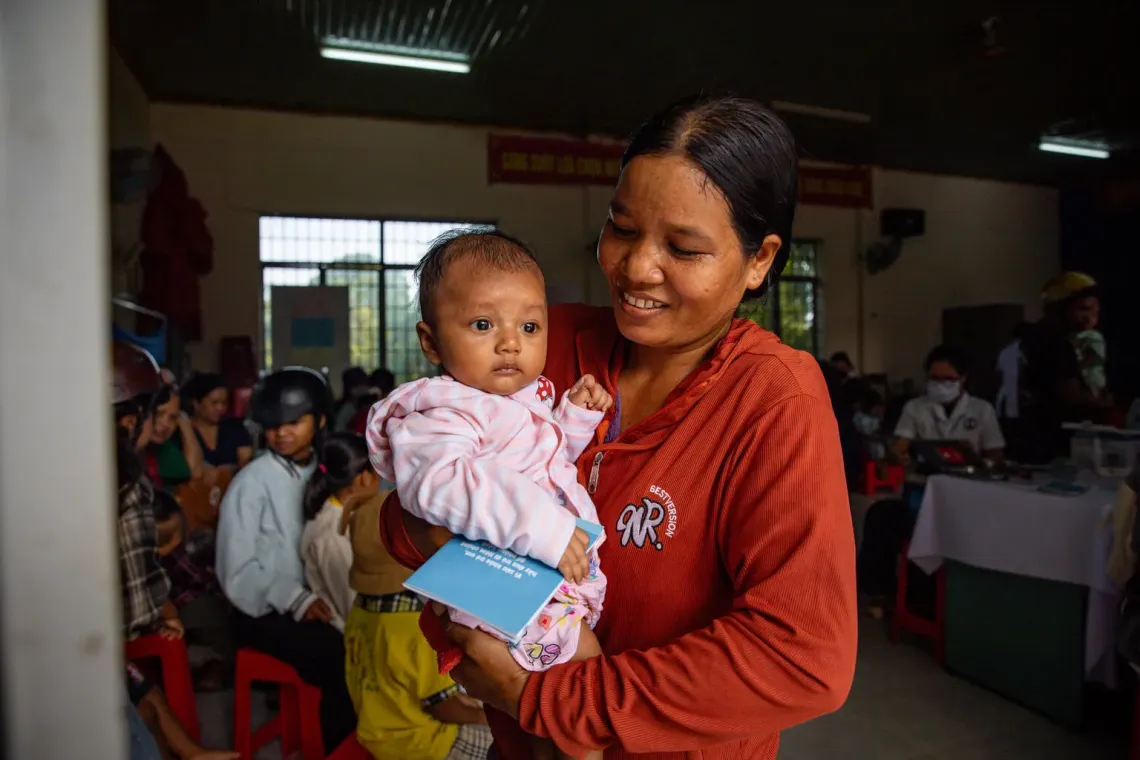
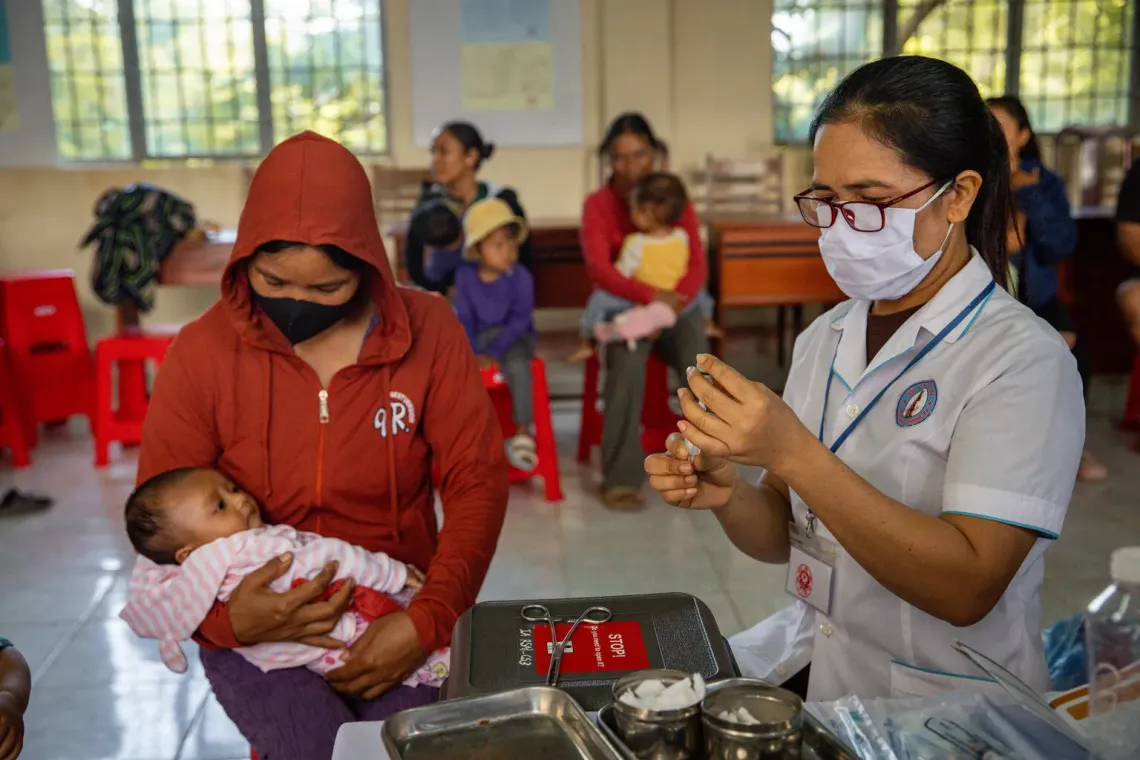
By 7 AM, the cultural center in Chư Gu village is already filled with chatter and movement. Memories of the worst flooding in nearly 20 years are still fresh in people’s minds, but this morning, the mood is light. The center has been turned into a mobile vaccination site, and families are arriving one after another with children in their arms, waiting for their turn.
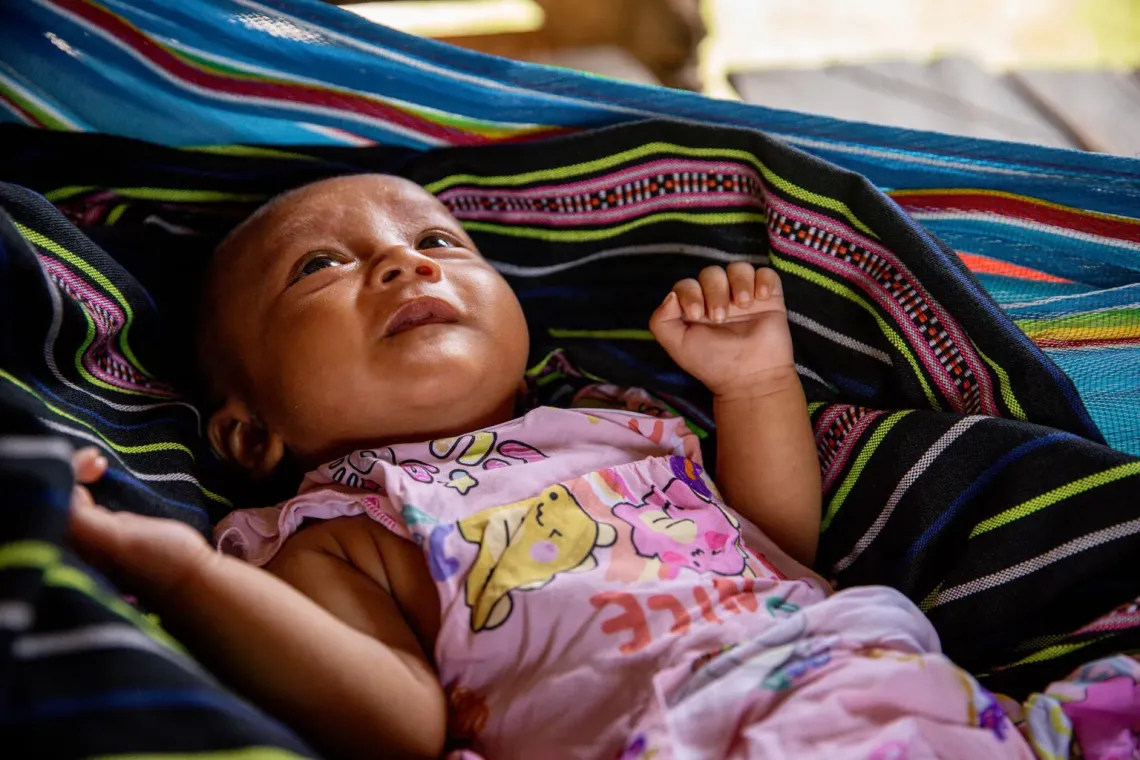
Among them is H’Đông, a J’rai mother holding her youngest daughter, three-month-old H’Châm.
“I’m just waiting for the date so I can bring my child in,” she says as her daughter receives the rotavirus vaccine, which helps protect infants from severe diarrhoea and dehydration.
Before vaccination day, village health workers visit households to remind families and answer questions, helping make sure children do not miss essential care.
H’Đông, however, does not need much convincing. After three difficult births, she has learned to be especially careful with her children’s health. Since then, she has made sure each child receives their vaccinations on schedule.
“I have never missed a vaccination appointment,” she says. “I don’t want my children to get sick.”
So she finds a way. On the days when vaccination takes place at the commune health center a few kilometers away, H’Đông has to ask another mother in the village for a ride because she does not ride a motorbike - the most common means of transport in Viet Nam. With her baby in her arms, they make the trip together.
“It’s more fun going together,” she says with a smile.
When vaccination services come to the village, the journey is shorter. H’Đông does not need to find a ride, leave home for as long, or worry as much about weather and distance. For families whose children have fallen behind on vaccinations, mobile sessions also give them a chance to catch up and stay protected from disease.
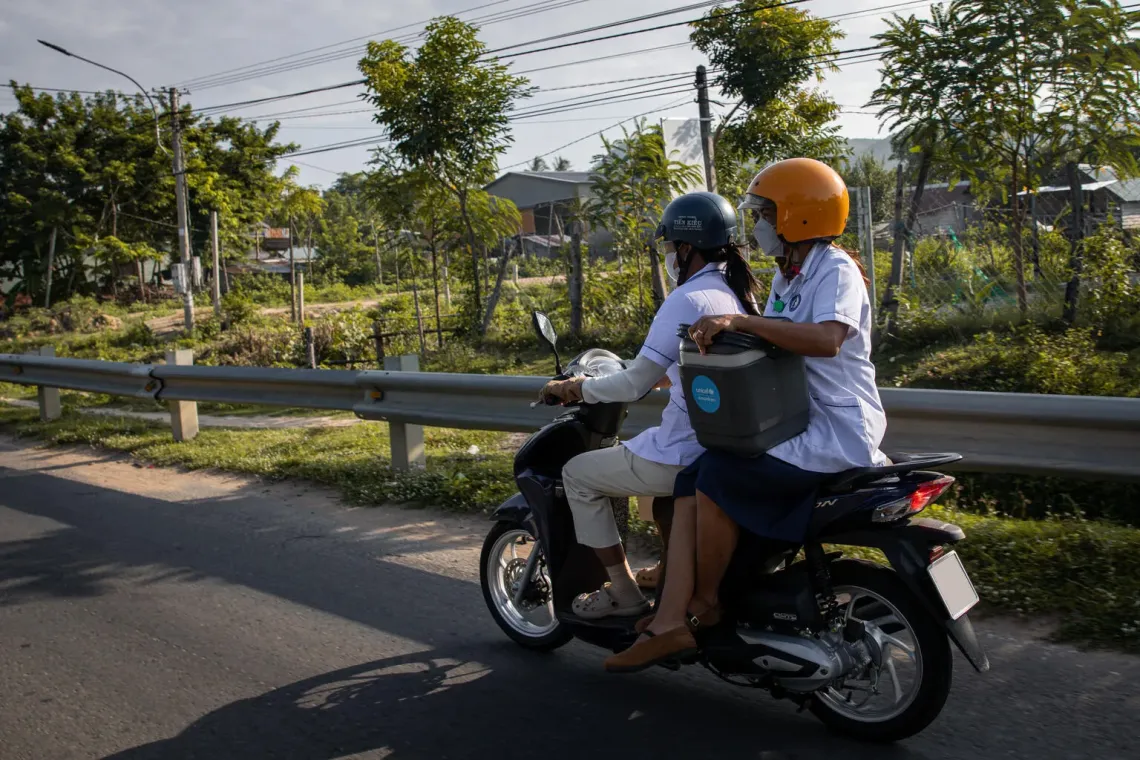
“We organize mobile vaccination sessions every month,” says H’Liu, a health worker in IaRsai commune, Gia Lai province. “Many parents work far from home, and some children stay with grandparents or relatives who cannot ride a motorbike. If vaccination is only available at the health center, not everyone can come.”
In Chư Gu village, this matters even more as the weather becomes less predictable. Born and raised here, H’Đông has seen the changes over the years.
“The summers have become much hotter,” she says. “And last year, the flood reached our fields. It made us worry.”
Health workers also have to adjust vaccination plans as weather patterns change. “On hot days, more families come in the morning because it is cooler,” H’Liu says. “When there is heavy rain or flooding, sessions can be delayed.”
To respond to the typhoons and floods that disrupted essential services across Gia Lai province, UNICEF has provided ten vaccine refrigerators and 249 vaccine carriers to commune health centres, supporting both routine immunization and mobile outreach.
“We used to use an old refrigerator from another health programme to store vaccines,” H’Liu remembers. “Now, with equipment made for vaccination, we feel more confident planning outreach sessions and bringing vaccines to the villages.”
UNICEF has also supported training for local health workers on vaccine delivery, safety, disease prevention after disasters, and proper vaccine storage. This helps them reach more children and keep vaccination services running during emergencies and extreme weather.
For H’Đông, each vaccination appointment is tied to the life she wants for her children. She never had the chance to go to school herself. Now, she wants something different for them, including H’Châm, who she hopes will one day sit in a classroom.
“If she is healthy, she can go to school and have a better future,” H’Đông says.
Around her, the morning session continues. Families wait with babies in their arms as health workers call names and check records.
As heat, rain and flooding make it harder to deliver health services, UNICEF continues working with partners, health workers and local communities to keep vaccination within reach. Through that shared commitment, children like H’Châm can stay protected, one vaccine at a time.