UNICEF supports the rehabilitation of the hospital boat for the most vulnerable children
Children, mothers, and pregnant women will be cared for in their communities, when before they had to spend days travelling by boat for life-saving treatment.

- Español
- English
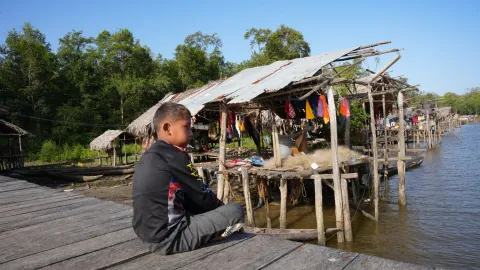
Delta Amacuro (VENEZUELA). - On the banks of the Orinoco River, in the heart of Delta Amacuro, more than 40,000 people live. This is one of the most vulnerable states in Venezuela, with 70% of its inhabitants living in extreme poverty. Most of them are indigenous to the Warao ethnic group.
97% of the population does not have access to drinking water and accessing health services is a challenge for people in the most remote communities of the state, since the closest hospital is in the capital, Tucupita.
People have to travel by curiara (wooden rowing boats) by river to get there, which takes days. From Curiapo, they travel upriver for 6 to 8 days. This means that in an emergency there’s a high risk of not getting to the hospital alive. Some 3,200 settlements are located on these waterways

Diseases like tuberculosis, malaria, HIV, and waterborne diseases due to lack of access to clean water, as well as some high-risk births, are some of the most frequent medical problems for those living next to the river.
To bring safe water, child protection, nutrition, and health services to children, adolescents and their families in this region, UNICEF worked in coordination with national and local authorities to rehabilitate two river ambulances and a hospital boat named "Orinoco Delta Type II Specialist River Clinic", which will travel along the river to provide comprehensive care.


This hospital boat includes a delivery room, an initial diagnosis room, a gynecology clinic, an immunization area, a rapid laboratory sampling area, a pharmacy, observation and medical recovery room, a laundry, and a water treatment facility with a hose that will run from the boat to the community so that inhabitants can access drinking water.
It will also have a birth registration office, to guarantee children’s right to identity.


The UNICEF team that has worked on renovating, refitting, and equipping the boat expressed their satisfaction with the results.
“I feel proud to have worked on such a high-impact project for these vulnerable communities; the children need it”, explains Tomás Álvarez, supplies and logistics assistant at the UNICEF field office in Bolívar state.

There is a supplies warehouse, multipurpose room, dining room, kitchen, bathrooms, and cabins for medical staff. Two electrical generators and solar panels will ensure a quality power service is are also part of this river clinic hospital boat, which will be operated by the health authorities of Delta Amacuro state.


The river clinic hospital boat and ambulance renovation project was were made possible thanks to contributions from international donors that support UNICEF’s work in Venezuela to benefit the most vulnerable children.