"I go with my sister in the curiara, and take a bucket. I collect water to drink and cook"
The first solar-powered water treatment plant in an indigenous rural river community provides safe water to 15,000 people.
- Español
- English
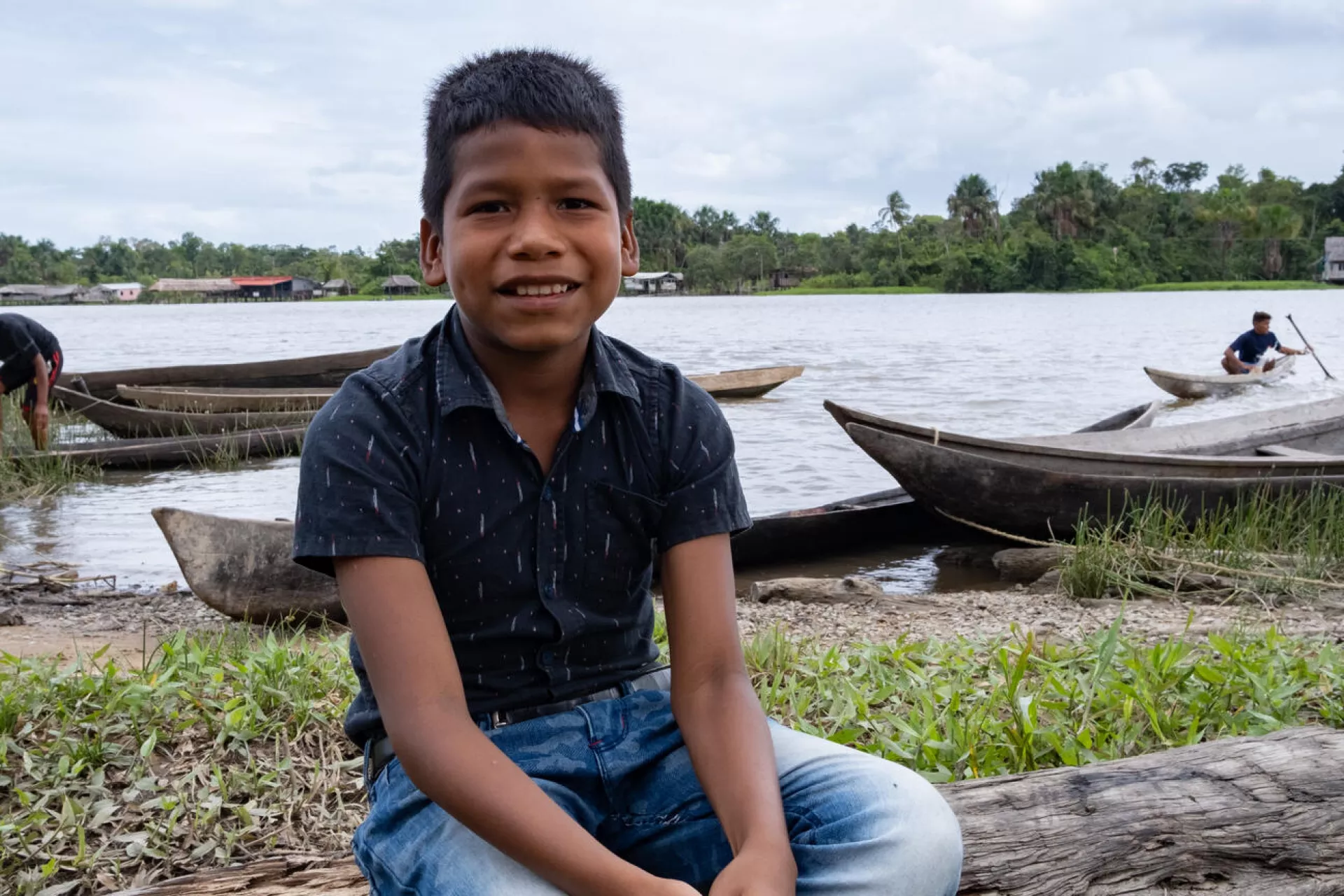
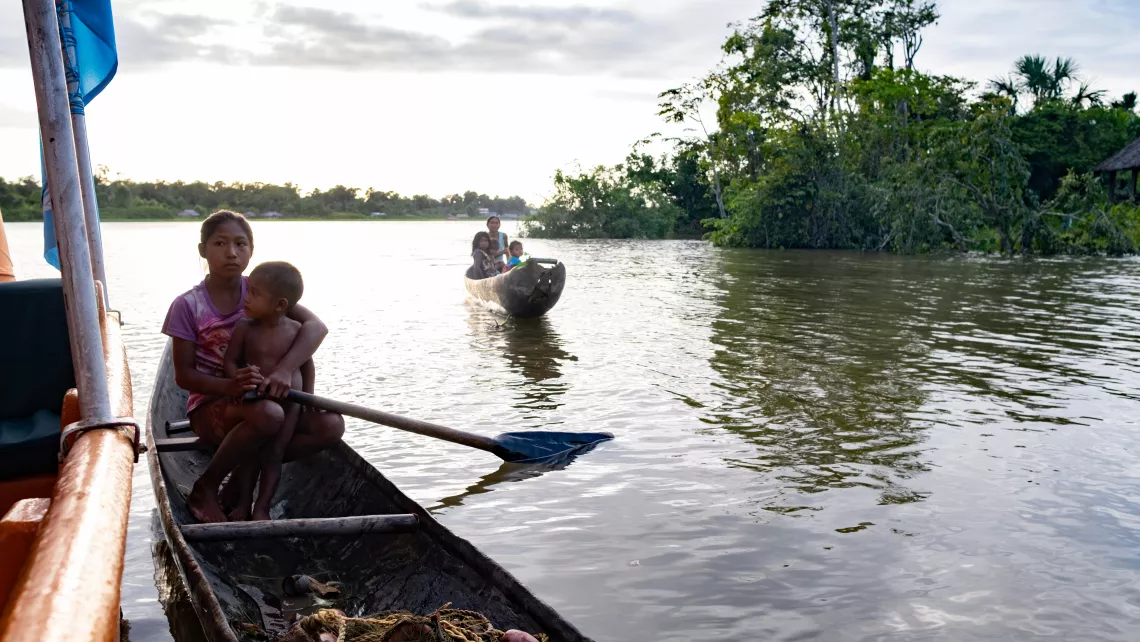
Dahir Franco, a 10-year-old boy who likes to sail the curiara (craft boat) and play football, lives in San Francisco de Guayo, a community located 6 hours away by river from Tucupita, the capital of the Delta Amacuro State.
Dahir goes to his neighborhood school every day. It only takes him a minute to get there because his house is in a ranch right behind it. He belongs to the Warao indigenous community. Until now, people in his community consumed water directly from the Orinoco River, and suffered the inherent negative consequences to their health, especially characterized by waterborne diseases.
In March 2023, for the first time, children, adolescents, and families in San Francisco de Guayo and the surrounding communities began to access safe drinking water, with the installation of the first solar-powered water treatment plant in a rural river community, at the local hospital. This plant will benefit the 15,000 people living in San Francisco de Guayo and the surrounding river communities.
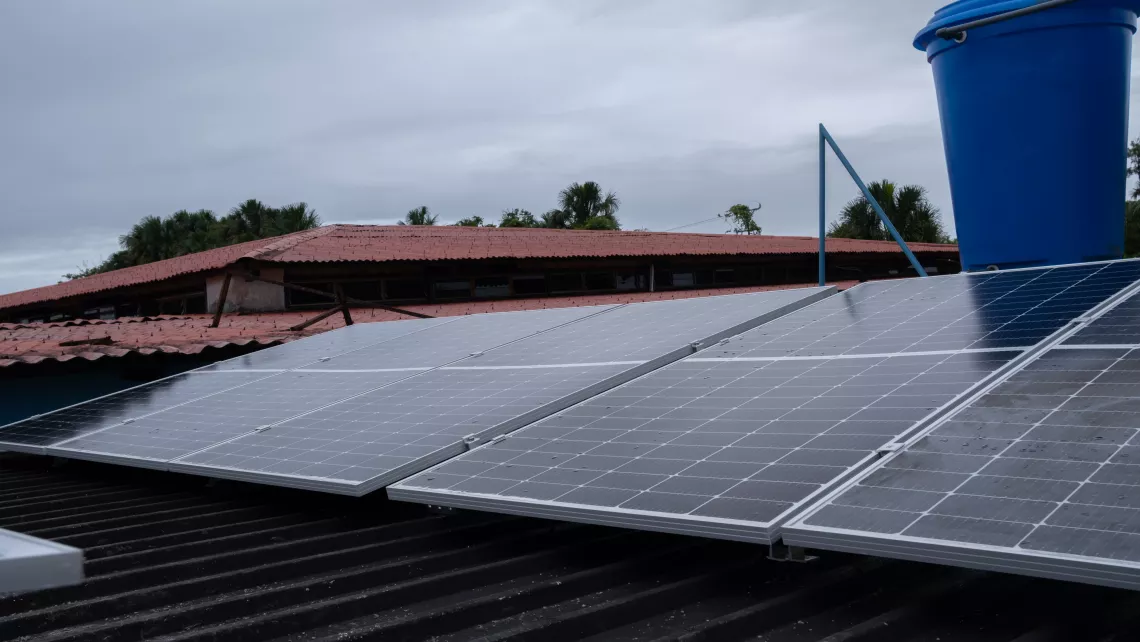
Because it does not rely upon the electrical grid, this water treatment plant ensures greater resilience to climate change and is adaptable to community conditions.
Coordination among the different stakeholders involved was a key factor in bringing safe water to the community. UNICEF provided the supplies, including the water treatment plant, local authorities provided nautical logistics to move the supplies, and community leaders became organized and trained to ensure the maintenance and care of the plant.
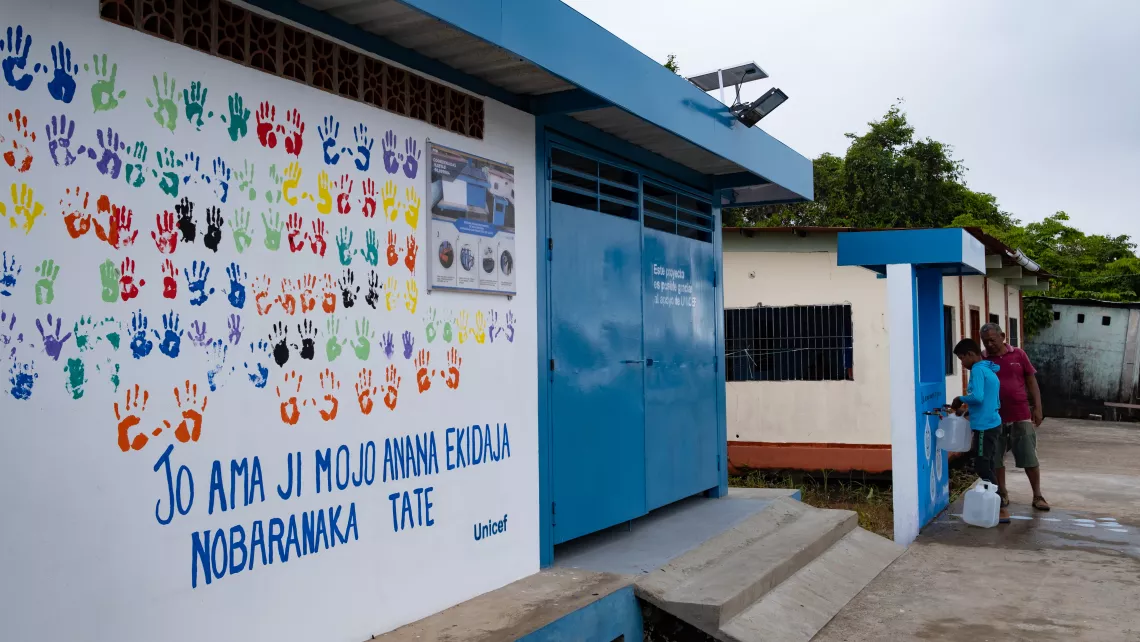
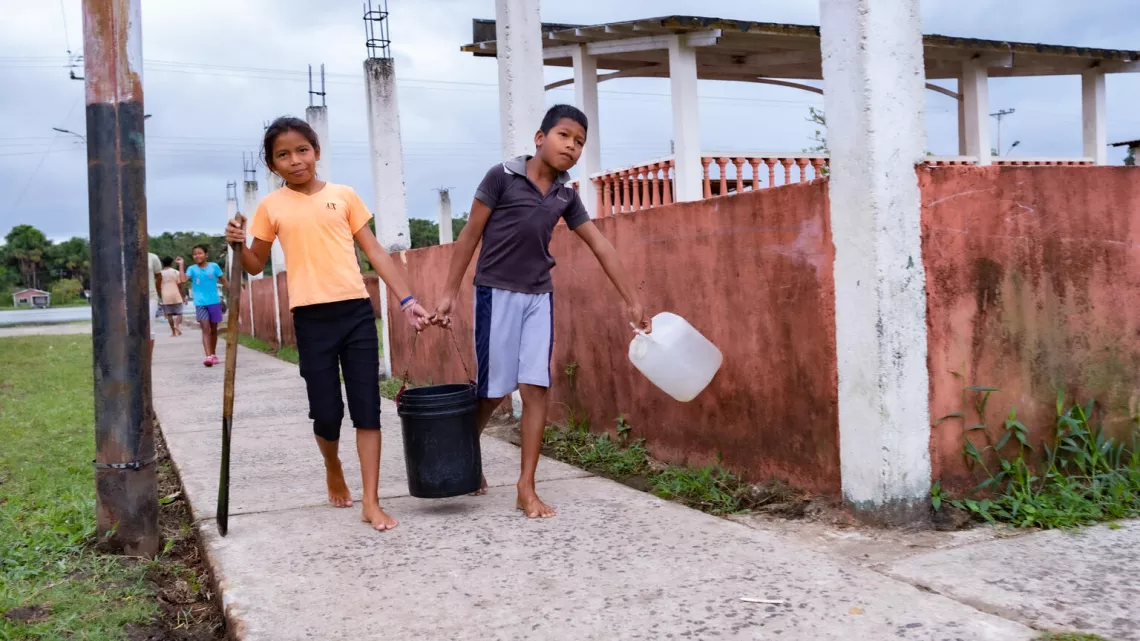
At Dahir’s home, as in many of San Francisco de Guayo, girls and boys help their families with different daily activities such as caring for the conuco (vegetable garden) and water collection. Dahir gets up at 6:00 in the morning and, together with is nine-years-old sister, goes to the water treatment plant in his curiara before going to school. The trip only takes five minutes.

"I go with my sister in the curiara (craft boat) and take a bucket. I collect water to drink, cook, and wash. Collecting water is very easy, I get it at the hospital," says Dahir.
Operating this plant in the hospital supports maternal and child health and nutrition services with safe drinking water, and saves lives every day. In addition, it serves as a meeting point for the community, facilitates hygiene, and promotes protection, health, and education activities, all part of UNICEF’s behavior change work in the communities.
To ensure that the community knows the importance of safe drinking water, activities were carried out for children and adolescents, and for adults. They learned about, interact with, and enjoy having the plant, as well as having better hygiene practices and proper storage of safe water at home, all in a participatory approach to prevent water borne diseases in children and adolescents.

"My parents tell me that the water from the hospital is clean, and if we drink water from the river we get stomach pain, diarrhea, and vomiting," explains Dahir.

Dahir is proud to guide his community members to take safe water. "If someone does not know, I say: go to the hospital to get clean water" he explains.

In coordination with the authorities and with support from international donors, UNICEF is helping to strengthen national capacities in water, hygiene, and sanitation to ensure children, adolescents, and their families - even in the most remote communities - access safe drinking water and prevent diseases.