Balanced and diverse diet to protect children from malnutrition
UNICEF is implementing nutrition workshops in vulnerable areas to teach mothers, fathers, and caregivers how to provide high-quality nutrition that respects cultural food traditions.

- Español
- English
A fresh breeze blows through Don Pedro School, located in Terrazas de las Acacias, 20 minutes from downtown Caracas. Here, nearly 800 students find shelter under the constant shadow of the cabins of the cable car system that crosses the sky above this community.
At the heart of the educational center is the Santa Joaquina de Vedruna outpatient clinic, a nutritional care point for children under five years old. Here, health and nutrition personnel from UNICEF's implementing partner, Fe y Alegría, evaluate them for early detection of any form of malnutrition. This includes the prevention of anemia, acute malnutrition, and other vitamin and mineral deficiencies and subsequent treatment according to the country's current protocols.
Each case receives nutritional care and follow-up until recovery and subsequently has access to the regular nutrition program to maintain care, with the support of implementing partners and the public health system.

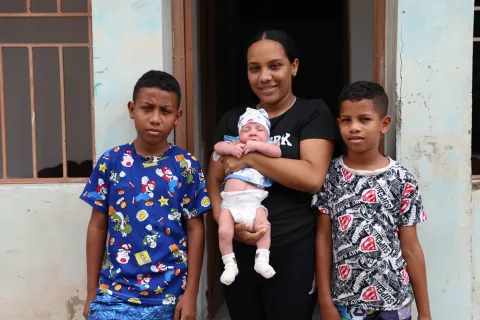
A few weeks ago, Rosa Bellorín, a 31-year-old mother living in Terrazas del Alba, just a stone's throw away from the school, took her children to the doctor's office as usual. However, something different happened that day. Another parent from the school mentioned a nutrition day at the clinic.
Rosa, who had always seen this space but had never approached it, did not hesitate to go, worried about her young daughter's lack of appetite. 'Sometimes I see the girl as small, and sometimes there are days when she eats a lot and others when she doesn't. And I see that it affects her growth.'
The nutrition team at the nutritional care center attended to her, providing her with a personalized diagnosis and treatment. 'They gave me sachets (of RUFT, a therapeutic food). I'm giving them to her little by little. She has an appointment in the coming weeks.'
Empowering families to prepare nutritious foods

Like many other mothers, Rosa receives the necessary treatments to combat malnutrition and participates in training to improve the quality of her family's diet. 'The goal is to promote optimal child feeding that is healthy, diverse, and of high quality for boys and girls in accordance with family traditions and the local availability of food,' says Zulay González, UNICEF Venezuela nutrition officer.

Rosa attended a workshop at the school to continue improving her daughter's nutrition. Doubts about ensuring a balanced and attractive diet for her girls motivated her. 'Sometimes we don't have the right tools, and we have all the foods at home, but we don't know how to work with them,' she says while conversing and participating in the workshop, which is based on national and global recommendations on child feeding and is regularly attended by 20 people per day.
During the workshop, Rosa commented that learning about the importance of preparing food at home and avoiding foods high in sugar was useful. 'Sometimes we don't give our children the right fruits because we decide to buy them juice on the street, and it's not ideal. Ideally, we should give them natural juice at home, for example.'

Rosa believes these workshops should be replicated in more places, as they guarantee preparing nutritious food for her family. Cristina Soto, a nutritionist at Fe y Alegría, highlights this last point because it allows her to build a network of more people who join her in having a more balanced diet, starting at home.
Once the father, mother, or caregiver acquires the knowledge, they become a spokesperson. If the people around that family group begin to observe the changes that exist in that eating pattern, then we are gradually empowering the entire population,' she states firmly.
UNICEF implements these nutritional workshops to contribute to the goal of recovering and preventing malnutrition in children. With this, caregivers, fathers, mothers, and families seek to increase their knowledge in preparing healthy menus, becoming multiplying spokespersons of the information in their communities. The workshops will be carried out in at least seven states of Venezuela during this year.