Feeding Your Child: When to Introduce Complementary Foods
When should complementary foods be introduced into a child's diet, and why is it so important to do so at the right time?

As your child grows, so do their nutritional needs. During the first two years of life, up to 75% of the nutrients a child receives from each meal support brain development. That is why introducing complementary foods at the right time plays such an important role during this critical period of growth and development.
Complementary Feeding at a Glance
For the first six months, breast milk alone provides everything your baby needs.
During the first six months of life, breast milk provides all the energy and nutrients your baby needs for healthy growth and development.
Begin introducing complementary foods at six months of age.
At around six months, your baby begins to require more energy and nutrients than breast milk alone can provide.
Start with small amounts.
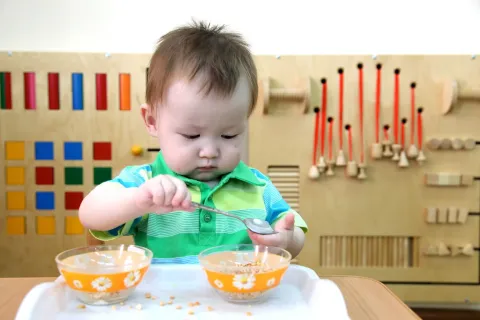
At six months of age, begin by offering your baby two to three spoonfuls of complementary foods twice a day, such as porridge, vegetable purée, or fruit purée.
Introduce complementary foods at six months for all babies.
Whether your child is breastfed or formula-fed, complementary foods should be introduced at six months of age. Delaying introduction for too long may put your child at risk of nutritional deficiencies and poor growth.
Before Six Months
From the first hour of life until six months of age, your baby receives all the nutrients needed for growth and development from breast milk. During this period, they do not need anything else—not water, tea, juice, porridge, or any other foods or liquids.
Myth: Babies need complementary foods before six months of age.
For babies who are exclusively breastfed, there is no need to introduce additional foods before six months of age, and doing so may even be harmful.
Giving foods or liquids to a breastfed baby before six months may increase the risk of illnesses such as diarrhoea, which can lead to weight loss, weakness, and in severe cases, may become life-threatening. Introducing other foods too early may also reduce breastfeeding frequency, leading to a decrease in breast milk production and reducing the amount of the most important food your baby receives.
Breast milk is the safest and healthiest food for all babies during the first six months of life. It provides a reliable and safe source of essential nutrients wherever you and your child live in the world.
Signs of Readiness for Complementary Feeding
If your baby brings their hands to their mouth before six months of age, you may think that breast milk is no longer enough and that they are still hungry. In fact, this is a normal developmental behaviour and one of the natural signs that babies display as they grow and mature.
These behaviours do not mean that your baby is ready for complementary foods before six months. By the age of six months, your baby will be developmentally ready to begin complementary feeding.
Myth: Boys need complementary foods earlier than girls.
Both boys and girls need the same amount of food to grow healthy, strong, and intelligent. During the first months of life, breast milk alone provides all the nutrition needed for either a son or a daughter.
Six Months and Beyond
Once your baby reaches six months of age, their rapid growth and development require more energy and nutrients than breast milk alone can provide. Alongside continued breastfeeding, complementary foods should be introduced to meet these increasing nutritional needs.
When to Introduce Complementary Foods
Feed your baby whenever they show signs of hunger. After washing your hands with soap and water, begin by offering two to three spoonfuls of complementary foods twice a day, such as porridge, fruit purée, or vegetable purée.
Continue breastfeeding as usual.
Babies Who Are Formula-Fed
If your baby is formula-fed, complementary foods should also be introduced at six months of age. This is the age at which all children—whether breastfed or formula-fed—should begin receiving complementary foods to support their growing bodies and nutritional needs.
Living with HIV
If you are living with HIV, introduce complementary foods to your baby at six months of age and continue breastfeeding while taking antiretroviral medication and following your prescribed treatment plan.
Do Not Delay Introducing Complementary Foods
As children grow, they need additional energy and nutrients from food to continue developing properly. Introducing complementary foods too late may result in slower weight gain and increase the risk of weight loss, undernutrition, and weakness.