Protecting children left behind by migrating parents in Uzbekistan
Findings of a study on the well-being of children affected by migration are presented at the annual child protection forum in Tashkent
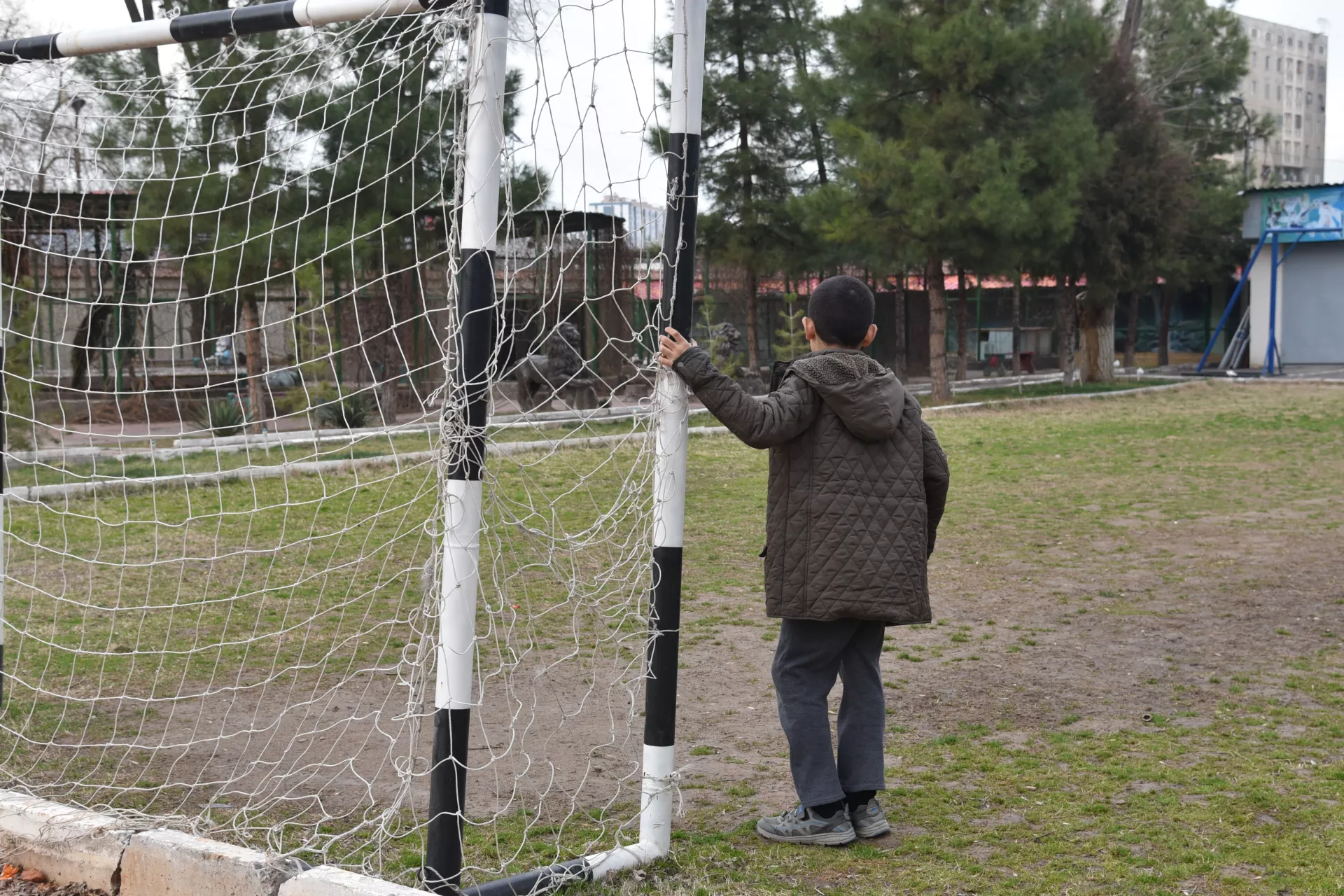
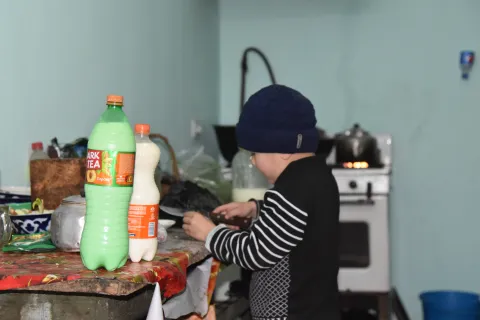
The majority of migrants from Uzbekistan have at least two children, whom they leave in the care of other family members when leaving the country, which puts children at the risk of being neglected and takes a heavy toll on their psychological well-being.
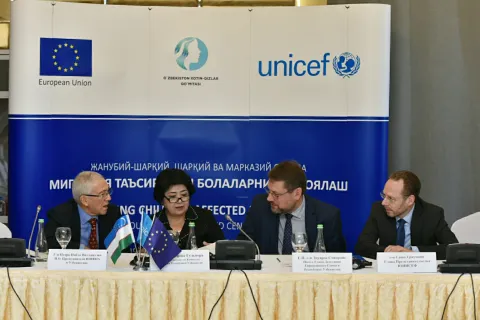
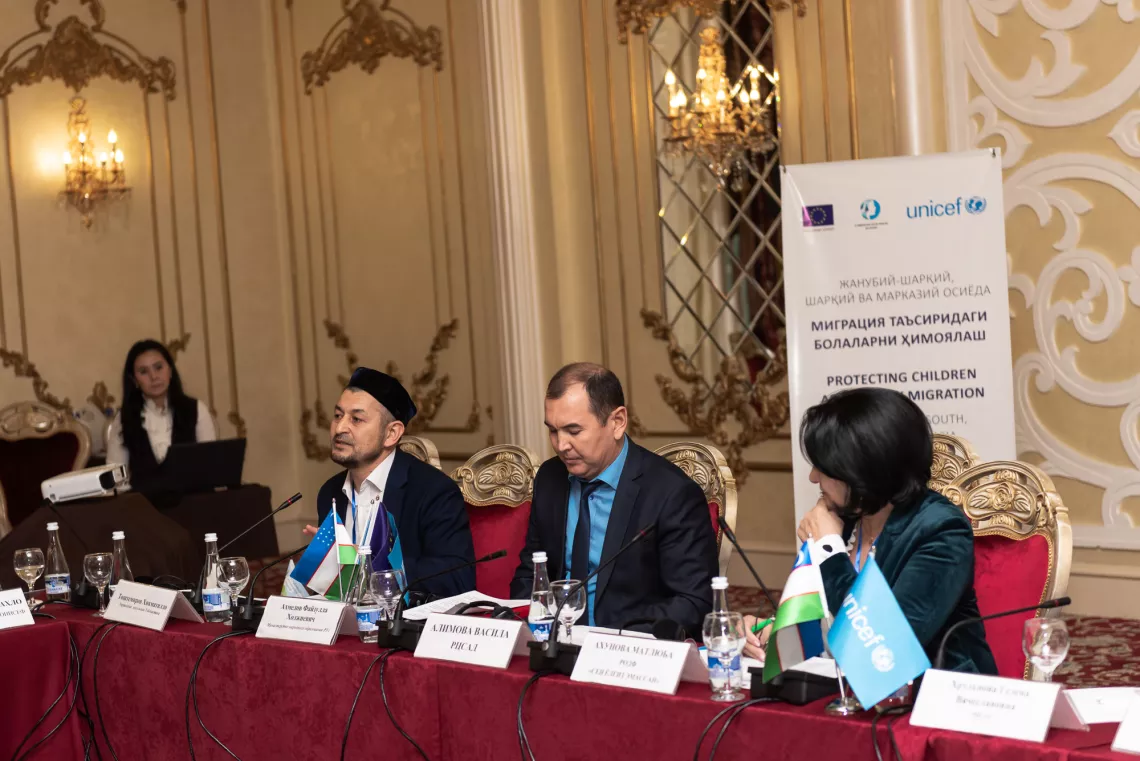
This is one of the key findings of a study on the situation of children affected by migration presented on 22 November at an international forum in Tashkent. This event was focused at strengthening social work profession in the country to ensure the well-being of children and families.
The study is part of the project "Protecting children affected by migration in Southeast, South and Central Asia" funded by the European Union and implemented jointly by the Women’s Committee of Uzbekistan and UNICEF. The project aims to provide children left behind by migrating parents with access to quality social services and child protection systems.
Reaching out to children of labor migrants
"Problems tend to be not so serious when people migrate through local employment agencies. But parents often travel abroad unofficially, leaving children without officially appointed caregivers. This leads to a lot of problems."
The project was rolled out in Uzbekistan in 2018 and will be completed in 2020. It is being carried out in four regions with highest migration rate - Fergana, Bukhara, Surkhandarya and Khorezm. The aims of the project are to identify problems experienced by families affected by migration and help them to address the issues.
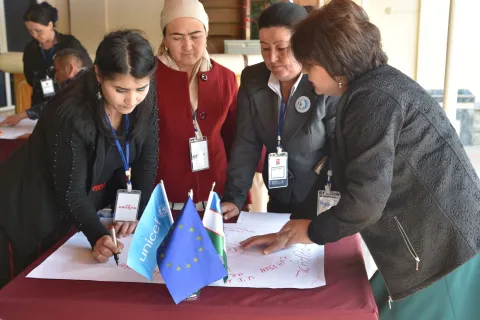
To start implementation, social workers of the Republican Center for Social Adaptation of Children visited the affected families. They conducted an assessment of families and children. This paved the way for the involvement of other specialists from a number of organizations, including guardianship and trusteeship bodies, Commission of Minors, Women’s Committee, Oila center, and others.
So far, 204 families with 403 children left behind by one or both migrant parents have gone through initial assessment and been provided with support services.
Istat Kamolova, a deputy head of the Gijduvan district administration in Bukhara region, said that for her the main challenge in this project has been to address the issues posed by illegal migration. "Problems tend to be not so serious when people migrate through local employment agencies. But parents often travel abroad unofficially, leaving children without officially appointed caregivers. This leads to a lot of problems. I have seen cases when parents left their five or seven little children with their relatives, who had not been appointed as official guardians. One and a half months passed before we were able to officially appoint guardians to those children. Relatives find it difficult to support so many little children for a long time. This situation can lead to other problems. We need closer cooperation among the Ministry of Interior, schools, communities and women's committees to address this problem," she said.
She also mentioned that round table meetings and individual conversations with children of migrants proved to be effective in finding out about their problems first hand and working out a long-term strategy for addressing them.
Understanding migration's impact on families and children
"The majority of migrants from Uzbekistan do not take their children with them when travelling abroad for work. They travel alone."
The situation analysis on the well-being of children and families is an important part of the project intended to enable policy makers to better understand the impact of migration on children left behind.
Conducted in the four regions mentioned above in March-May 2019, it is the first study on the impact of migration on families in Uzbekistan. It looked at four different aspects of children's well-being: healthcare, education, financial situation and psycho-social impact. The survey covered 1,016 caregivers and 702 children. The qualitative part of the study involved focus group discussions among children, caregivers and social workers as well as interviews with experts from various institutions and local governments.
"The majority of migrants from Uzbekistan do not take their children with them when travelling abroad for work. They travel alone. In 25 per cent of cases, both parents were in migration. Mothers migrate irrespective of the age of their children," said Irina Teplyakova, a project manager, from local research agency “Al Mar Consulting” while presenting the study at the forum. She said that Russia was the main destination for migrants with a figure of 87 per cent.
She also said that the households had no documents proving guardianship or custody of children, because relatives traditionally take care of children while parents are away, believing that no official documentation is needed for this.
The study did not establish a connection between migration and problems at school, showing that most of the children interviewed go to school regularly. No major problems were identified with access to healthcare either, but it did show that people in rural areas had less access to quality services. It also revealed that 14 per cent of children under one year old were not getting vaccinated. However, it remains unclear if this was caused by the lack of awareness of caregivers or access to vaccines.
The study shows that 84 per cent of migrants' families depend on remittances sent by migrant workers.
"When men leave the country, they sometimes stop supporting their families, which leads to financial hardships. They stay abroad for 4-5 years, with their wives having to carry the entire financial burden on their own, which makes their lives really difficult. We have been working to help such families," said Anna Ismatova, a deputy head of the Peshku district administration in Bukhara region.
Tackling the consequences of migration
The study concluded that there was a need for an effective mechanism for establishing the number and demands of children left behind by migrating parents. It also gave some recommendations:
- Reviewing the legislative framework and existing procedures regarding the protection of vulnerable families and children;
- Introducing into the child protection system a mechanism for identifying children without parental care, and creating accessible and simplified legal mechanisms for appointing guardians;
- Implementing case-management standards for families and children in need of social services;
- Working out and expanding services for providing psycho-social support for children affected by migration;
- Organizing events to raise awareness about potential emotional and psychological risks of leaving children without parental care.
The study findings, conclusions and recommendations will be further discussed and finalized with key stakeholders.