Central Asia advances climate resilient education ahead of the Regional Ecological Summit 2026

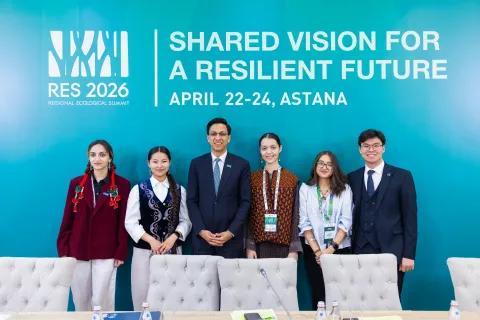
Astana, 13 February 2026 — As part of the preparations for the Regional Ecological Summit 2026 (RES 2026), to be held in Astana from 22 to 24 April, a senior-level preparatory meeting brought together distinguished representatives of the Ministries of Education and Ministries of Environment from five Central Asian countries, alongside international organizations and development partners. The meeting provided a platform for cross-sectoral dialogue on climate change education and its critical role in helping countries meet ambitious targets under their updated Nationally Determined Contributions (NDCs 3.0).
The meeting focused on advancing the Regional Green School Platform, a regionally coordinated cooperation platform hosted by the Government of Kazakhstan to support Central Asian countries in strengthening climate resilient education systems. The platform brings together governments, development partners and international financial institutions to promote climate education, climate resilient school infrastructure, youth-led climate action and enabling governance and financing frameworks in the education sector.
Planned for endorsement at the Regional Ecological Summit 2026, the Regional Green School Platform will serve as a voluntary regional mechanism linking knowledge exchange with national policy processes and financing frameworks, including countries’ commitments under their NDCs 3.0. The platform is designed to support practical implementation at country level while responding to the specific needs of children and adolescents.
Discussions highlighted the growing impact of climate and environmental risks on children in Central Asia. Around 23 million children in the region are exposed to high or very high levels of climate-related hazards, including extreme heat, drought, air pollution and water scarcity. These risks increasingly affect children’s health, learning outcomes and access to safe and continuous education.
UNICEF experts presented a guide on integrating climate change into curricula and teaching practices. They also shared findings from energy audits of schools across the region, which show that many school buildings are ageing and poorly equipped to withstand climate stress. Improving energy efficiency and climate resilience in schools can help create healthier and more comfortable learning environments, reduce operational costs and free up resources to improve education quality. At scale, climate resilient school approaches have the potential to benefit 24.4 million children and more than 24,000 schools and other social infrastructure facilities across Central Asia.
For children, this means safer and healthier schools, better learning conditions and stronger climate and environmental skills. For families, it means greater confidence that schools can protect children’s well-being in the face of climate shocks. For communities, it contributes to more efficient use of public resources and greater resilience of social infrastructure.
Participants included representatives of ministries of education and ecology from Kazakhstan, Kyrgyzstan, Tajikistan, Turkmenistan and Uzbekistan, who shared national priorities and emerging practices related to green schools and climate education.
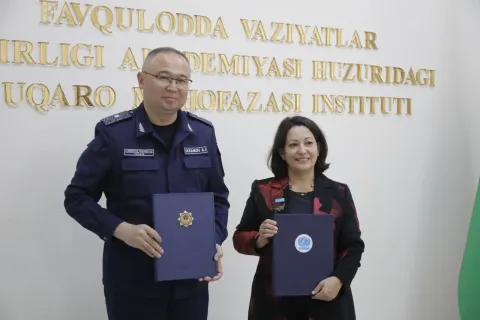
From Uzbekistan, Mr. Obidjon Kudratov, First Deputy Chairman of the National Committee on Ecology and Climate Change, reaffirmed that Uzbekistan’s updated Nationally Determined Contribution (NDC 3.0) includes, for the first time, a dedicated section addressing the rights, needs and interests of children. He emphasized that the Government, in partnership with UNICEF and other stakeholders, is actively engaging children and youth in the development of the NDC 3.0 Implementation Roadmap and expressed Uzbekistan’s readiness to contribute to the development of regional standards for climate-resilient educational institutions ahead of RES-2026.
Mr. Azizbek Turdiev, Deputy Minister of Preschool and School Education of the Republic of Uzbekistan, highlighted the progress of the “Eco-Schools Uzbekistan” initiative, which now engages 500 schools
and more than 100,000 students nationwide. He underscored the institutionalization of climate education, the expansion of youth-led initiatives, and Uzbekistan’s active participation in regional and global climate platforms.
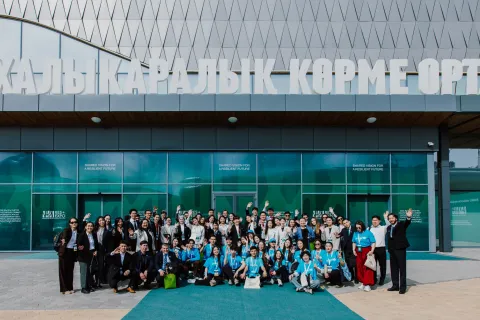
As part of the programme, participants visited the venue of the Regional Ecological Summit 2026, where solutions related to sustainable development, clean energy and climate resilient infrastructure will be showcased during the Summit.
Outcomes of the preparatory meeting will be presented in the High-Level Session about children at the RES-2026 and contribute to shaping a shared regional approach to climate resilient education, supporting countries in protecting children’s rights and futures in a changing climate.
For more information, please contact:
Murodjon Ismoilov Emergency, Climate Change & DRR Officer Phone: +99878 1480200 +99890 925 67 00 E-mail: [email protected] | Nargiza Egamberdieva Communication Officer Phone: +99878 1480200 +99893 380 34 19 E-mail: [email protected] |