

HIV/AIDS
Availability of a high standard of HIV prevention, treatment, care and support nationwide.
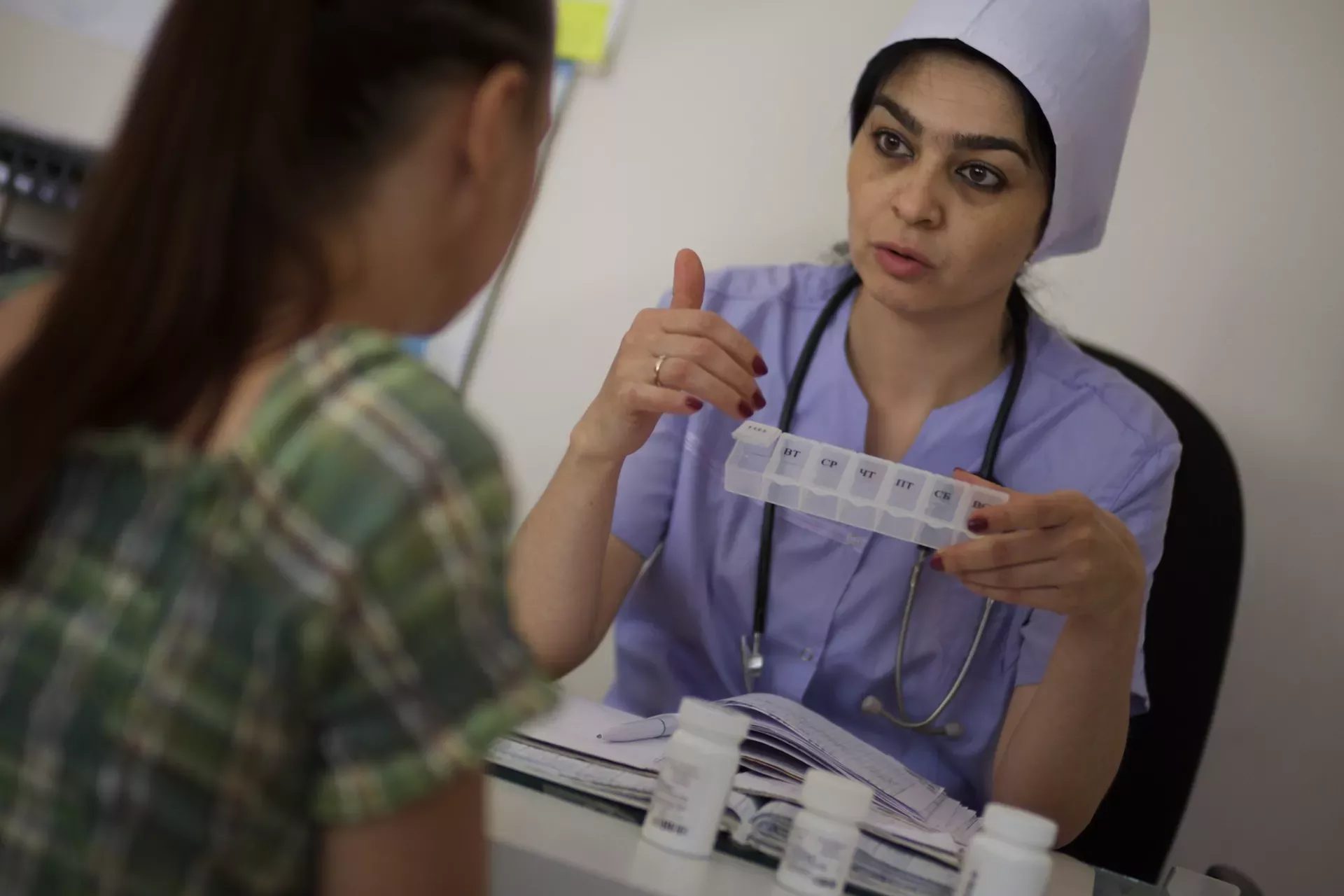
UNICEF, in collaboration with national and international partners, is working to eliminate mother-to-child transmission (MTCT) of HIV in Uzbekistan. A key milestone in 2024 was the development of a national Roadmap for the Elimination of MTCT of HIV (2024–2026), supported by UNICEF. This roadmap aims to improve the quality of services for approximately one million pregnant women annually, laying the foundation for national validation of elimination and advancing maternal and child health rights
To strengthen service provision, 75 staff from AIDS centers and multidisciplinary teams received specialized training to deliver medical and psychosocial support to pregnant women and mothers living with HIV. As a result, over 11,000 people living with HIV (PLHIV), including 1,600 children and adolescents, benefited from enhanced mental health and psychosocial support, supported by UNICEF training resources for psychologists and outreach workers.
UNICEF-supported digital education initiatives have also scaled up HIV awareness nationwide. More than 500,000 teachers have completed online training on HIV prevention, treatment, care, and support via the onlinedu.uz platform.
Children and adolescents living with HIV (C&ALHIV) have gained improved access to treatment, care, and support through the adoption of a national clinical protocol, ensuring a standardized and child-friendly approach to HIV services.
UNICEF continues to engage communities to raise awareness, reduce stigma, and build support systems for adolescents living with HIV.
We work with partner organizations to eliminate mother-to-child transmission of HIV. 900,000 women annually receiving comprehensive mother-to-child transmission of HIV and syphilis (MTCT) preventive services. Over a half million teachers completed the online educational courses on HIV prevention, treatment, care and support of people living with HIV (PLHIV) using the developed electronic platform (onlinedu.uz) Children and adolescents, living with HIV have improved access to HIV treatment, care and support services through the adoption of the National clinical protocol. Over 6,000 children and adolescents, living with HIV and their families received psycho-social support through the network of Day Care Centers supported by UNICEF. Also, we engage with communities to promote HIV awareness, reduce stigma, and foster support networks for adolescents living with HIV.
UNICEF is committed to addressing emerging challenges and closing remaining gaps through strategic partnerships, system strengthening, and innovation:
- Development of a cross-sectoral referral framework: UNICEF is supporting the creation of a two-way national referral system prioritizing C&ALHIV. This framework will institutionalize streamlined coordination among health, social protection, child protection, and education sectors, and strengthen links with NGOs and CSOs.
- Capacity-building for primary healthcare workers: To ensure continuous professional development, UNICEF is developing and digitizing a training course on prevention of mother-to-child transmission of HIV. The course will be hosted on the platform of the Center for the Development of Professional Qualifications of Healthcare Workers and made available nationwide online training of PHC specialists.
- Strengthening monitoring systems: UNICEF is supporting the National AIDS Center in harmonizing methodologies for calculating key indicators required for validation of MTCT elimination of HIV and syphilis, and in integrating C&ALHIV-specific reporting tools into the Electronic HIV Case Management System.
- Integrating HIV into psychosocial support services: UNICEF is working to mainstream HIV programming into social services. This includes strengthening the capacity of the National Agency for Social Protection, regional branches, and Inson social service centers (social workers, psychologists, legal specialists, etc.) to provide holistic support for PLHIV and their families.