When a home Is destroyed, it’s time to rebuild hope: UNICEF mobile teams support families
UNICEF mobile teams are supporting Ukrainian families who lost their homes due to the war, helping them restore a sense of safety and normal life.

- Українська
- English
That evening, after finishing preparations for the next day’s meals, Inna was watching the news. Reports of possible night shelling prompted her to warn her children to be ready to run to the shelter at any moment.
“Maksym didn’t always want to go to the shelter. Like many teenagers, he would say that my daughter and I should go while he stayed in the corridor. But that night I told him, ‘No, you’re coming with us,’” recalls Inna.
When the air raid siren sounded, the family went to a shelter. They spent hours in a school basement cut off from the outside world.. Sofia quickly fell asleep on a chair. The alert eventually lifted andthey went outside for fresh air, but another alert forced them back inside. Suddenly, a deafening explosion shook everything. .
“I thought it had struck the school itself, because we never heard anything in that basement before. But this time, the blast was so strong we all felt it,” Inna recalls.
Minutes later, their neighbour arrived with devastating news: Inna’s apartment was gone.

Searching through the ruins
The missile strike destroyed their next door apartment and their neighbour was tragically killed. Inna’s home and a number of others were reduced to rubble.
“I wanted to run in because our cat was there. The rescuer asked me where the bathroom was, but I couldn’t even recognize my own home,” she says.
The children went to stay with relatives, while Inna searched for the cat. When her husband called to ask if they were home yet, she had to tell him that there was no home anymore.
An hour later, a rescuer named Oleksandr pulled their cat Vegas, still alive, out from under the bathroom debris.

Finding strength through sports
Seventeen-year-old Maksym has played basketball since the second grade. He faced the burden with remarkable resilience. When the family was allowed into the ruins, the first thing he looked for was his sports medals.
“This isn’t just for show. It really matters to me. I’ve played basketball for seven years, and those medals are part of me. Luckily, they were in a box — not hanging on the wall — because we needed to bring them to the graduation ceremony,” he explains.

Despite the stress, Maksym successfully passed his exams and was accepted to two universities — one for economics and one for sports coaching.
“My immediate plan is to study well at university. I received a governmental grant. By the second year, I hope to qualify for a state-funded place,” Maksym says.
Nine-year-old Sofia, now in fourth grade, is a cheerleader and dreams of becoming a flight attendant. She worried most about the family cat.
“I was so scared when we couldn’t find him. I couldn’t sleep and cried a lot. When mom finally brought him home, I wanted to cry even more — but this time because I was so happy,” Sofia shares.
Working with the UNICEF Mobile Team
The next morning, the UNICEF and charitable foundation “Winds of Change” mobile team visited the family, as they regularly do for those affected by attacks. Psychologist Nataliia and case manager Aliona provided comprehensive support to all family members.
“That very day after the attack, we gave the children psychological first aid to restore at least a minimum sense of safety. They were disoriented, they didn’t feel safe, they were in despair,” explains Nataliia.
She spoke with the children about their feelings, reassuring them that it is normal to feel fear after such a trauma. With Inna, she discussed what behaviors to watch for, possible emotional reactions, and how long they might last.
“The children are emotionally resilient. Both are athletes, and that gave them a certain strength,” she adds.

Through case management, Aliona also provided essentials for the family. “They had no children’s clothing left. We went to a store and bought clothes. We also gave them bed linen, hygiene items and humanitarian kits,” she recalls.
Nataliia emphasized important advice for parents of children who have experienced trauma:
“In the first weeks after stress, children may either be hyperactive or very withdrawn. This can last from two weeks to a month and a half. It’s especially important to keep daily routines. Parents should maintain regular rituals — waking up, going to the bathroom, feeding the pet, helping mom. Knowing these are their responsibilities gives children back a sense of control.”

Community support and a new life
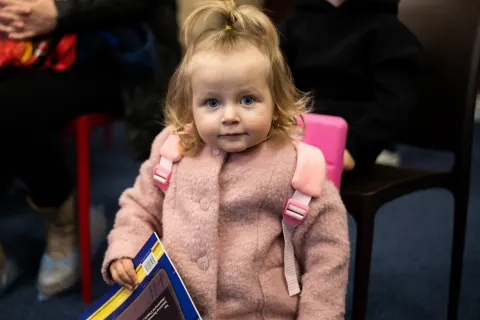
Alongside UNICEF’s mobile team, the family also received support from their local community. Sofia’s classmates collected school supplies for her — a backpack, notebooks, pens, folders and a uniform. “I am proud of us Ukrainians. They prepared Sofia fully for school,” says Inna.
Now, the family plans to rent a new apartment in Odesa so that Sofia can attend school nearby. She has returned to cheerleading, while Maksym adapts to university life.

Psychologist Nataliia continues to stay in touch with the family.
“When your heart is broken, help is so important. I felt we were not alone — that we would cope, that everything would be okay,” Inna concludes.
Vegas the cat, now eight years old, has fully recovered from the trauma. “I’m still shocked he survived. But he’s wise. That’s why he survived — and will keep surviving,” smiles Sofia.
UNICEF continues to support Ukrainian families by providing comprehensive assistance — from psychological support to basic supplies — to help children and parents restore stability and believe in their future.