Ukrainian families find a safe haven in Germany
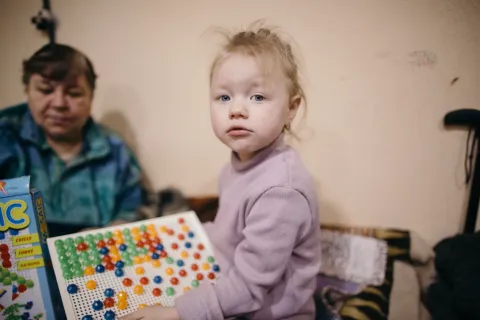
Natalia and her young daughter Kira are among a group of Ukrainian families finding new ways to move forward in Germany.

- Українська
- English
Nearly every day, three-year-old Kira asks her mother Natalia two questions – “Is Kyiv being bombed today?” and “When will we go back home?”.
Both break Natalia’s heart, for she has no answers for her daughter.
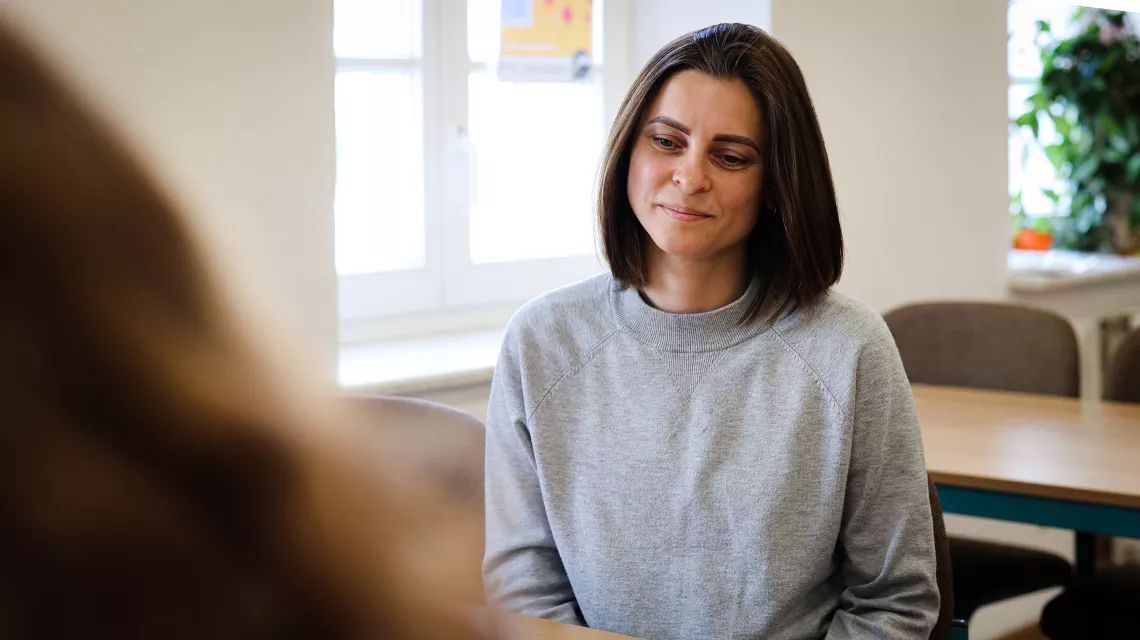
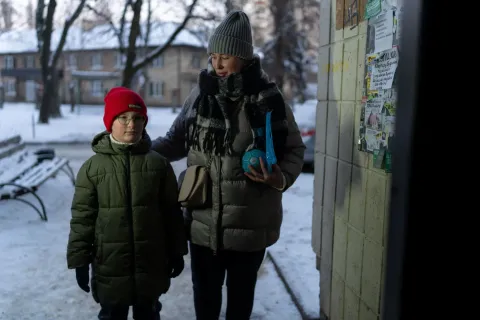
In February, Natalia and Kira became refugees. Like millions of other Ukrainians, the pair were forced to flee the war at home and found safety in Europe. According to the United Nations Children’s Fund (UNICEF), more than 3 million people have now fled Ukraine, including 1.5 million of children. The fighting has not only devastated lives, but futures too.
Today, Natalia and Kira live in Germany, in a small commune near Berlin. There, despite the heartbreak of leaving everything they loved behind, they are helping build a thriving Ukrainian community with a kindergarten and school for displaced children.
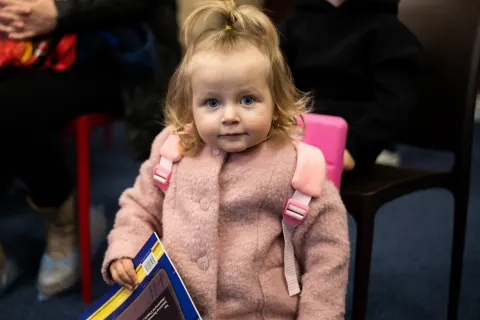
“There are children, aged from one and a half to six years old,” says Natalia. “Some of them had spent three weeks in a basement before they were evacuated to Europe. Many of them fled with nothing. And here, where they’re safe with other kids around, they can finally feel relaxed; they start to forget about the bombings.”

“I hold on only because of this kindergarten”
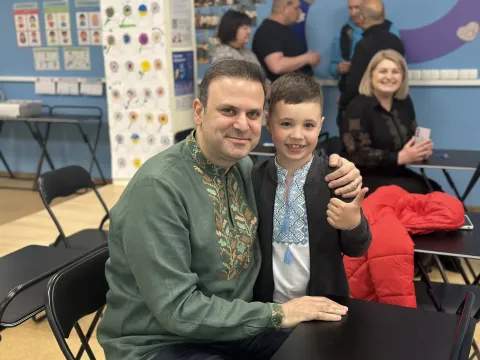
Before the violence escalated in February, Natalia worked as an interior designer. In Germany, she connected with three other displaced women – Iryna, who worked for social services, Julia, who was an editor, and Marina, a lawyer – to create a kindergarten for their children.

Approximately 30 Ukrainian boys and girls attend the kindergarten, which is located in a small cultural centre that has been made available by the local government. The women all volunteer as teachers and cooks.
Natalia knows all too well how important this place can be for young children who have fled the war and are now in desperate need of stability.

“I saw my daughter playing with a German girl, pulling her hand and saying, ‘Let’s go hide, there is bombing’,” Natalia says. “Her German friend doesn’t understand, as she doesn’t know what bombing is. I don’t want to normalise the feeling of fear for our children.”
“I hold on only because of this kindergarten. When you’re home, you can’t resist the urge to take your phone and check what’s going on in Ukraine. But when you come here, there are children, they are all noisy, each with their own character. And during this half of a day you feel like you are in some other good dimension. And it gets easier,” Natalia adds.

“You can’t switch your heart off”
While the kindergarten has become a lifeline for Ukrainian children and parents, the hurt that Natalia and Kira feel over losing their home and love ones remains raw.
“The circumstances of our moving to Germany are sad, that is why integration is pretty slow,” she adds, wiping the tears from her eyes. “We can’t stop looking at our phones and reading news from home. Psychologists say that we shouldn’t put our life on hold. We are really grateful to all German residents that they give us housing and that we are safe, but you can’t switch your heart off – it aches with homesickness.”

For Julia, a mother of two from Kharkiv, the kindergarten helps the women to feel at home in a new country. It took her an exhausting seven days to reach this area from Kharkiv.
“All the women here were forced to leave their husbands,” she says, holding her daughter Nastia. “And it feels like you were torn in pieces and your heart was pulled out. The most difficult thing is when you have no idea when you’re going to meet again.”
“When we were fleeing the war, my son with fearful big eyes kept asking me, ‘Mom, are we going to die? Are we leaving today, mom?’ I said that his Dad and I would do everything needed to keep them alright and alive. We live with this belief and because of this we have moved to a safer place.”

UNICEF has been working around the clock to help the millions of Ukrainian families on the move. SPILNO centres – one stop hubs in areas where people transit – provide a space for children to play, engage in informal learning and receive emotional support from social workers. Mothers and caregivers can also access information on local services, such as health facilities and accommodation. In addition, mobile child protection teams, consisting of a social worker, counsellor and legal advisor, are moving around areas with large numbers of displaced persons, including shelters, to support children and parents in the best way possible.
For now, in Germany, the kindergarten offers the women and children a place to feel at ease. And one day Natalia finally hopes to tell her daughter: “We’re going home tomorrow.”