Support helps foster families in Kharkiv region brave winter
An emergency foster family from the Kharkiv region has received assistance from the European Union and UNICEF, as part of efforts to help vulnerable people cope with winter.
- Українська
- English
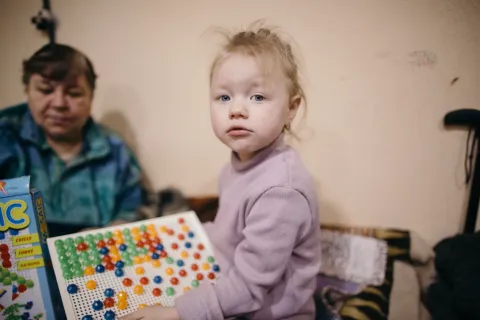
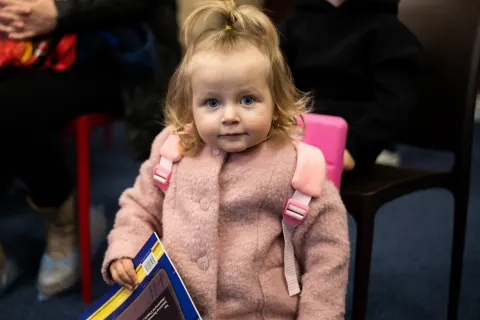
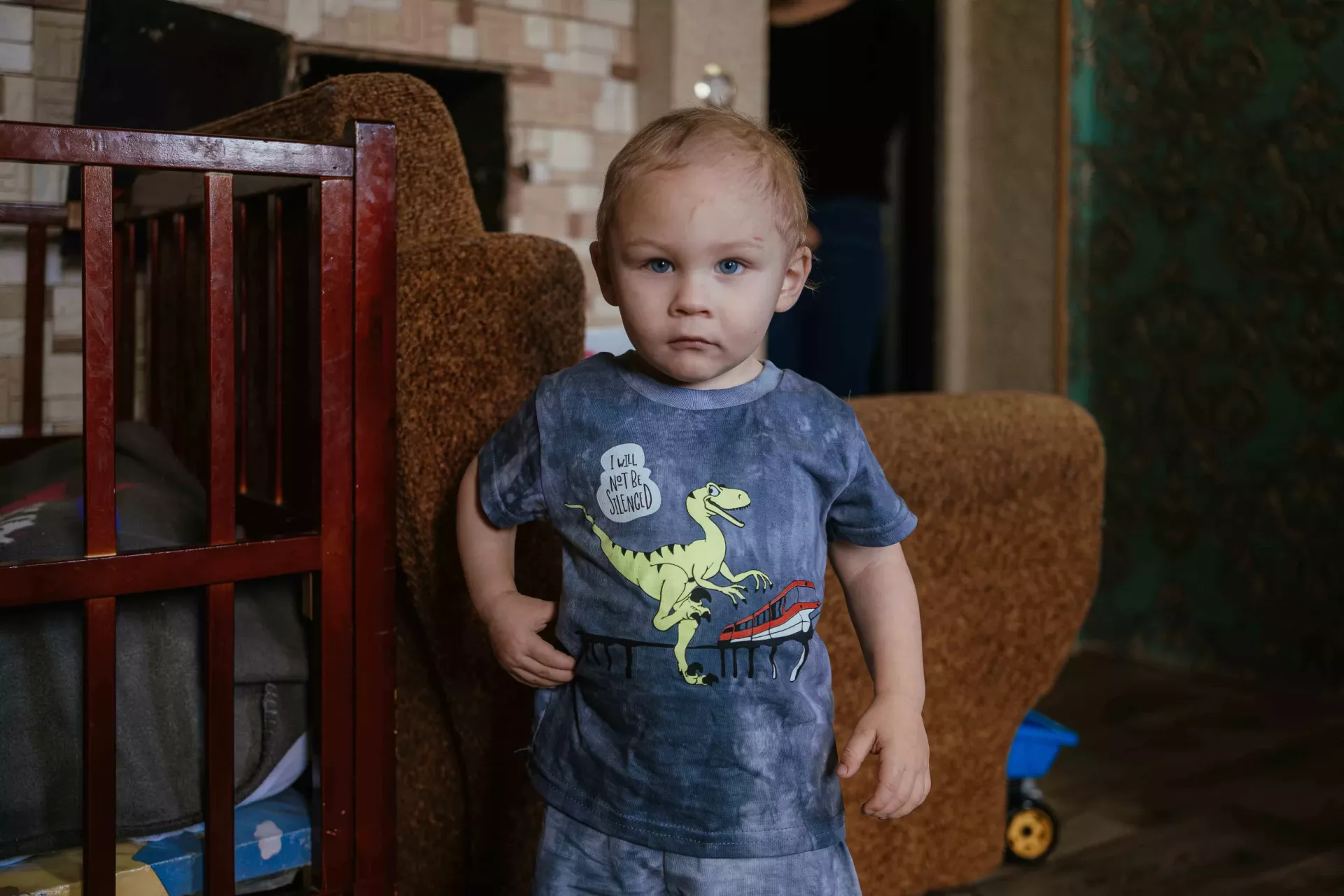
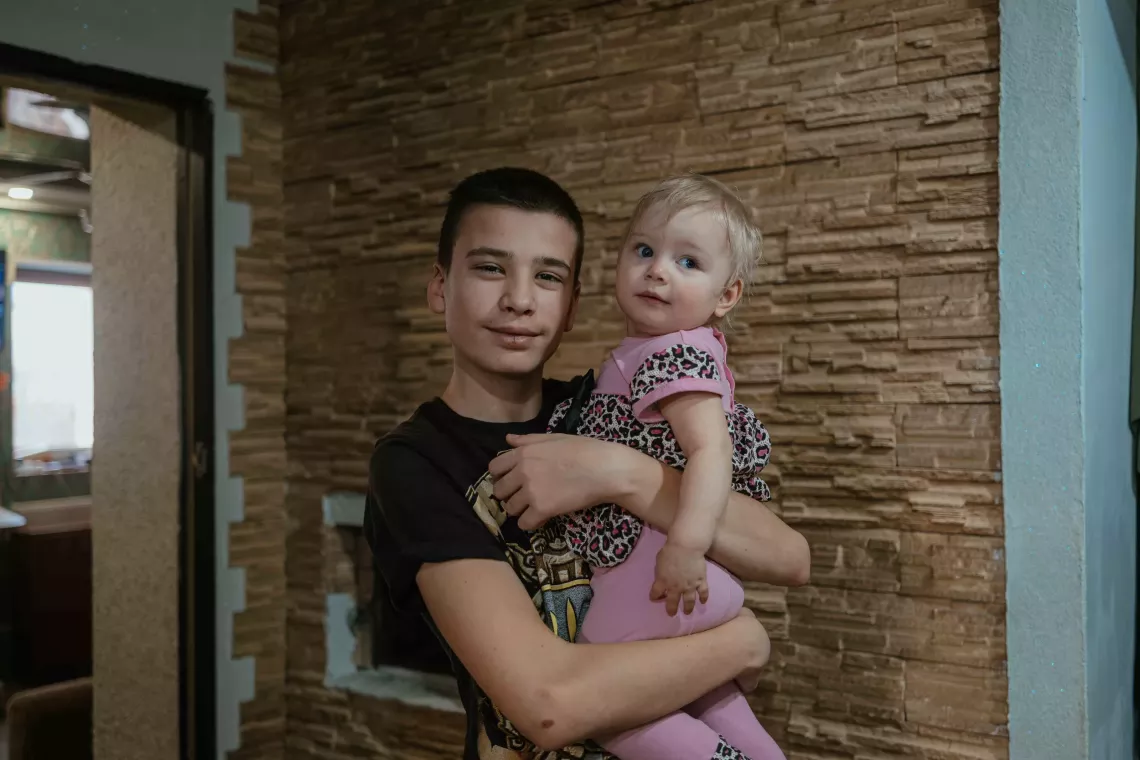
Over the past four years, 18 youngsters have found love and care as part of Liudmyla’s foster family in Malynivka, in the Kharkiv region. Currently, five children have found a home here – siblings Sasha, Misha and Mariana, Maria and baby Lidia.
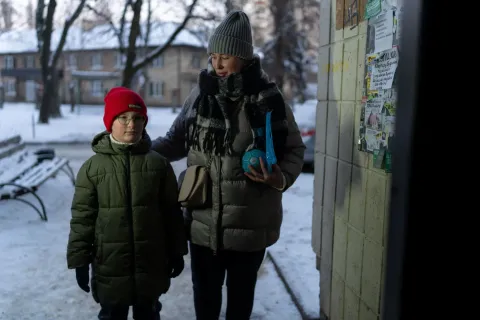
Winter can be a challenge for this family. Their biggest need has been heating the house where they live, as it is large and requires a lot of firewood or pellets. Until recently, they could not rely on electric heaters due to frequent power outages.
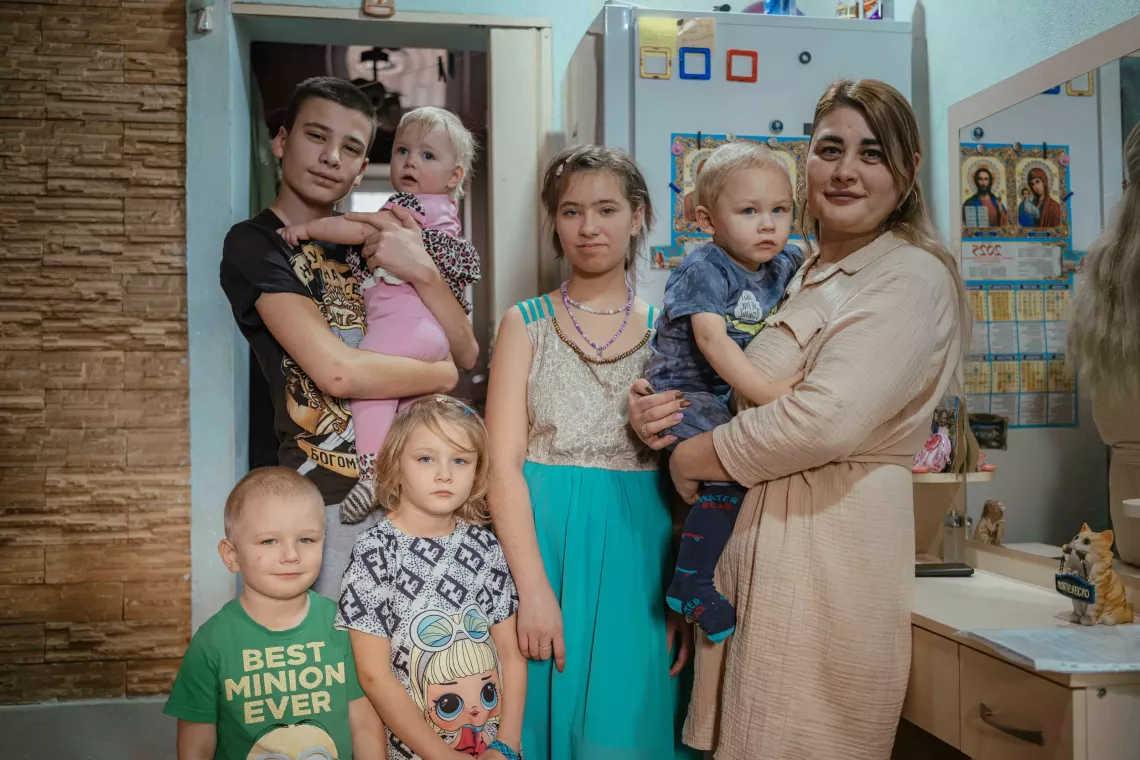
Now, however, there is hope. In order to ensure steady power supply in her home, Liudmyla has installed solar panels on her land. Although this required significant funds, she says the comfort of the children is paramount and the panels mean the house always has light, heat and a stable water supply.
The village council has also stepped up to help, providing the family with pellets both last year and this year. Furthermore, Lyudmila's family was one of foster families to receive assistance from the European Union (EU), UNICEF, and Partnership For Every Child, an organisation that helps implement this project.
"There was a list of essential items, and we could choose three items from it,” explains Liudmyla. “I opted for an electric stove with an oven and a freezer, because we have a large household. We keep chickens and a piglet, so there will be a place to store meat. I wanted a wardrobe for the children so that each one has their own shelf.”
The aim of emergency foster care is to provide temporary care, support and upbringing for children whose families face difficult situations or crises. A child stays with a foster family while their parents work on resolving an issue or, if returning to their biological family is not an option, until a new family is found for them. Currently, there are around 450 foster families in Ukraine caring for almost 900 children. Family foster care is available in every fifth community in Ukraine and demand for this is growing amid the ongoing war.
Liudmyla says it is crucial for the children to have a sense of their own space.
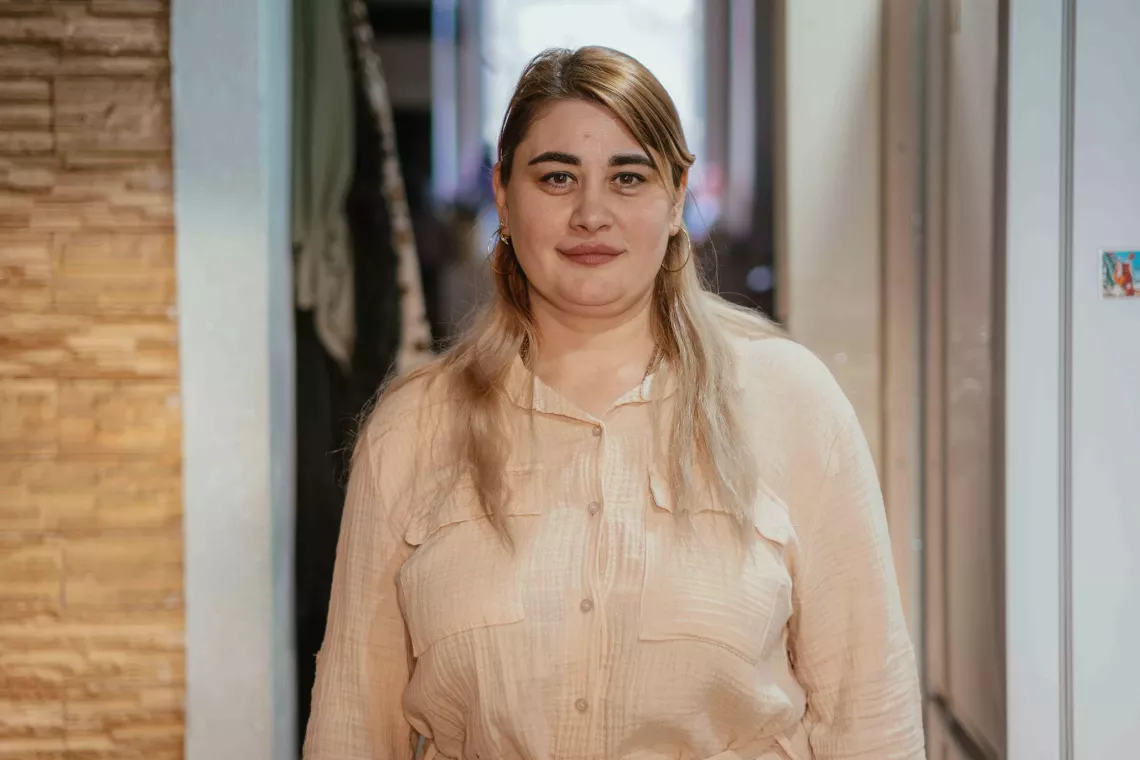
"Each child has their own shelves. They are very proud and already like: 'This is my shelf,’ I want them to understand that they are cared for, looked after. And they see what it's like to live in a family. I teach every child who lives with me that they are an individual.”
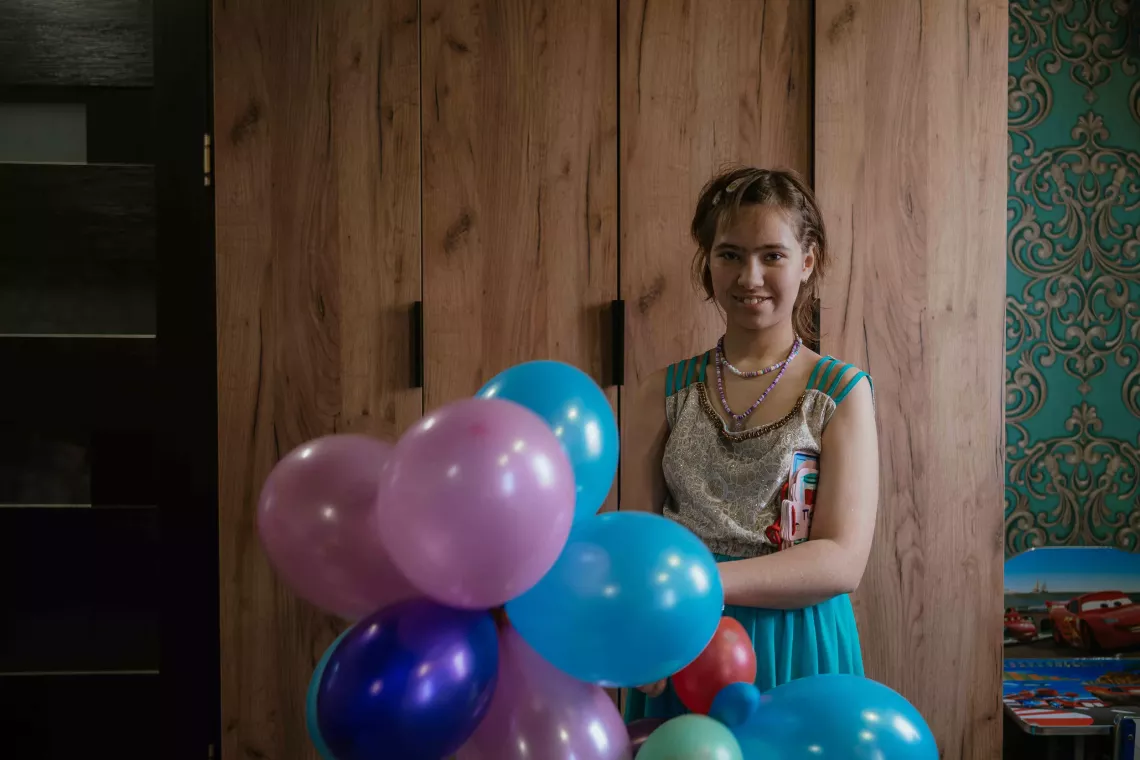
The children in Liudmyla’s foster family also received sets of winter clothes and shoes from UNICEF and the EU. Fourteen-year-old Maria especially likes her new jacket. Liudmyla says that when they go to special classes with teachers, the young girl loves to wear it.
"Maria has a disability,” says Liudmyla. “When she came, it was difficult at first because the child herself did not understand where she was. Maria communicates very poorly. She does not understand basic things – what day it is, what month, season. We are learning all this. Now she is learning to communicate. The teacher works with her, and the child seems to have started living anew.”
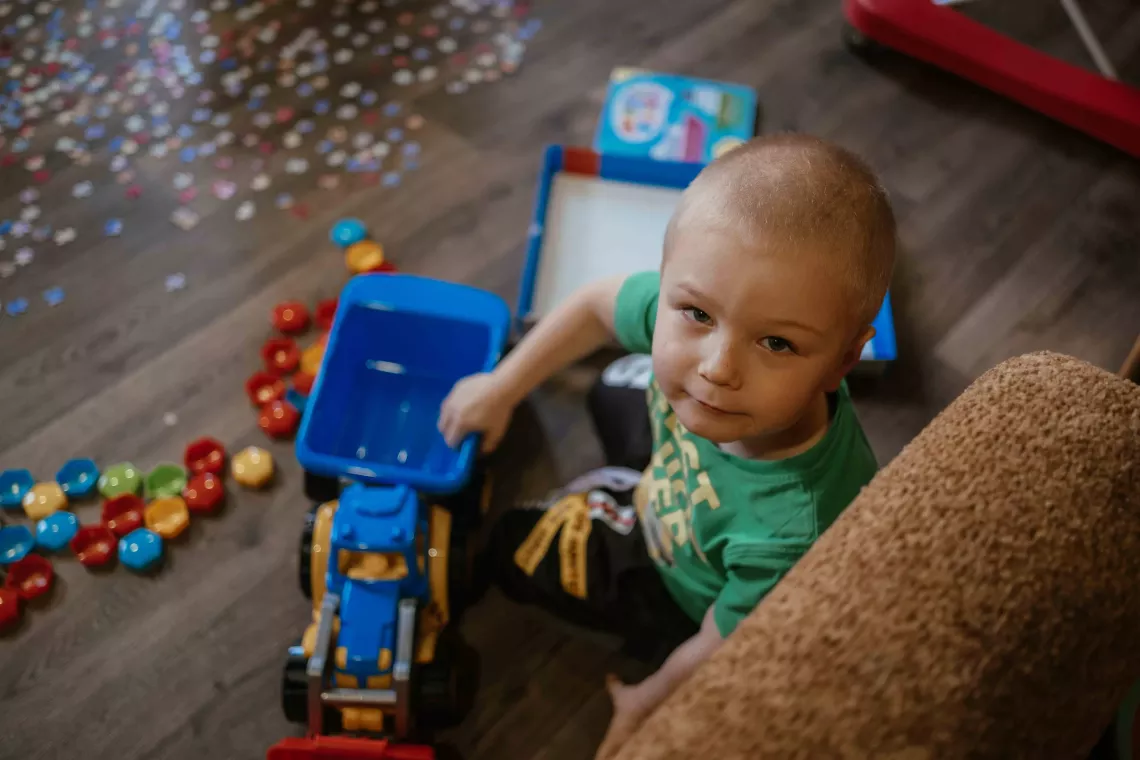
Despite the war, Liudmyla is determined to help the children have happy, positive childhoods. She has spent some of the aid she received from UNICEF and the EU on things to help improve the emotional state of the children and distract them from the fighting. For example, she bought Maria a drawing set.
"We received 20,000 hryvnias,” says Liudmyla. “I bought fruits for the children. Apart from drawing, Maria loves different beads and jewellery, so we bought some to please her. For the younger ones, we also bought soft toys.”
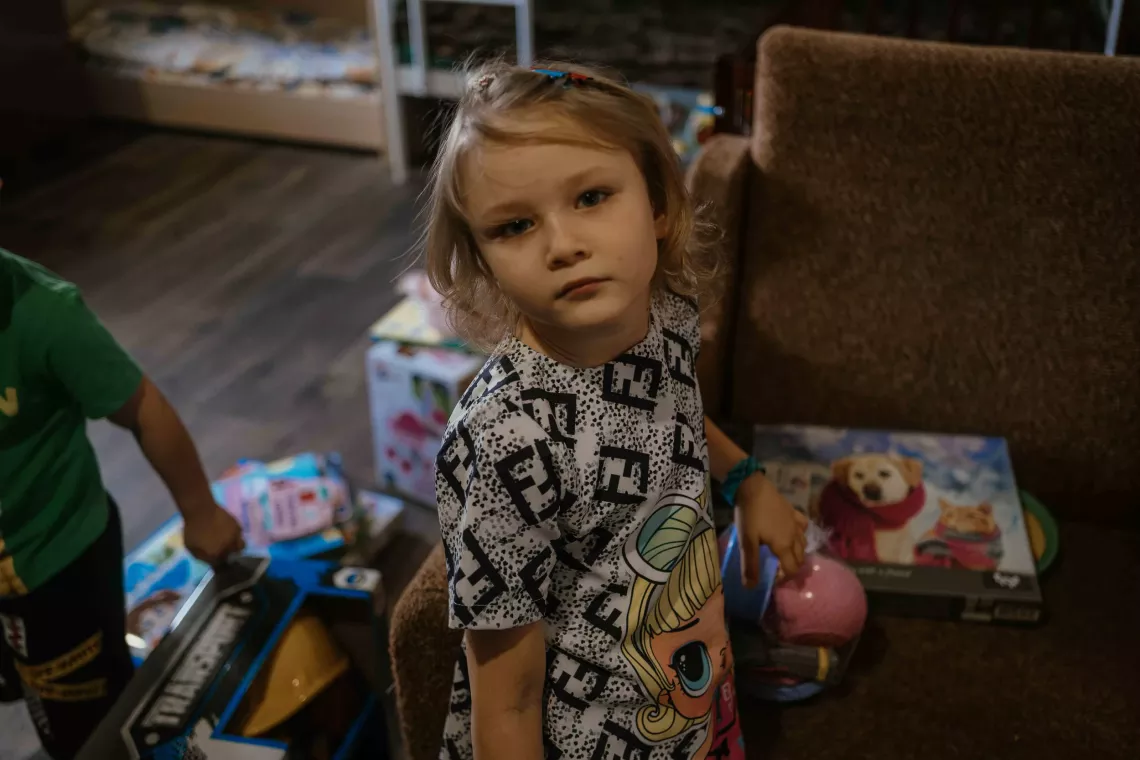
Liudmyla says that UNICEF and Partnership For Every Child have been supporting her family for two years. The aid she has received during this time includes towels and bed linen. She says these items have come in very handy for her foster family.
"Bedding is generally a painful topic for us,” she says. “There are many children and the bedding needs to be washed. By now, 18 children have lived with me, and every child wants to have their individual, clean and pretty linen.”
Liudmyla says that due to the war, being a foster caregiver has become even more important, particularly due to security challenges.
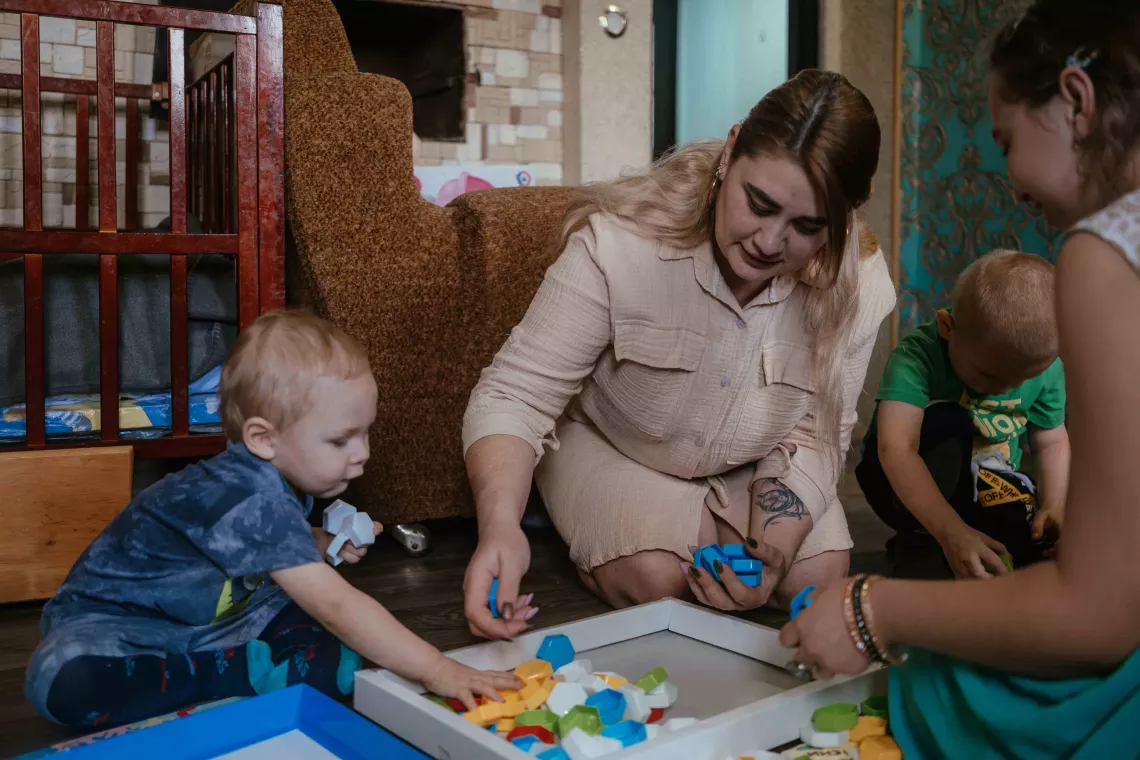
“I always have balloons. We inflate them and then deliberately pop them. And when something explodes somewhere, I tell the children that a balloon popped somewhere, so they stay calm” .
The ‘Family for every child: Better care for Ukrainian children’ project is jointly implemented by UNICEF, Partnership for Every Child, the Ministry of Social Policy of Ukraine, the National Social Service of Ukraine and the Coordination Centre for the Development of Family-based Care and Childcare. This project is financially supported by the European Union and the Austrian Development Agency (ADA).