“I want to create a kind, safe atmosphere for others”
The story of a girl from Kharkiv region who inspires others through creativity
- Українська
- English
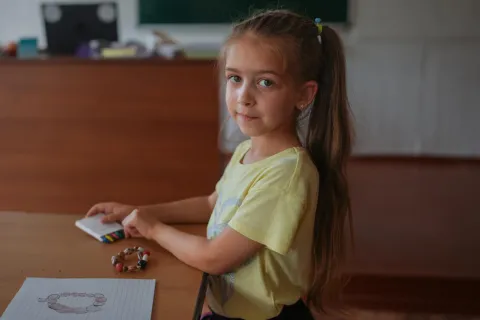
In a bright classroom, eleven girls carefully tie white fabric ribbons. One twist, another and slowly a small ball takes shape in their hands. Soon it will become the head of an angel. A dress, wings and a colourful belt are added — and a gentle talisman is complete.
Sixteen-year-old Liza, who is leading the workshop, moves from desk to desk, helping each girl tighten the loops just right.
“Everyone did it,” she smiles with relief.
The girls applaud, and even after the bell rings, they linger in the classroom, proudly showing each other their handmade angels.


“This isn’t just a workshop about traditional doll-making and learning our culture,” Liza explains as she gathers fabric and thread. “It’s also emotional relief — a chance to escape anxiety for at least an hour, and an opportunity for children to connect after years of online learning and isolation.”
Liza, dressed in a white embroidered blouse with red flowers, discovered traditional Ukrainian crafts four years ago — right after the full-scale war began and the frontline rapidly approached her hometown of Zlatopil in Kharkiv region.
“When I was leaving for a safer village to stay with my grandmother, I thought I was seeing everything for the last time — my classmates, my friends, my city,” she recalls. “The fighting was very close. When I returned six months later and saw my friends again, it felt like I could breathe freely for the first time.”
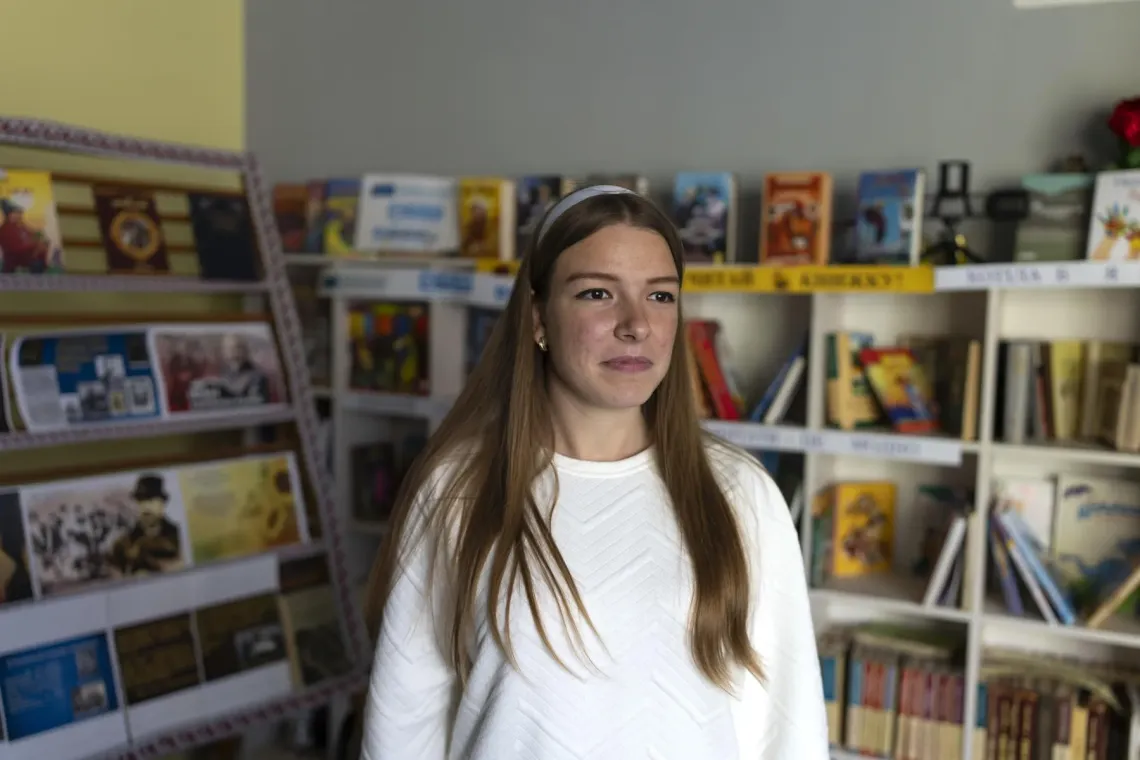
That moment became a turning point. Liza began volunteering and using creativity as a way to cope — and soon decided to share that experience with others.
She designed and launched a series of workshops and training sessions that help children socialise and deal with stress through different activities — from yoga to simple tea gatherings.
“I fully commit to what I do,” Liza says. “I really want to be someone who creates a warm, kind atmosphere for others and helps them feel better.”
Learning to reconnect
Liza says her desire to help others comes from her parents. From the first days of the full-scale war, both were involved in supporting their community.
“My mum works in local government and was at work from the morning of the invasion. My dad works with emergency services, so he went straight on duty,” she says. “For almost six months they worked non-stop. I stayed with my grandmother, and they could only visit every couple of weeks.”
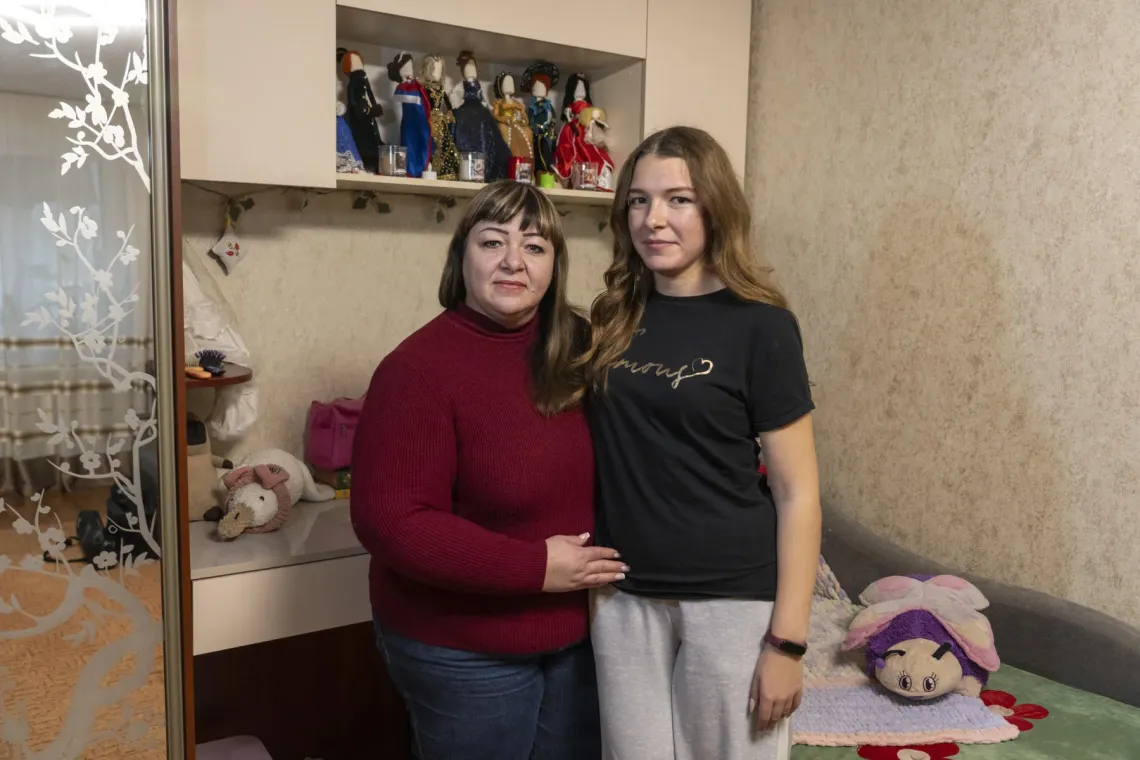
Mobile connection in the village was poor, making it hard for Liza to study or stay in touch with her parents.
The anxiety was compounded by uncertainty about how her education would continue and whether she would ever return to her class.
“On the morning of February 24, I suddenly realised that we might not finish school together, that our class might never gather at school again. And that was truly frightening.”
When the security situation stabilised and she returned home, Liza decided to reclaim the time she had lost. She joined her city’s Youth Centre, became involved in creative projects, was elected president of the school’s senior students’ league, and started attending catch-up classes supported by UNICEF as she prepares for university.
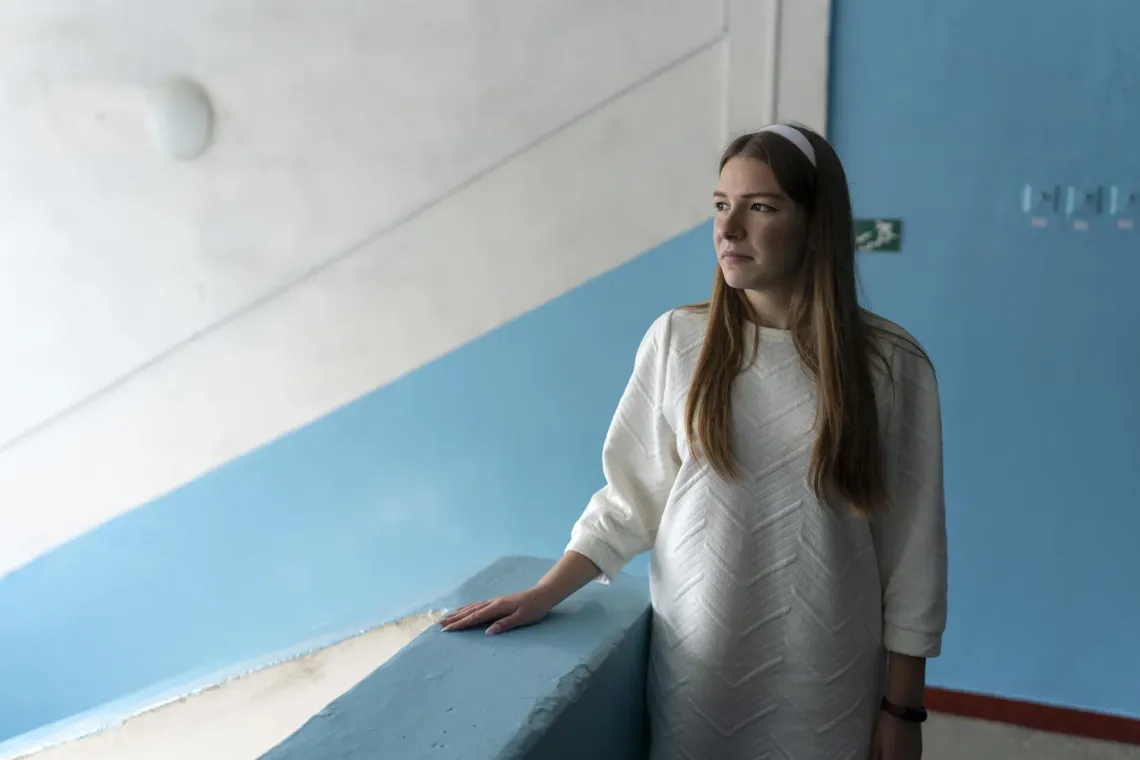
“I’ve noticed that because of the war, it’s become harder for teenagers to communicate,” Liza says. “Many have become more withdrawn. My class is very close — we talk, support each other. But there are classes where children barely communicate. During the war, socialisation is really difficult for teenagers.”
She adds that through training sessions, school leadership and creativity, she found new friends — and a clearer sense of her future path.
Creativity, even during blackouts
In her free time, Liza creates traditional motanka dolls professionally. Her collection includes dozens of pieces — from classic Ukrainian dolls in historical dress to figures inspired by Cleopatra or Marie Antoinette. Some she gifts to friends; others she sells abroad.
“When I make a motanka, I can sit for three or four hours completely immersed,” she says. “It helps me disconnect from reality, especially during air raid alerts.”
Even frequent winter blackouts don’t stop her.
“Electricity is on for only a few hours, so you have to work fast,” she laughs. “But even in low light, I keep sewing. I finished this dress using a torch.”
She takes down a doll dressed as Kate Middleton in a long blue gown inspired by the coronation of King Charles III. The soft toys filling her room are also handmade.


“I don’t know exactly where I’ll study or what profession I’ll choose yet,” Liza says thoughtfully. “But it will definitely be connected either to creativity or to working with people.”
Holding on to childhood
Reflecting on the past four years, Liza says she has learned to value school life and childhood, which passes faster amid air raids, shelling and constant danger.
When she started school, her class had 36 students. Today, only 25 remain. Many classmates fled abroad — from Poland to Australia — while new students joined after being displaced from frontline areas.
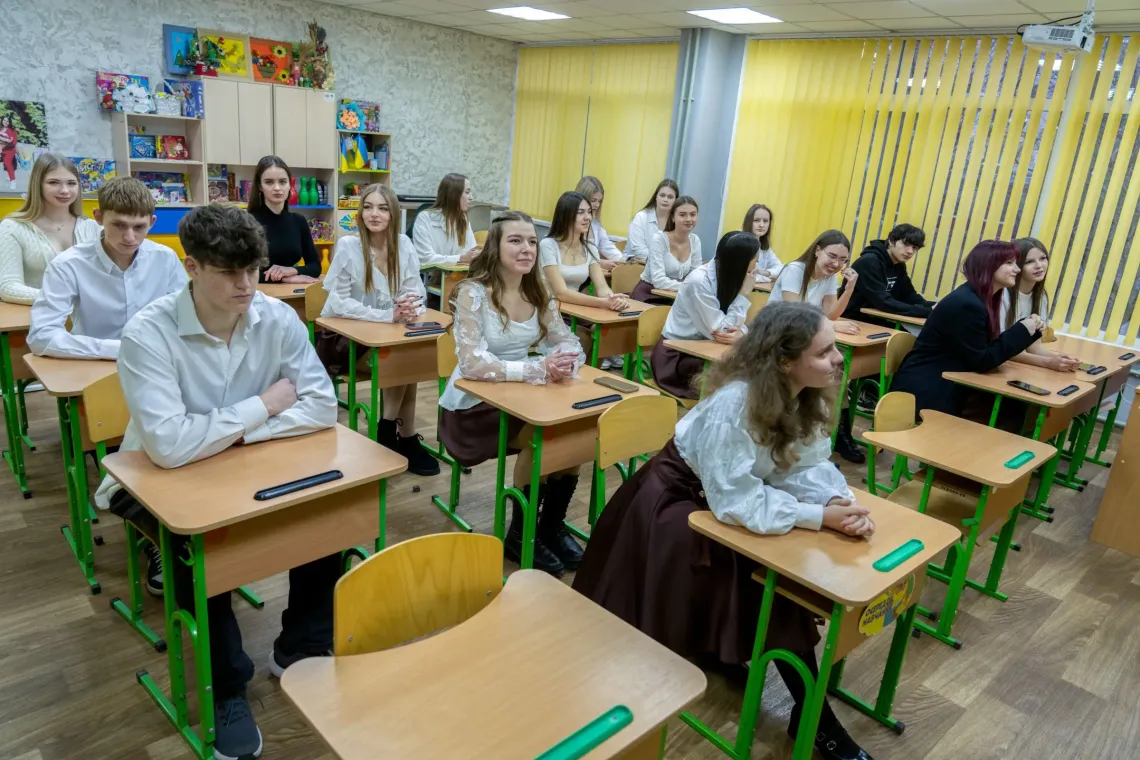
“We hold on to people for a long time,” Liza says quietly. “We miss those who left, keep in touch online, and easily welcome new ones. We’re a very close class. It’s hard to accept that soon I’ll leave, and everything will change.”
In five years, Liza imagines herself with a university degree, her own project or business and the chance to return home often, to see friends and family.
Because for her, creating warmth, connection and kindness, even during war, is already a way of shaping the future.