Ukraine’s newborns reap benefits of breastfeeding amid war
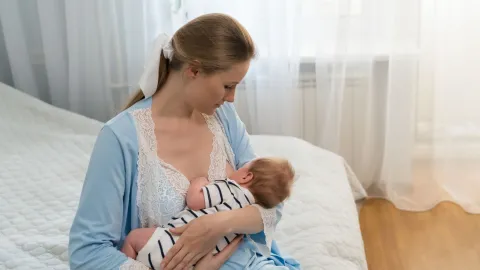
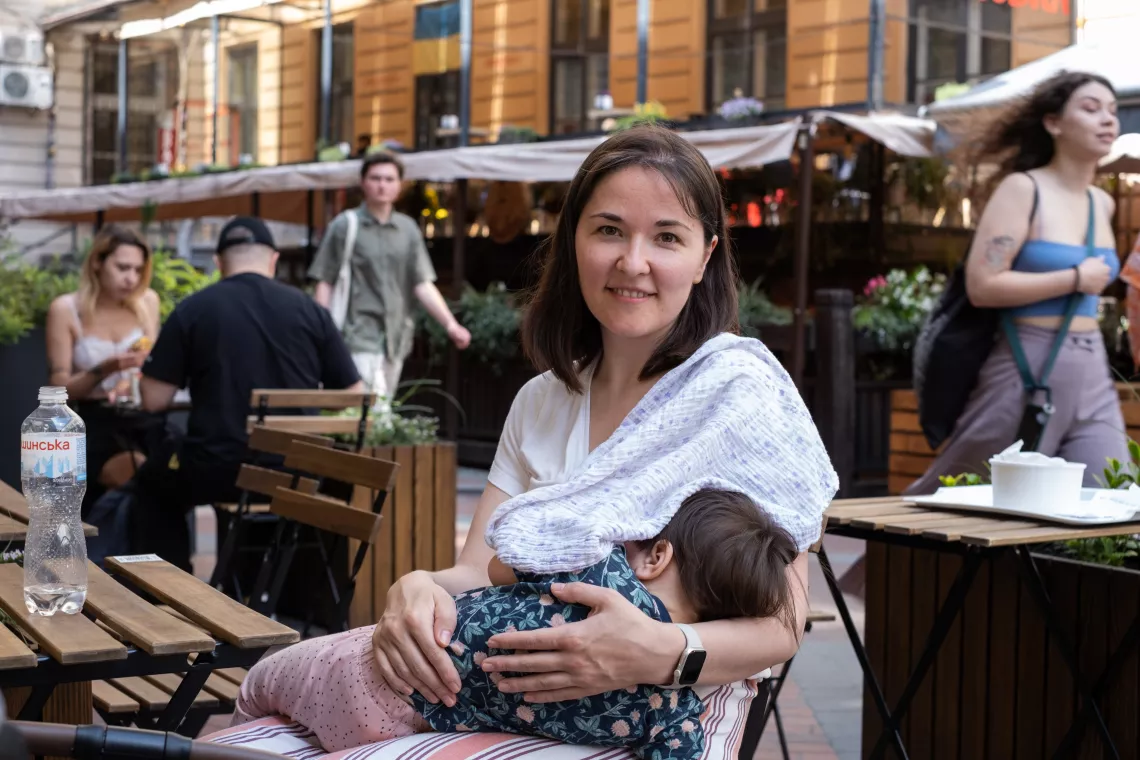
Halyna, who is determined to provide the best start in life for her young daughter Olivia, has been actively practising breastfeeding since the youngster was born
- Українська
- English
When baby Olivia was just one month old, her parents were forced to flee their home, as the full-scale war in Ukraine began to wreak havoc on millions. Thanks to breastfeeding, her mother Halyna was able to provide the nutrition and warmth that the youngster needed during their harrowing journey – first by boat, then by bus and finally by train.
"Breastfeeding is crucial for me,” says Halyna. “First of all, it calms me and my daughter. Moreover, the child can be fed quickly and immediately. After 24 February, baby formula disappeared very quickly in Kherson. Breastfeeding is an important part of my life with Olivia.”
Halyna had been due to visit the doctor on that fateful day of 24 February 2022. The night before, she had hardly slept, worrying about the birth of her child. Then, in the morning, she received a message from a friend that the war had started. She and her husband decided to go to the hospital and that evening their daughter was born.
"The first time I saw Olivia was after a C-section, she was lying not far from me,” recalls Halyna. “The doctors immediately put the baby to my breast. It was a fabulous feeling.”
Together with her baby daughter, Halyna was discharged from the maternity ward three days later. Their home city of Kherson was under constant shelling, and the new mother no longer felt safe in the hospital or at home.
"I wanted to give birth to a healthy child and take care of her,” she says. “I tried not to listen to what was happening outside. We heard the explosions, as we lived near the bridge over the Dnipro River. I realised that we had to leave for the sake of our child.”
It was dangerous to evacuate by car, so the family decided to cross the river by boat and travel through the estuary to the Mykolaiv region. They packed only the most essential items, such as official documents, a phone, diapers and warm clothes for Olivia.
"The baby survived the journey on our chests,” says Halyna. “Breastfeeding is our everything. When Olivia woke up, I would put her on my breast and we would continue on our way.”


For the first month of Olivia's life, Halyna breastfed her daughter everywhere she went. But getting used to it took time. She turned to the hospital’s breastfeeding counsellors almost immediately after the birth and consulted with specialists online.
"Olivia slept a lot and didn't want to breastfeed,” remembers Halyna. “However, I didn't want to give up breastfeeding and, with the help of specialists, I managed to get everything back on track. Now I just enjoy the process.”
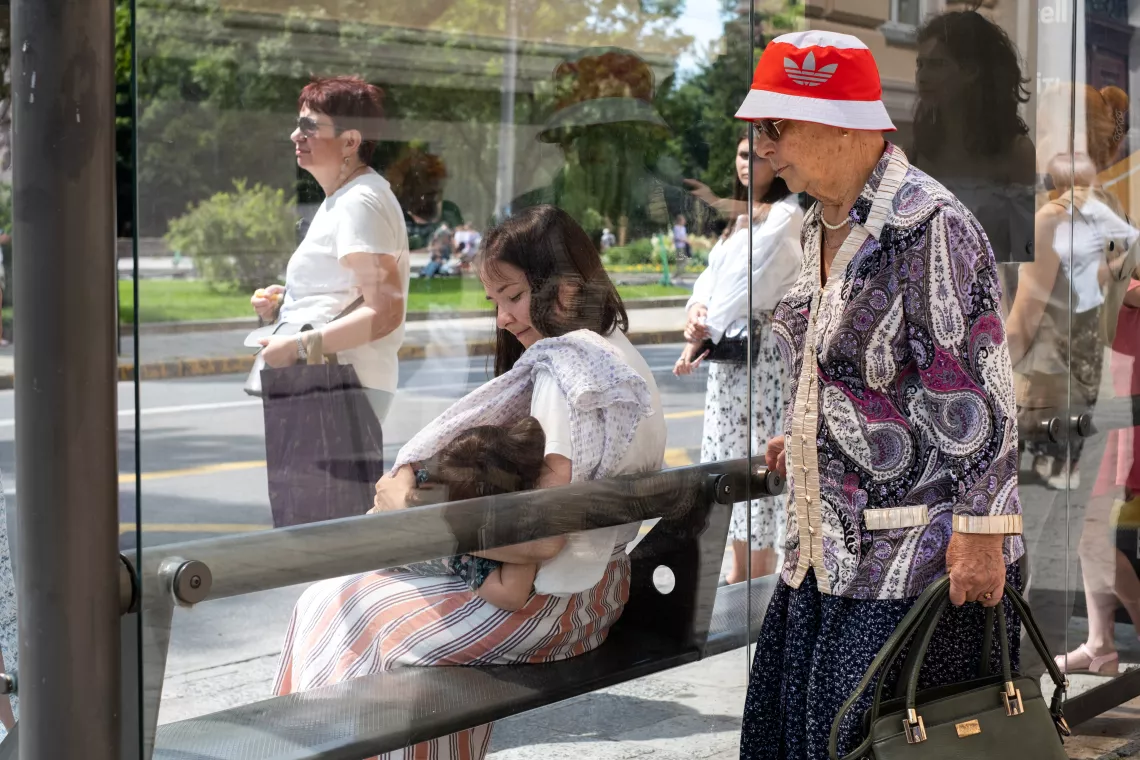
Halyna says that after the full-scale war broke out, she no longer cared about the opinions of others on breastfeeding in public.
"Once, I was at a bank branch and got stuck in a very long line. Olivia was hungry, so I fed her. For a year and a half, I didn't face any judgement, no one made any comments and no one said I chose the wrong place.

Halyna believes that young girls should be taught about the process of growing up at school and told who to turn to if they need help.
"If a woman doesn't have trusted people or relatives, there should be appropriate organizations. Sex education, professional counselling and a well-established infrastructure for breastfeeding mothers will help make motherhood happier.”
Breastfeeding has significant and lifelong benefits for both mother and child. Halyna plans to breastfeed Olivia until she is at least two years old – but for now, the main thing is to make it an enjoyable process for both of them.
"When I feed my daughter, I feel calm,” she says. “I look at Olivia and she looks at me, and it's such trust between mother and child. Breastfeeding is like an anchor in the stormy sea of life. I can stop and be alone with my child, and everything around me seems to freeze. These are very happy moments of my motherhood.”
Do you have questions about breastfeeding? Call the Ministry of Health and the United Nations Children’s Fund (UNICEF) hotline ‘Spilno to Health’ on 0 800 351 896 for advice on vaccination, breastfeeding and nutrition for children under three years of age. The project is co-funded by the European Union and the Government of Germany, and implemented by GIZ in partnership with UNICEF and the Ministry of Health of Ukraine.