A boy who grew up in instantly
Mykyta’s story from Kharkiv region
- Українська
- English
Mykyta’s day is planned hour by hour: school, training, exam preparation with tutors, helping his parents. Everything has to fit around power outage schedules: charging devices in time, doing homework whenever electricity is on.
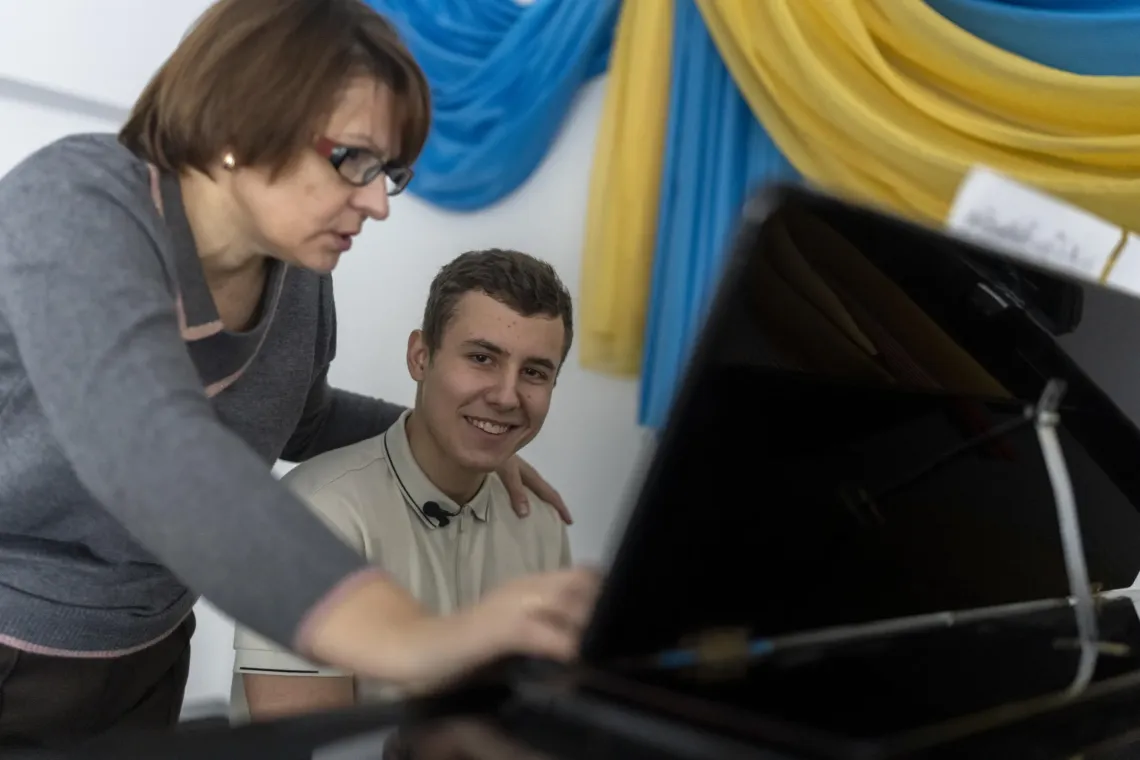
But when he sits down at the piano, time seems to stop. His fingers glide from note to note, and his reflection appears in the glossy black surface of the instrument: focused, absorbed in music.
UNICEF
“More emotion, Mykyta! This piece needs a storm of feelings,” says his music teacher and close friend, Ms Nataliia.
Today, Mykyta is playing The Poet’s Heart by Norwegian composer Edvard Grieg. The piece doesn’t come easily at first.
“It has to be expressive, but I’m afraid I’m not quite getting it,” admits the 16-year-old.
“Don’t be afraid,” Ms Nataliia reassures him. “I believe in you. I’ll help.”
She sits at the neighbouring piano and begins to play along. The music starts to flow.
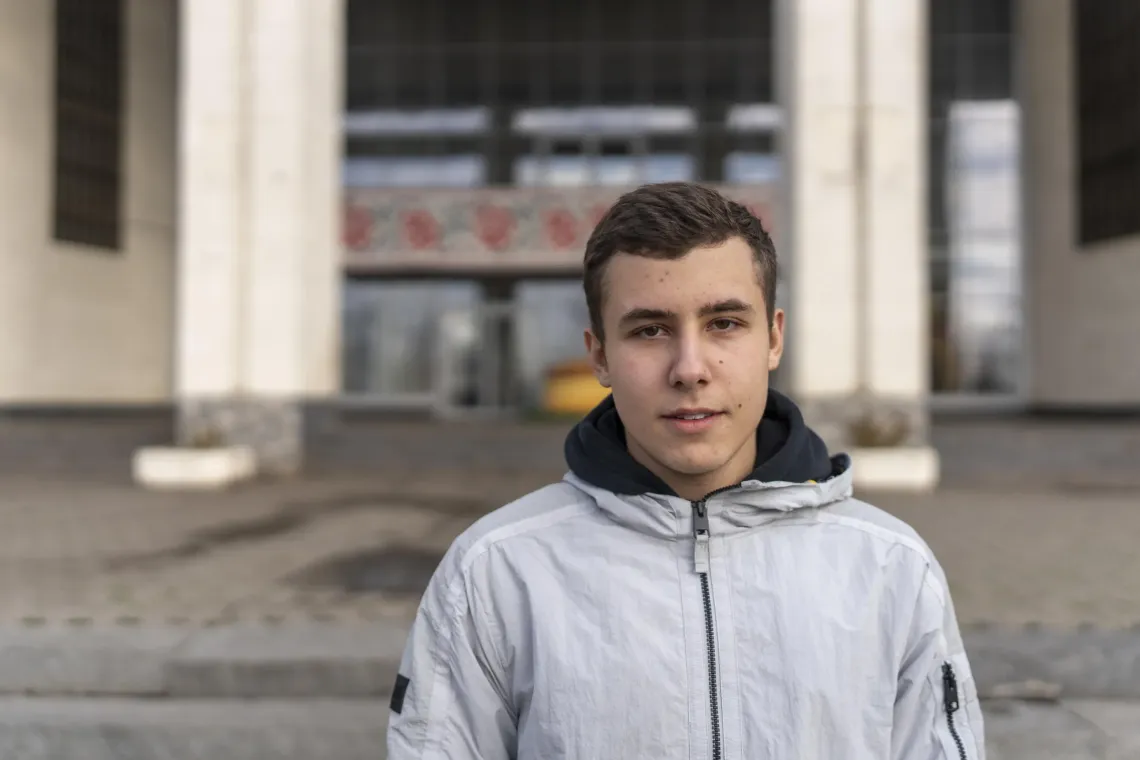
Over four years of full-scale war, Mykyta from the town of Zlatopol in Kharkiv region has changed several schools and countries. Yet throughout it all, he dreamed of returning home to his class, his music school, his teachers and friends.
“Everything abroad felt wrong - the language was difficult, people at school were strangers. Studying was hard, and more than anything I wanted to go back,” he recalls.
Zlatopol is a small agricultural town less than 100 kilometres from Kharkiv. In February 2022, the situation felt critical. Mykyta’s school closed, fighting was ongoing near Kharkiv, and shelling reached the town.
His mother decided they had to leave for his safety.
“It took us several days to get to Lviv. The roads were completely jammed. I remember a column of tanks heading towards our town. No one knew what would happen tomorrow, I didn’t know if I would ever return to my school or see my classmates again” Mykyta says. The journey to Bulgaria lasted more than a week.
Because of the language barrier, he was placed in a lower grade at school.
“The language was similar, but I still didn’t understand much. Instead of Year 7, they put me in Year 6. It wasn’t interesting, something felt off, so my mum and I decided I’d leave that school,” he explains.
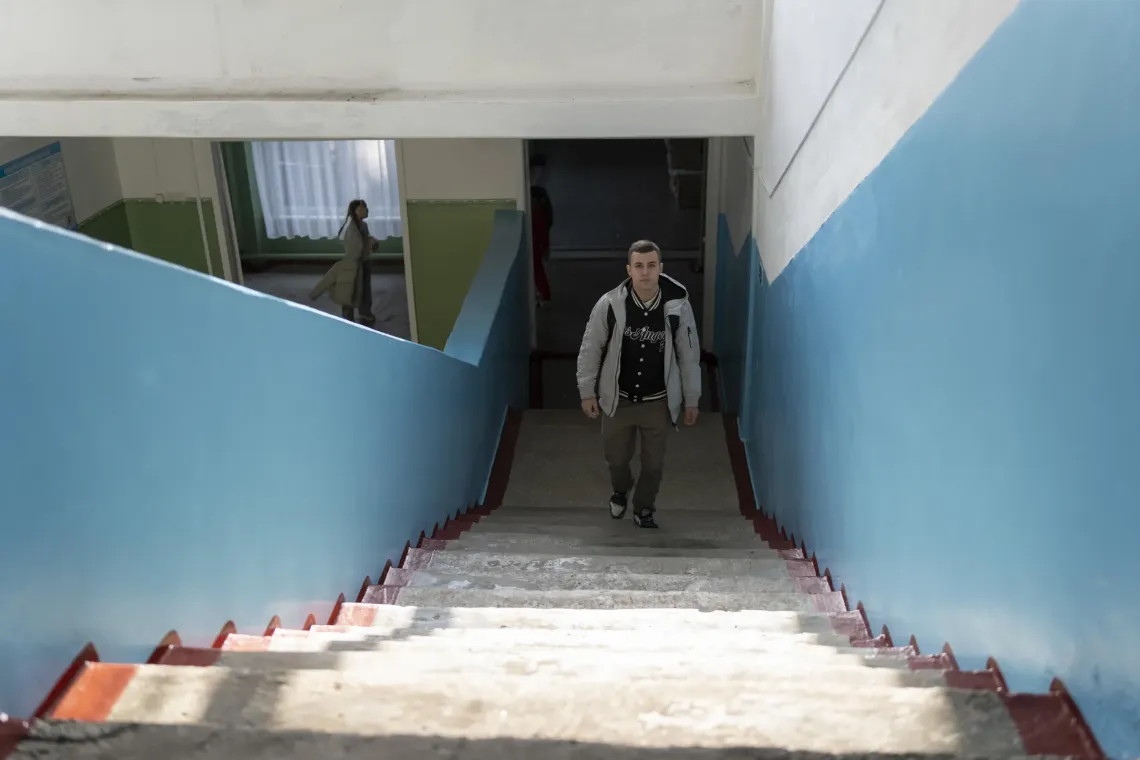
After that, Mykyta returned to online learning with his class at Zlatopol Lyceum No. 6.
“It was good to see my friends at least through a phone screen,” he smiles.
After Bulgaria, the family moved to Israel. A year and a half later, they were finally able to return home.
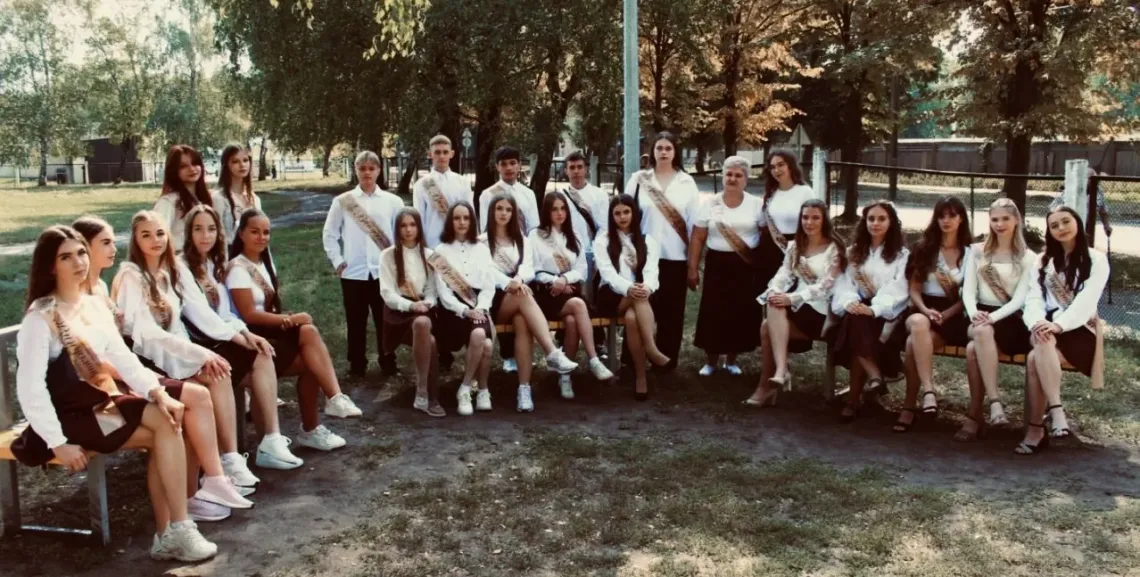
“When my mum said we were going back and that it was more or less safe, I was really happy,” Mykyta says. His class has always meant a lot to him.
Music, connection and sport as therapy
Music became the thread that kept him connected to home. Mykyta never stopped piano lessons with Ms Nataliia.
“We even looked for rented apartments abroad that had a piano,” he adds. He has won prizes at several music competitions.
Natalia Yevdokymova, director of Zlatopol’s School of Arts, says Mykyta before the war and Mykyta today are two different people.
“This generation grew up too early. When Mykyta first came to me, he was lively and chatty. Then the war began, he left and something inside him changed. He grew up in an instant. When he returned, he was different,” she says.
Although Mykyta doesn’t plan to pursue music professionally, it helps him cope.
“Piano and powerlifting are my main passions. They’re very different, but both bring me joy. And spending time with friends,” he says. Recently, he lifted an 82-kilogram barbell at a powerlifting competition.
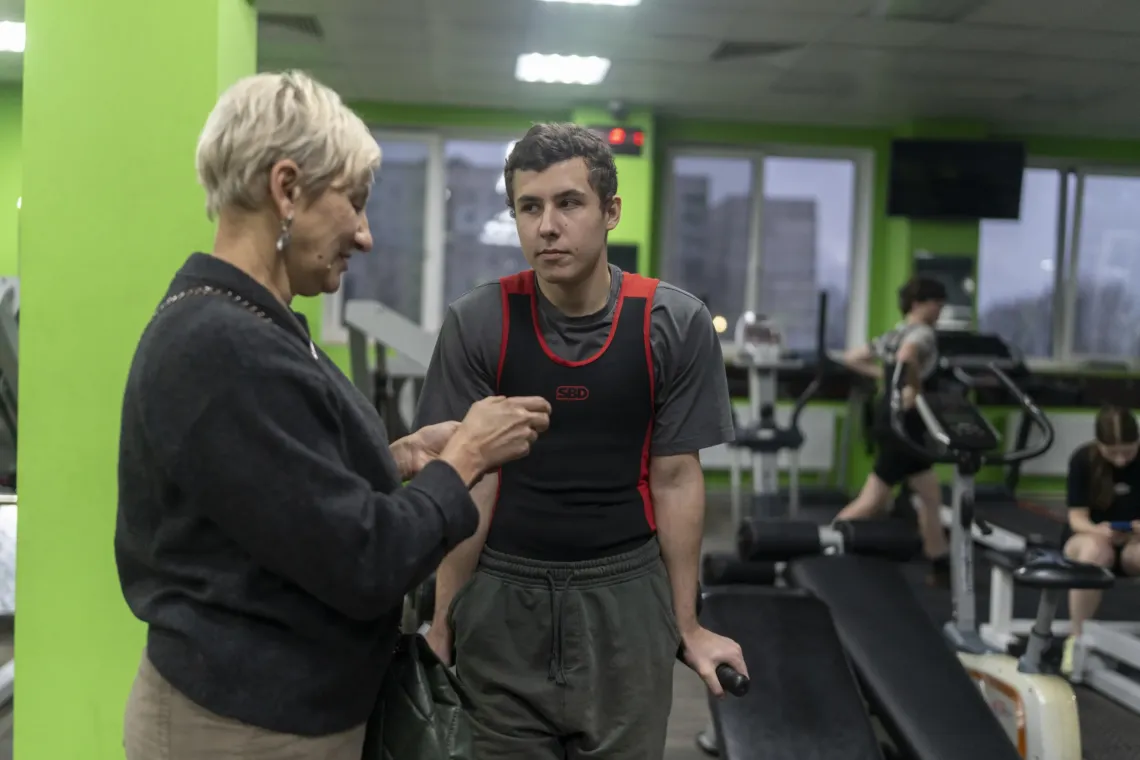
This is Mykyta’s final year with his class at his home lyceum. Next year, he plans to apply to a law university. Until then, he tries to spend as much time as possible with his friends.
“It’s heartbreaking that war takes away children’s childhood,” Ms Nataliia says as Mykyta repeats Grieg’s emotional piece. “To protect it, children need attention, support and space to develop their talents. Often, music and human connection are the best therapy.”