The weight of a mother's fear
"When your child is sick, take them to hospital for a check-up. If they are malnourished, they will get RUTF, because it is free. I did not pay a single cent for RUTF or for the nutrition services."

At the onset of August 2026, Geraldine Sabimana had taken her daughter to Nakivale Health Centre III for a routine immunisation. It was almost an afterthought when a nurse placed Nina on the scale. The reading was 4.2 kilograms, barely more than half of what a healthy eight-month-old should weigh. Geraldine was referred straight to the nutrition clinic.
"When they told me my baby was malnourished, I felt bad. I even feared moving among my neighbours,"
In a community where a child's condition can feel like a verdict on a mother's care, the diagnosis was not only medical. It was personal, and it was lonely.
Geraldine's fear is a familiar one at Nakivale. Long queues of mothers and babies form outside the clinic before it even opens. Some carry babies wrapped against the morning cold, while others hold the hands of toddlers too tired to stand in line.
A few have walked from the far edges of the settlement, where the paths turn to mud after rain and a clinic visit can take most of a day. Nobody speaks much. Everyone is watching the door.
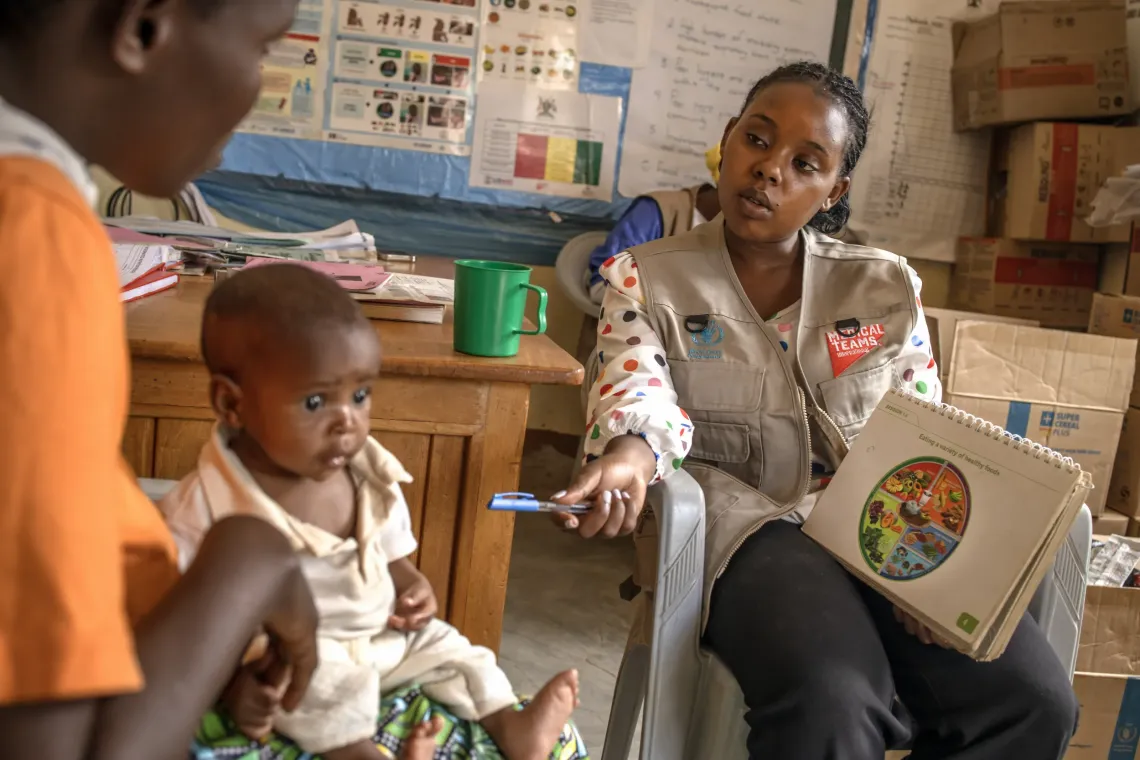
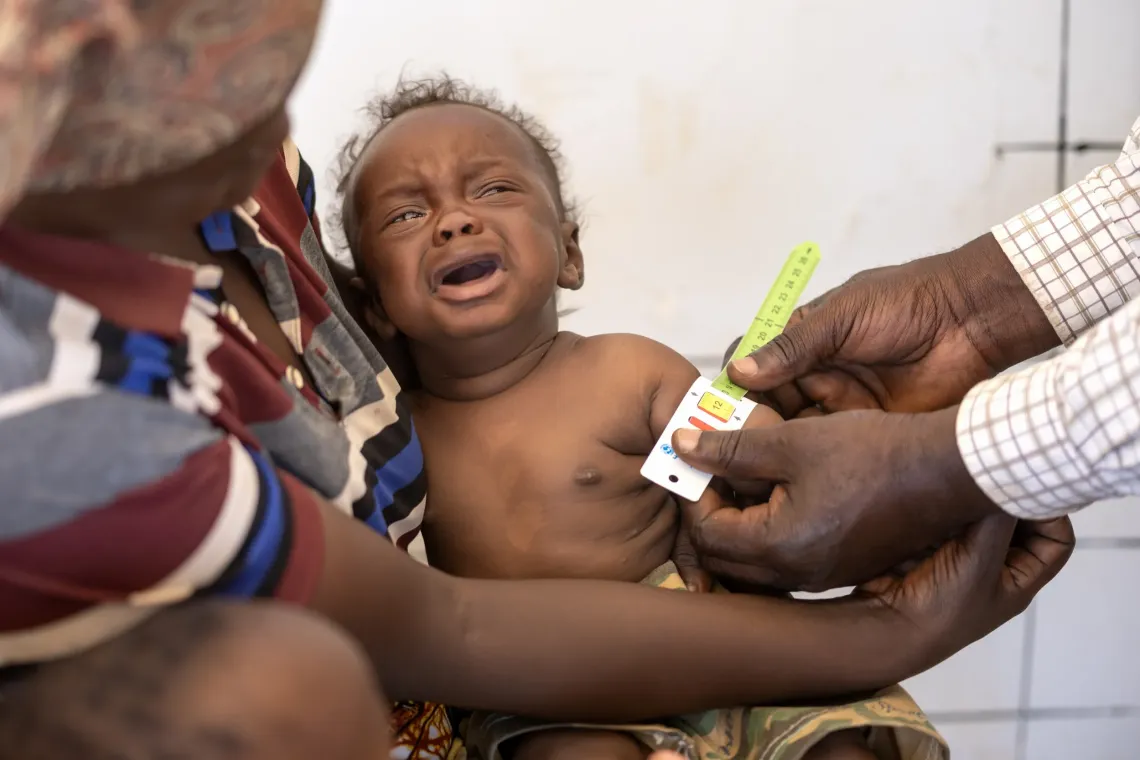
At the clinic, the routine is steady and practised. A child is weighed and measured, and a trained health worker measures mid-upper arm circumference at the midpoint of the upper arm and checks for bilateral pitting oedema— swelling in both lower legs or feet where pressing your skin leaves a dent that stays for a few moments. These findings, together with clinical assessment and an appetite test when indicated, guide referral and treatment decisions. For some families, the assessment is reassuring. For others, it marks the beginning of treatment and follow-up.
On 8 September 2026, the ration board indicated that ready-to-use therapeutic food (RUTF) and ready-to-use supplementary food (RUSF) were in stock. Children who met the relevant programme admission criteria could therefore begin the appropriate treatment without a commodity-related delay.
Behind that shelf of sachets sits a project most mothers will never hear the name of. The nutrition response at Nakivale Refugee Settlement is funded through the Uganda Humanitarian Fund (UHF). The fund brings together UNICEF, which procures the RUTF, and the World Food Programme, which procures the RUSF, with Medical Teams International (MTI) staffing the clinic day to day.
The health centre itself sits inside the settlement, run under the Office of the Prime Minister and UNHCR. None of it is visible from where the mothers sit. What they see is a nurse, a scale, and a week's ration of sachets handed to them without a bill attached.
Among the MTI staff is Abi Oworikunda, a nutritionist who has learned to read a child's future from the numbers on a MUAC tape. She sees between 70 and 80 patients on a normal day, each one weighed, measured and screened before a decision is made. It is unhurried, exacting work, repeated child after child, hour after hour, in a settlement where a missed diagnosis can mean a family goes home believing there is nothing to worry about.
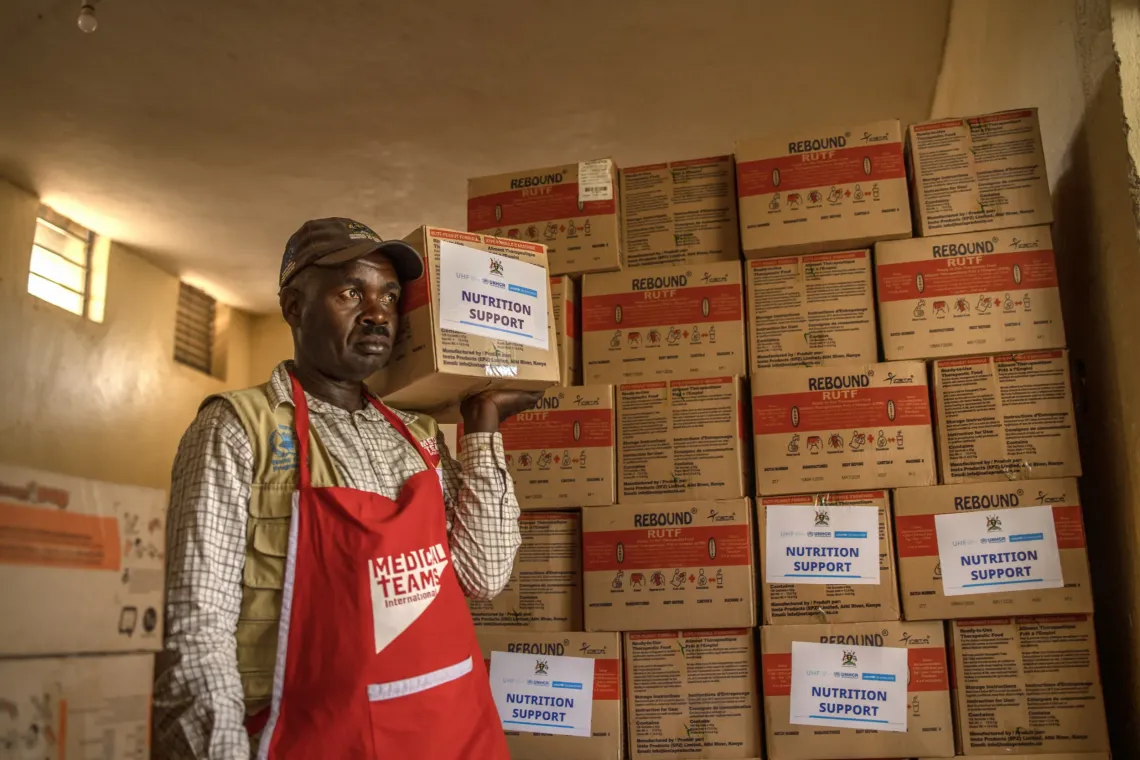
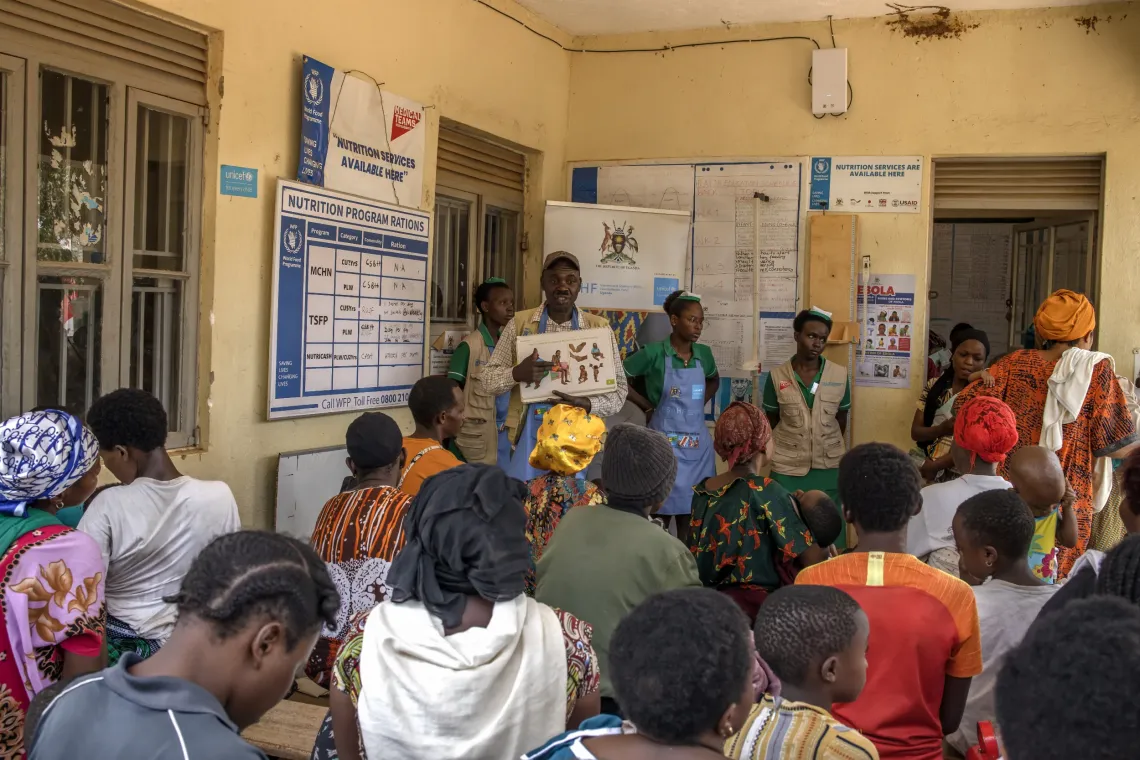
"On a normal clinic day, we can see up to 80 children," Abi says. "Each child receives the appropriate measurements and clinical checks. The findings help us determine who needs nutrition treatment, referral, counselling or continued monitoring."
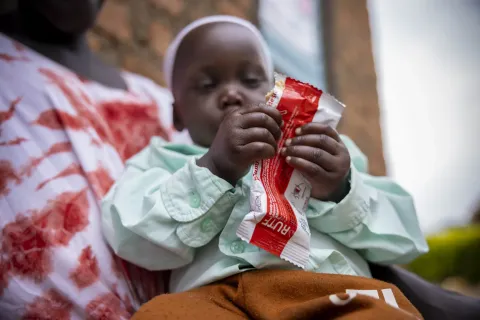
Nina did not go home untreated that day. Her low weight and poor appetite prompted further assessment by Abi and her colleagues. She was enrolled in outpatient treatment and sent home with a prescribed week’s ration of RUTF, together with instructions to return for weekly follow-up.
It was the kind of care that shows itself only in numbers on a chart, but the numbers began, slowly, to move.
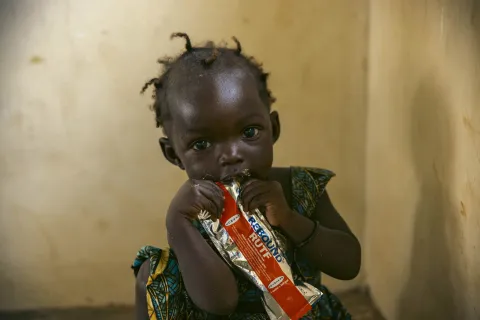
"RUTF has made a real difference for Nina," Abi says. "Her weight has improved, her appetite has come back, and her measurements are moving in the right direction. This is what we want to see in every child we enrol."
Abi is careful not to present treatment as the whole story. Child malnutrition usually results from several interacting factors, including inadequate dietary intake, illness, feeding and care practices, and limited access to health, water, sanitation and other essential services. At Nakivale, recurrent diarrhoeal disease and poor water, sanitation and hygiene conditions can increase a child's nutritional vulnerability.
"Many of the children we see have also experienced illness, including diarrhoea associated with poor water, sanitation and hygiene conditions," Abi says. "Diarrhoea can reduce a child's appetite and nutrient absorption while increasing nutrient losses and nutritional requirements."
Alongside the sachets, families are pointed towards agriculture, a way to grow their own healthy food to supplement the nutritional treatment they receive. Where gender-based violence threatens a household's stability, child protection services step in too. A malnourished child, Abi has come to understand, is rarely a story about food alone
A mother who takes home RUTF may also be referred to a hygiene promoter, a farming group or a protection officer, interventions that do not show up on the ration board but shape whether a child's recovery holds upon completing treatment with RUTF. For Abi and her colleagues, treating the number on the scale is only ever the first step.
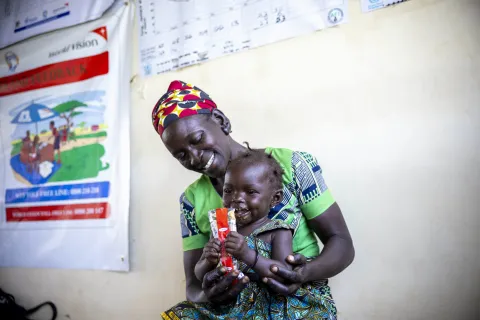
Geraldine took Nina home with a supply of RUTF and instructions on how much to give her. A month later, she returned for the follow-up weigh-in. The scale read 4.6 kilograms, and staff told her Nina was improving
"Now I feel good, because my baby is getting better,” Geraldine says smilingly.
Nina now eats one and a half sachets of RUTF a day, and Geraldine still prepares porridge for her at home, to supplement the treatment. The appetite that once worried Abi has returned, and the diarrhoea that stole nutrients from Nina's small body has eased. She is heavier in her mother's arms now, more restless, more curious about the room around her.
Geraldine has one message she wants other mothers to hear, spoken plainly.
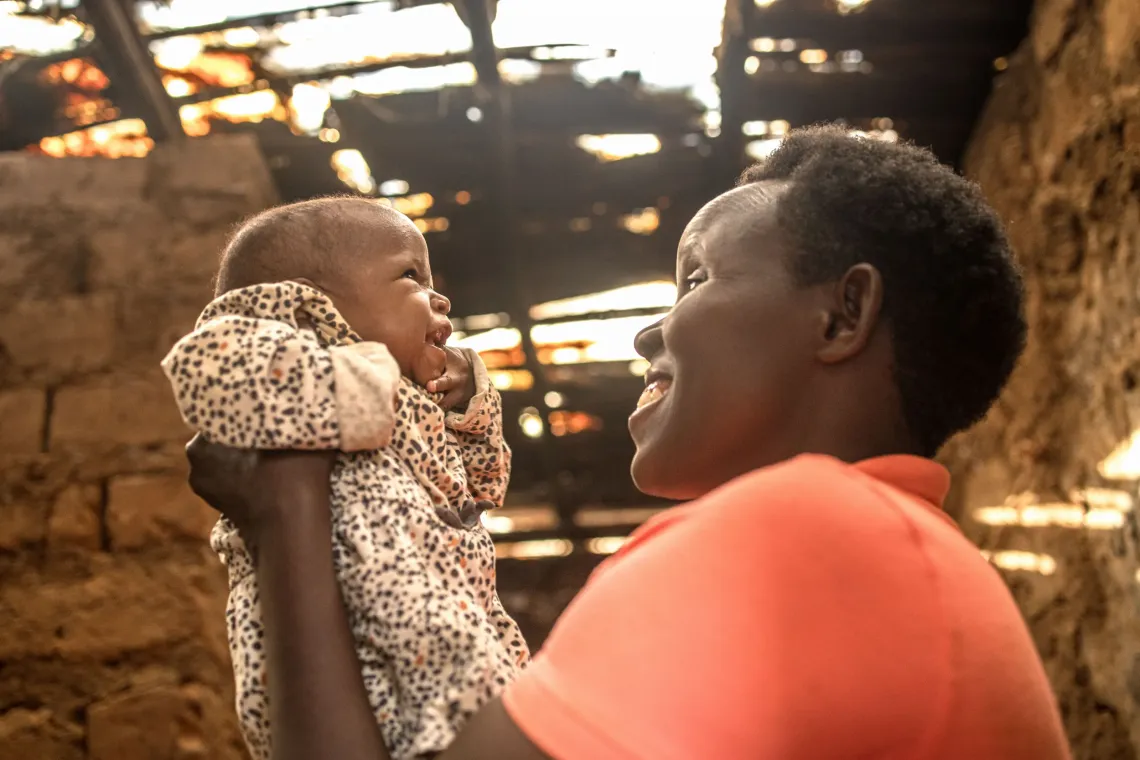
"When your child is sick, take them to hospital for a check-up. If they are malnourished, they will get RUTF, because it is free. I did not pay a single cent for RUTF or for the nutrition services."
Geraldine is a refugee mother in a settlement where money is scarce and every cost matters. That her daughter's recovery cost her nothing is not incidental. It is the entire point of the system: the fund, the agencies, the sachets on the shelf, all of it converging on one small girl and one weigh-in at a time.
Nina's file at Nakivale Health Centre III will eventually be closed, marked recovered, and filed away among dozens of others like it. But for Geraldine, the number on that final scale will not be a statistic. It will be the moment her daughter stopped being a source of fear and became, again, simply her baby.
Outside the clinic, the queue keeps forming each morning, another set of mothers waiting their turn at the scale. Some will hear good news. Others, like Geraldine once did, will be handed a referral and a fear they cannot yet name. What waits for them inside is the same system that waited for Nina: a nurse, a tape measure, a shelf of sachets, and, in time, the chance to feel what Geraldine feels now, watching her daughter grow heavier and more curious about the world each week.