Settling a father’s heart
The impact of a nutrition programme in Uganda

“They told me I needed to sacrifice a sheep,” Khadiri Aloro, 37, mutters.
The swellings on his two-year-old son’s hands and feet didn’t seem to be anything to worry about. But when the skin started peeling off in big patches, and wounds erupted all over the body, Khadiri knew something was wrong. Over two months, he visited three different traditional healers, as his aunts insisted that a curse had befallen the baby because of a garden Khadiri burnt down as a child. However, another relative, a health worker, advised Khadiri to seek medical help, whereupon the baby was diagnosed with severe acute malnutrition (SAM).
Harmful customs and beliefs are among the key factors contributing to malnutrition in Yumbe District in West Nile.
According to Zubairu Salim, an enrolled nurse and nutrition focal person at Yumbe Health Centre IV, sacrifice and retribution are common beliefs in the region, negatively impacting health-seeking behaviour, alongside low nutrition literacy and other socioeconomic and humanitarian pressures. Though Khadiri’s 29-month-old son had fallen sick in May, he was only taken to hospital in July after three visits to traditional healers and an animal sacrifice. The toddler was underweight at six kilogrammes, with poor appetite and displaying severe oedema (body swelling) and dermatosis (skin lesions), both caused by severe malnutrition.
“I was seriously stressed,” Khadiri says.
After initial emergency inpatient therapeutic care and later, an appetite test, the baby was placed on outpatient therapeutic care (OTC) consisting of home-based daily treatment with ready-to-use therapeutic food (RUTF), and weekly monitoring visits to the hospital. This therapeutic care is part of a UNICEF nutrition response targeting children aged 6 to 59 months. Funded by the Uganda Humanitarian Fund, the six-month project aims to support the identification, referral and treatment of children with SAM: 21,650 across 13 refugee-hosting districts, and a further 15,500 in the Karamoja sub-region.
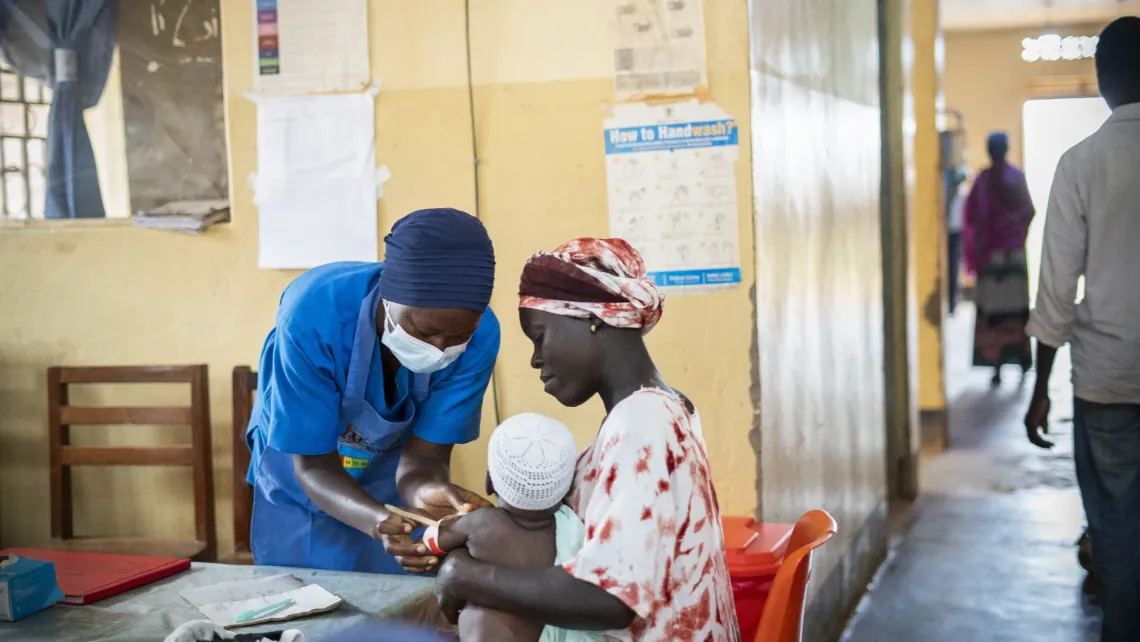
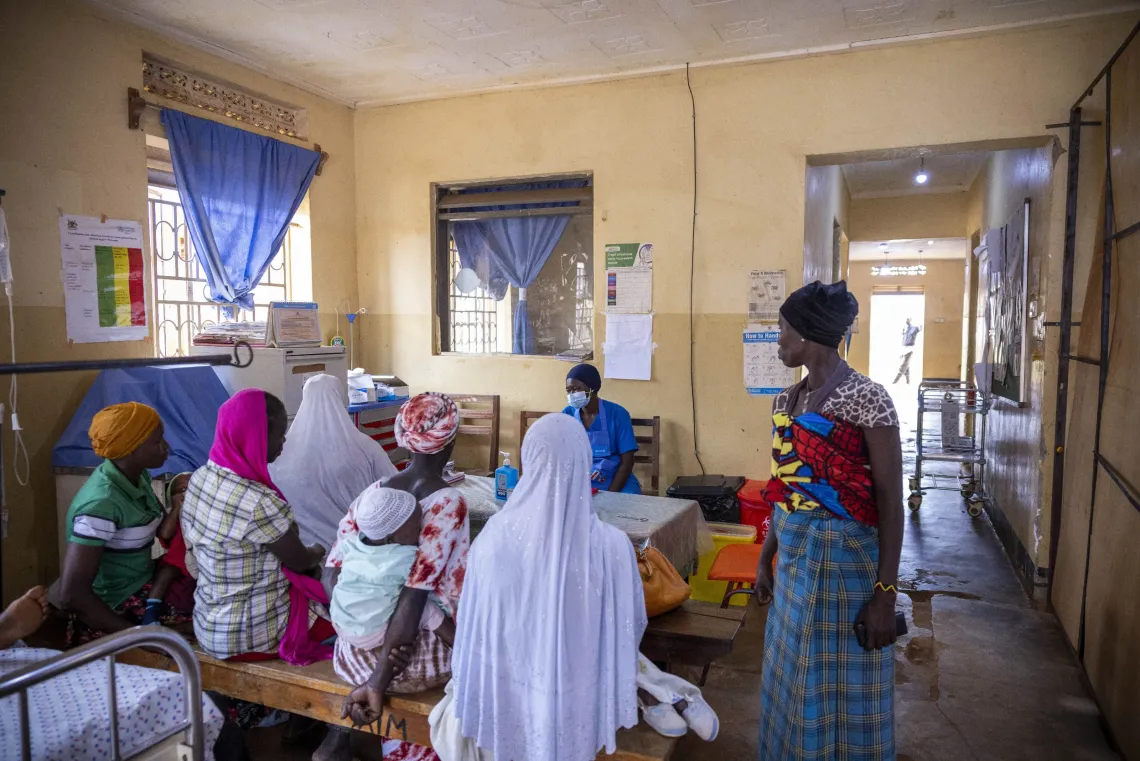
Within the health facilities, caregivers receive wholesome nutrition education that addresses personal beliefs, attitudes and values about food, promotes early screening and detection, and ensures proper and hygienic adherence to therapeutic feeding at home. Through mass screenings and integrated outreaches, the health facilities take nutrition education and care to the communities, especially in hard-to-reach areas, to ensure that children can grow up healthy and strong and reach their full potential.
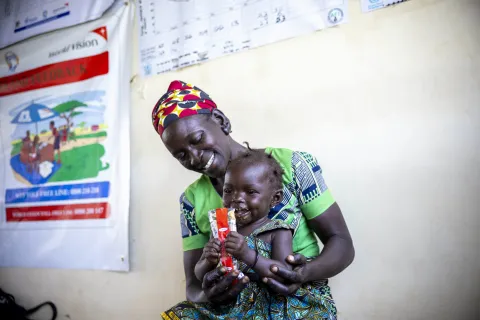
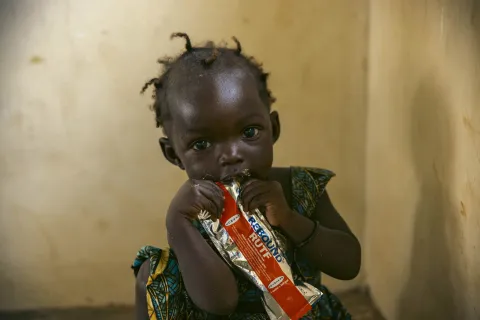
Khadiri’s son now easily recognizes the red and silver RUTF packaging, reaching for and gleefully licking the peanut butter-vitamin multinutrient paste as it is squeezed out of the sachet. Six weeks after his first hospital visit, two-year-old Ajga’s weight has increased by two kilogrammes, and his MUAC reading is normal at 14.3cm. He is scheduled for complete discharge in one week and will no longer need the RUTF.
Jostling for space on his mother’s lap, Ajga’s twin brother frequently sniffles and coughs.
“You need to take him to the hospital,” the nutritionist advises during a follow-up visit to the household.
Khadiri nods in agreement, “I know that medicine really helped my child.”
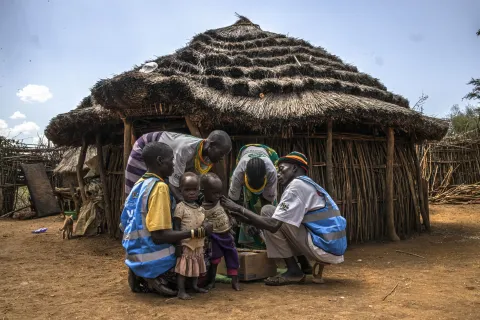
Upon admission to the nutrition project, caregivers are linked to village health teams (VHTs) who continue to follow up on the family’s nutrition practices, the progress of the child and any other health issues. The VHTs, occasionally accompanied by other health professionals, also integrate nutrition within all other health education, identify and refer new cases, monitor those on treatment and follow up on the discharged.
Back in Ugofe Village, in Yumbe Town Council, Khadiri seems to ponder as he steadily gazes at his now wound-free, plump-looking son playing with a banana finger.
The 37-year-old father rests his hand over his chest and says, “Amwasi acha ala.”
“My heart has now settled down.”