It takes a consortium to nourish a child
How volunteers, caregivers and a nutrition project are fighting severe acute malnutrition in West Nile

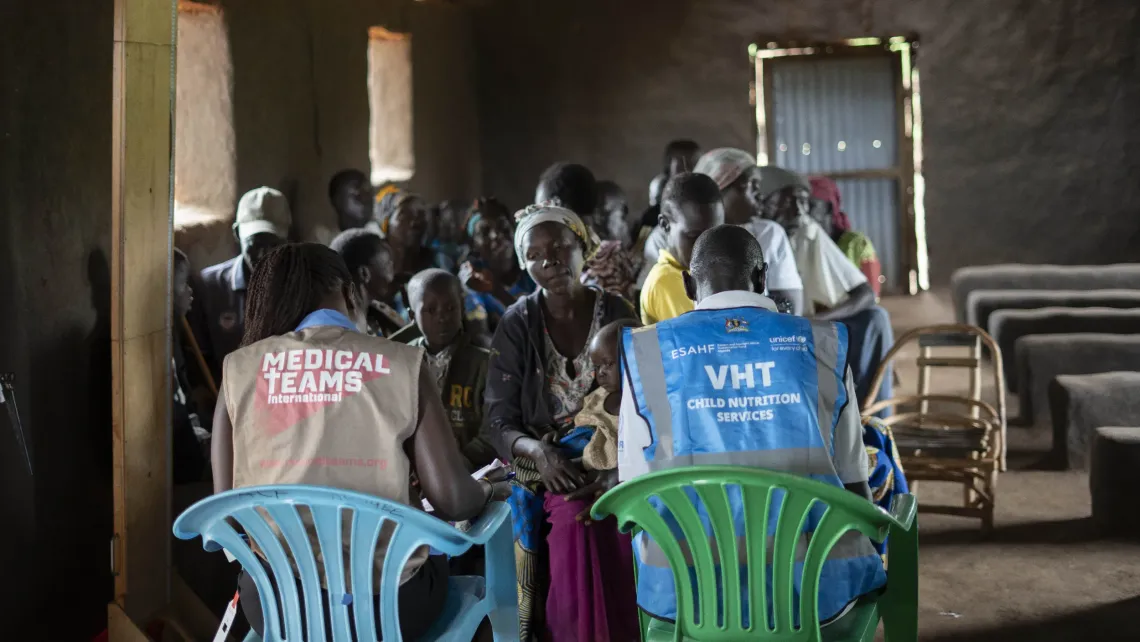
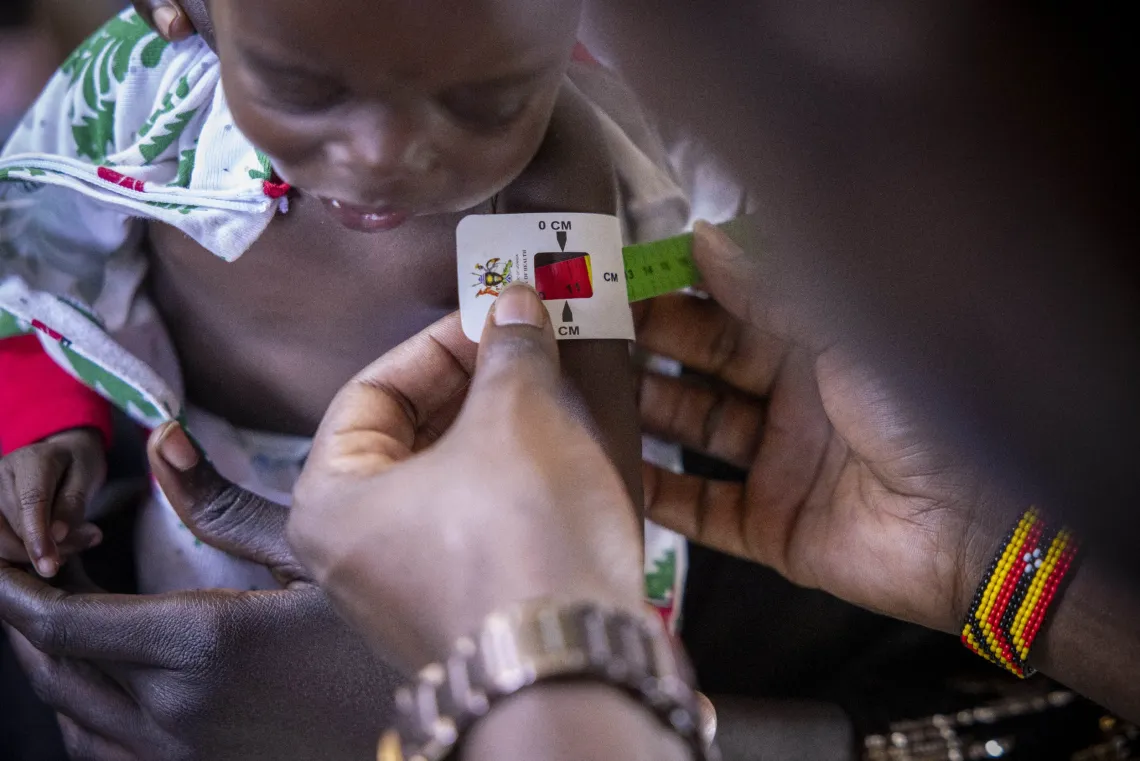
“Come now, they have arrived,” the voice of a village health team (VHT) blares over a megaphone, announcing the start of an integrated nutrition and health outreach in Village 13, Cluster 5 in Bidibidi Refugee Settlement in Yumbe District. Across the border in Terego District, an enrolled nurse at Uriama Health Centre III measures the height, weight, and mid-upper arm circumference (MUAC) of a child, checks for oedema (body swelling), and dispenses pre-prescribed ready-to-use therapeutic food (RUTF) based on the child’s weight and the scheduled follow-up period. Just outside the nutrition block, a grandfather inspects the vegetable seedlings of a model kitchen garden, preparing to give them to mothers of malnourished children.
All three are part of a UNICEF nutrition response targeting children aged 6 to 59 months with severe acute malnutrition (SAM). Funded by the Uganda Humanitarian Fund, the response aims to support the identification, referral and treatment of a total of 37,150 children with SAM: 21,650 across 13 refugee-hosting districts, and a further 15,500 in the Karamoja sub-region.
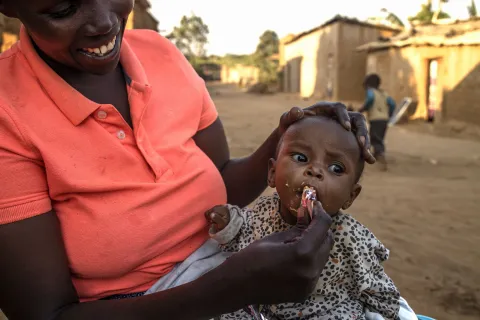
Nuriat, 19 months, is one such child. Her mother, Desire Faiza, 24, was abandoned by the child’s father. With no one to support Faiza and her then five-month-old baby, she became immensely distressed, her breast milk supply dried up, and she struggled to feed the baby. “I used to give her black tea because that’s what I had,” Faiza says softly, fingers pulling at her green, ankle-length dress, while seated at the nutrition ward in Yumbe Health Centre IV. Health workers across Yumbe District say abandonment is one strand in a wider pattern: alongside early marriage and limited access to family planning, it leaves many households headed by young single mothers, some barely out of their teens, with little support. “The doctor told me I needed to feed her millet, porridge, fish and vegetables,” Faiza says. Eight of the nine mothers with her in the ward are single parents averaging 26 years of age.
According to Zubairu Salim, the Nutrition Focal Person at the health facility, even after weeks of treatment with inpatient and outpatient therapeutic care, relapse is common during the planting and harvest seasons when mothers leave young children at home alone for long stretches to work in the gardens. This is one reason the response utilizes mass door-to-door screening and outreaches. “We follow mothers to their homes and remind them of the need to feed their children well, how to use locally-available foods and how to identify malnutrition,” Zubairu says.
Ensuring that child nutrition is a household initiative
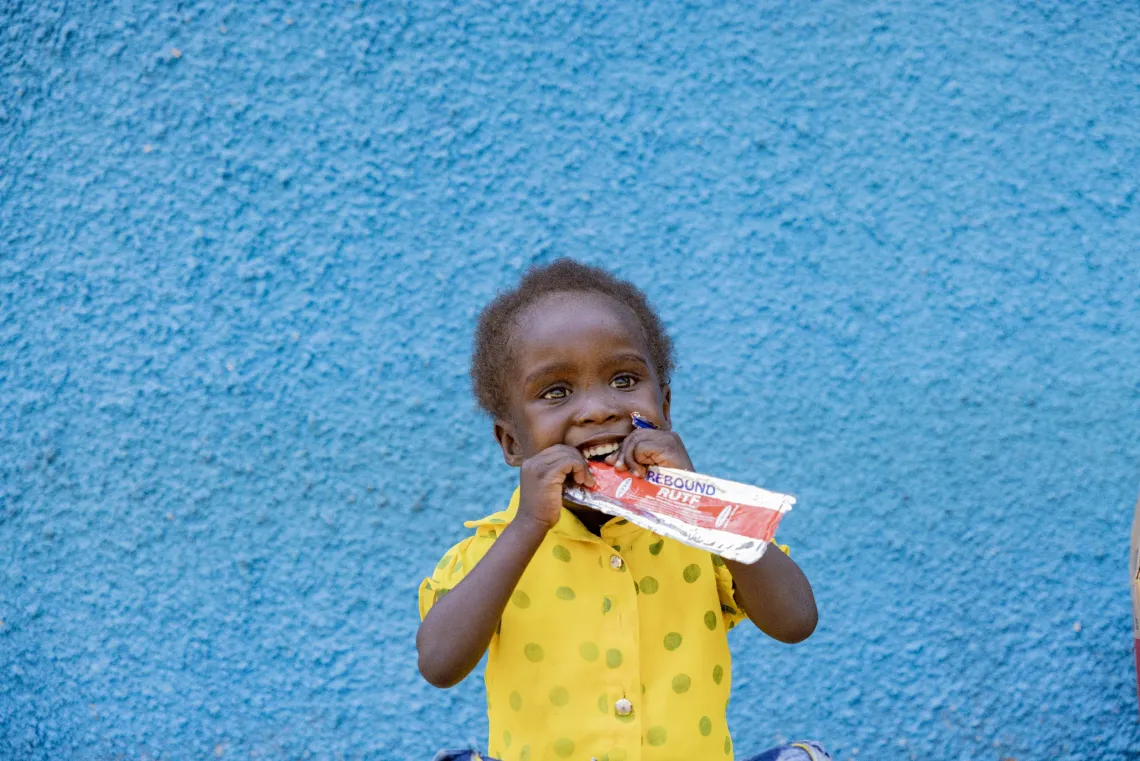
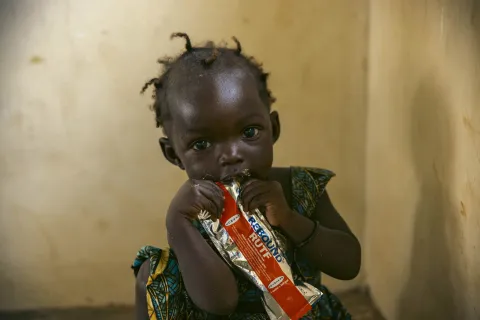
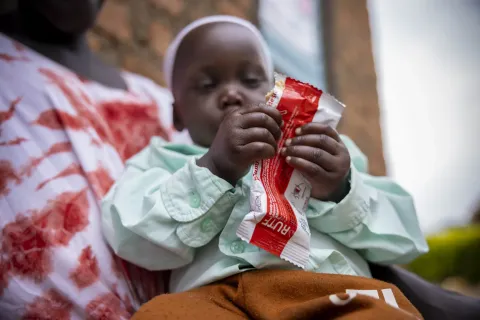
Identifying SAM is only part of the task; treatment and prevention are the others. Boosted by VHTs and community volunteers, the nutritionists teach mothers the importance of growing and including vegetables in the household diet. In Terego District, this work is carried out by both health workers and caregivers like Martin Awo, 43, a model parent in Ofua 3 Village at Rhino Camp Refugee Settlement in Terego. When Martin’s three-year-old granddaughter first visited the health facility, she was underweight at 8.8kg and her MUAC measurement was in the red range, at under 11.5cm. Four weeks later, the toddler sits at the veranda of the nutrition unit, slowly squeezing out RUTF paste and eating it carefully, ensuring that no drop falls to the ground. Both her weight and MUAC are back in the green/normal range. A few metres away, Martin walks a VHT toward the hospital demonstration garden for which he is responsible, carefully tending vegetable seedlings sprouting under a papyrus shed. “I try to ensure that she feeds well at home,” Martin says of his granddaughter, smiling at her fondly, “so she can be healthy and one day go to school.”
Ensuring that nutrition services remain available
Beyond household level, the project is also strengthening government systems to fully integrate nutrition as a regular service at health facilities, from triage to dispensing treatment. Vincent Kasule, the Nutrition Focal Person at Uriama Health Centre III, notes that though fighting SAM begins as a personal initiative, the project has enabled the facility to expand identification, referral and treatment of SAM. Within four months of the project launch in April 2026, 765 children with SAM in Terego and Yumbe had been identified through the mass door-to-door screenings and integrated outreaches and were receiving treatment at Uriama and Yumbe Health Centre IV.
“Our real target is to have limited or zero cases of SAM, and a community well equipped with right practices for good health and nutrition,” Vincent Kasule concludes. “And the only way to do this is together.”