The colour green
A community health volunteer in Nakivale Refugee Settlement took in an abandoned, dying child. A year on, a simple screening tape tells her, in colour, that he has made it.
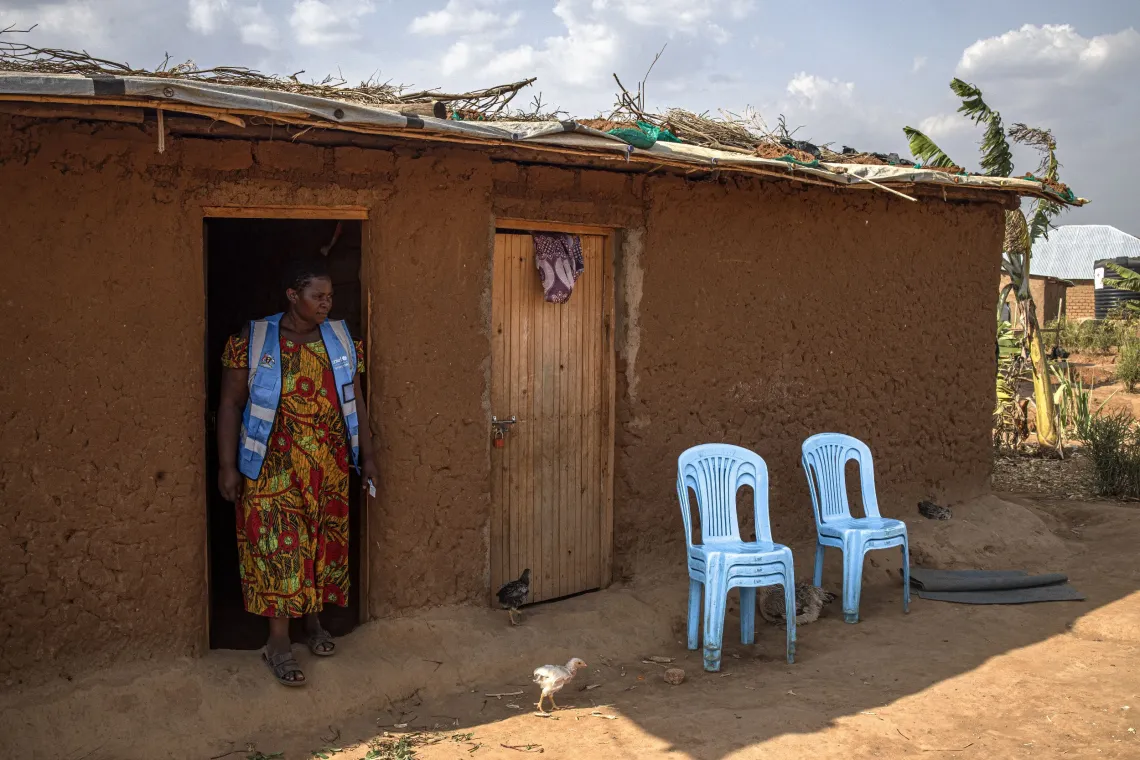
The dry season has stripped the colour out of the vegetation in most of Nakivale. The soil has turned the colour of ash, and the banana leaves hang limp along the paths Christine walks each morning, a screening bag over her shoulder and MUAC mid-upper arm circumference (MUAC) tape coiled inside. Three months without real rain have faded almost everything in the settlement.
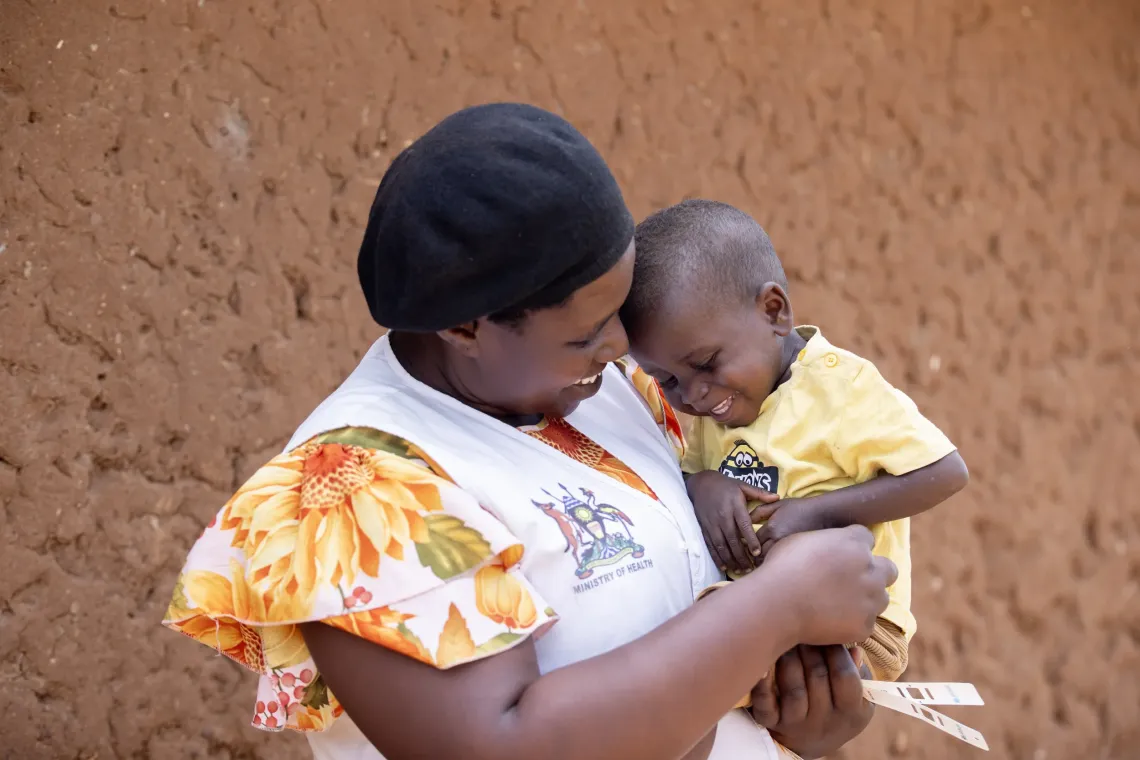
Christine Uwase wraps the tape around the small arm she has measured countless times, her fingers now finding by instinct the exact point where it is tight enough to read. This time, the colour that settles into view is green, not yellow and not the red that once meant a walk to Nyarugugu Health Centre III, in Nakivale Refugee Settlement in South western Uganda in with a child too weak to make the journey on his own legs. Green simply means a child is well.
For most Village Health Team members, a green reading is routine, one line in a register filled in and moved past without a second thought. For Christine, on this boy, it reads like a verdict on a year of her life. His name is Raphael Mutuyimana. He is three years old and not her son by blood.
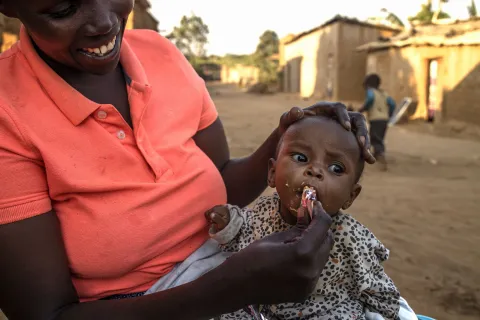
Christine found him during a routine screening round, abandoned and so gravely malnourished that his survival was genuinely uncertain. She could have logged the case, referred him on and gone home to her own family that evening. Instead, she carried him home herself, along with his brother found in the same condition and raised them both with the children already in her house.
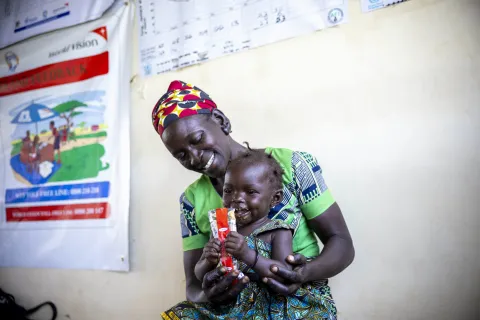
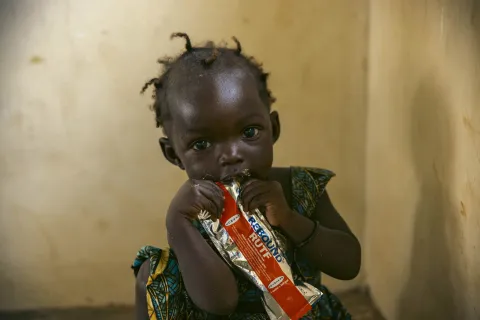
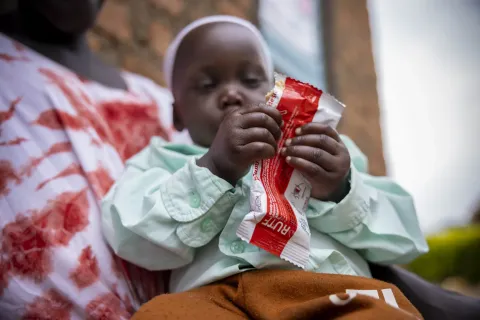
"When the MUAC turned green, I was very happy," Christine says, something in her voice still catching on it. "I got him when ‘he was red’, then ‘he moved to yellow’, and now ‘he is green’. I fed him on RUTF from Nyarugugu Health Centre III and followed the guidance the doctors gave me. I also fed him on greens and silver fish for protein."
The RUTF that Christine and hundreds of other children on treatment, are receiving is supplied by the Government of Uganda with UNICEF support and funding from the Uganda Humanitarian Fund.
The months between were not a straight line upward. When Christine first took Raphael in, malnutrition had already opened the door to persistent diarrhoea and vomiting that emptied out whatever small gains a meal had made. "The biggest change I have seen is that the diarrhoea and vomiting are gone and he is now able to play with his friends," she says.
"My biggest challenge now is to stop him from slipping back to yellow or red on the MUAC tape measurements. Food is scarce because of the dry weather, but I have to keep fighting to keep him healthy."
Recovery is never a door that closes behind a child for good. It is one Christine must keep leaning against, every day, for as long as the dry season lasts.
Today Raphael sits beside her on a plastic chair while she works, one of several children waiting their turn for screening, no longer needing to be the centre of her attention.
Nutritionist Wasswa, who managed his treatment at Nyarugugu Health Centre III through the worst of it, has watched the recovery from the clinical side of the same story.
"Raphael's case is one of the clearest examples of what happens when clinical treatment is matched by consistent care at home," Wasswa says. " A child with a committed caregiver recovers, and stays recovered, in a way we cannot achieve from the clinic alone."
The systems behind Raphael’s recovery do not know him by name, but they made sure Christine had the tape, training and supplies she needed when it mattered most. The RUTF that helped move him out of the red zone is procured with funding from the Uganda Humanitarian Fund, which keeps therapeutic food stocked before needs surge and prepares volunteers like Christine before a crisis hits.
Marion Awolo, the District Nutrition Focal Person for Isingiro, points to cases like his whenever she is asked why the district keeps investing in volunteers rather than waiting for children to arrive at a clinic on their own. "A volunteer who can act quickly, and who understands what a child needs beyond the clinic walls, is often the difference between a case that resolves and one that keeps coming back," she says.
When the screening ends, Christine folds the tape back into her bag and Raphael runs off to join the other children in the dust outside. There will always be another arm to measure and another dry season to survive, but for one boy, on one ordinary afternoon, the answer was finally, simply, green.