The initiative that runs on goodwill
A country-wide project in Uganda is strengthening the capacity of hundreds of civil society organizations through an informal multi-agency approach with limited, shared costs, but massive results.

When there is no money for a coffee break at training sessions, the organizers message or phone one another, and everyone contributes what they can.
Informal collaboration is at the core of the story of Uganda's Joint Civil Society Organization (CSO) Institutional Capacity-Strengthening Initiative. In November 2025, over 20 United Nations agencies and members of the Humanitarian International Non-Governmental Organizations (HINGO) Forum converged to build a national training programme, with no memorandum of understanding, no facilitation fees, no venue hire and no participant allowances. In nine months, it has trained 112 CSOs from over 20 locations.
Through practical training, peer learning and networking, the initiative draws on the partners' shared expertise to enhance CSO governance, financial management and resource mobilisation. Other training areas include monitoring and evaluation, safeguarding, inclusion, humanitarian principles, advocacy and communication and digital innovation. The Initiative also trained CSOs to register on the United Nations Partner Portal, a single, centralized way to connect, share information and apply for partnership opportunities across several United Nations agencies.
"Collaboration with international organizations doesn't necessarily mean funding," Nicoletta Confalone, the Chief Field Operations and Emergency, UNICEF Uganda, explains. "We can collaborate on coordination, on advocacy and on enhancing CSO readiness for Uganda’s transition to a middle-income country."
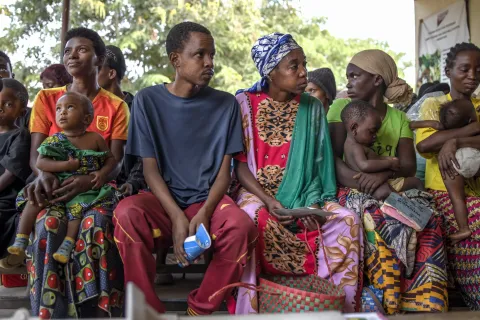
At the first training in Gulu in November 2025, the venue was a partner facility, facilitators were staff of participating organizations, and participants' time was their own contribution to their own strengthening.
For Grazia Paoleri, a senior technical advisor who joined the coalition as a refugee response expert, it is unlike anything she has worked in before. "For the first time in my working life I see organisations working in unison without any boundaries, and agencies working in the field with first-hand experience of community need," she says. “This initiative is demonstrating that it is possible to do better with less."
At the heart of the initiative is localization: shifting power, funding, and decision-making from international to local organizations which already exist within communities and can respond faster to humanitarian and development needs, positioning CSOs as development partners and not only implementing partners. Sarah Carl, Head of Programmes at the International Organization for Migration (IOM) notes the groundbreaking approach to localization by building the capacity of local NGOs in a zero-cost approach. This approach is vital in times of shrinking funding and contributes to Uganda achieving the Sustainable Development Goals. Under the leadership of UNICEF, the World Food Programme (WFP) and HINGO, via Brass for Africa, one of its members, the Initiative partners bring technical knowledge to the grassroots, then high-quality implementation of local projects continues with or without them. John Peter Okori, the National Monitoring and Evaluation Officer at IOM sums it up as a "coalition of the willing."
The Marketplace: The initiative includes the opportunity for CSOs to showcase their work to the facilitators at the end of the training, as well as to donors, private sector representatives, other United Nations agencies and international NGOs, and religious leaders, bringing all stakeholders into one room. During the marketplace in Arua, two CSOs working on land rights struck up a collaboration on the spot, and a group promoting hygiene in schools shared its step-by-step booklet so others could avoid duplicating work.
Brass for Africa, which joined the initiative through HINGO, mobilized INGO support and is helping register and rally local CSOs. Andrew Agassi, the CEO, who represents localization and partnerships on the network's steering committee, notes that the marketplace “brought CSOs closer to potential funders and allowed them to learn from what others are doing … and that created the opportunity to collaborate."
Inclusion in practice: Disability inclusion, one of the training topics, was taught in Gulu and Arua by Annette Babirye Luwambo, from Humanity and Inclusion, and who is herself a person living with a disability. She trained participants on the models of disability and inclusive programming, differentiating between segregation, exclusion, integration and inclusion. “The sessions were very inclusive of participants and trainers alike,” says Nimungu Claire Doreen, a participant from Nebbi Women with Disabilities Association, adding, "It gave me courage, joy, and insight at the same time."
A July 2026 follow-up survey highlighted improvements in organizational performance, partnership readiness and effectiveness among the 40 CSOs that responded; nearly 70 per cent had registered on the United Nations Portal. Through designated WhatsApp groups, created as part of the initiative, CSOs can share information, best practices, training and funding opportunities, and receive coaching, mentorship and one-on-one support.
More trainings are scheduled in Mbarara, Kikuube, and Adjumani districts by the end of April 2027, using the same model: agile decision-making, informal yet productive engagements, and minimal, shared costs. In many ways, a collaboration built on goodwill.