Austria funds expansion of climate-resilient water and sanitation services for children in West Nile
The Austrian Government commits EUR 3.5 million to UNICEF Uganda for safe, climate-resilient WASH services for more than 72,000 people, primarily children and women, in Yumbe and Madi-Okollo districts
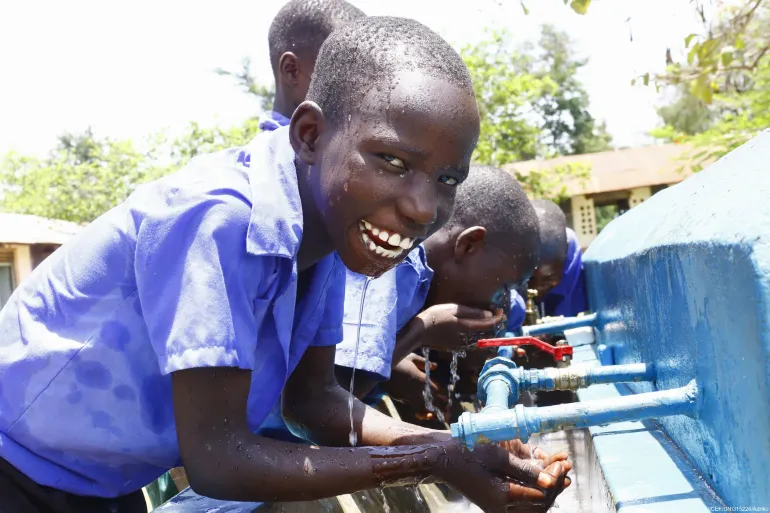
KAMPALA, UGANDA – 6 November 2026 – The Government of Austria, through the Austrian Development Agency (ADA), and UNICEF today signed a grant agreement under which Austria will provide EUR 3.5 million (approximately UGX 14.96 billion) to improve access to safe water, sanitation and hygiene (WASH) services for children and families in the refugee-hosting districts of Yumbe and Madi-Okollo in West Nile. Together with UNICEF’s contribution of EUR 390,000, the programme is valued at EUR 3.89 million.
The three-year programme, Strengthening the Humanitarian-Development-Peace Nexus through WASH and Climate Action in West Nile, will be implemented from 01 October 2026 – 30 September 2029 and will directly benefit more than 72,000 people, including approximately 14,925 children enrolled in primary and secondary schools.
Key interventions under the programme will:
- Improve access to safe, climate-resilient WASH services for approximately 50,000 people through five health centres.
- Provide an estimated 8,000 community members with reliable access to safe water through the construction of two climate-resilient community water systems.
- Reach more than 1.3 million people across Yumbe and Madi-Okollo districts, including over 400,000 refugees, through sanitation and hygiene promotion, community engagement and behaviour change initiatives.
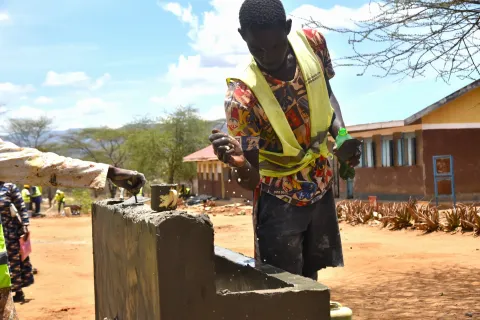
Working closely with the Ministry of Water and Environment, district local governments and local communities, the programme will support the construction and rehabilitation of climate-resilient water supply systems and WASH facilities in schools, health centres and communities. It will also strengthen local systems for the operation and maintenance of water infrastructure, improve household sanitation and hygiene practices, and introduce innovative climate adaptation measures such as biogas systems, managed aquifer recharge, catchment restoration, tree growing and community bylaws to protect water sources.
Climate-resilient water supply systems and WASH facilities are designed to keep delivering reliable services despite droughts, floods and other climate-related hazards. They include solar-powered water systems, water conservation measures, groundwater recharge, climate-smart sanitation technologies and protection of water catchments, so that communities have water throughout the year.
Dr. Katja Kerschbaumer, Head of Austrian Embassy/Development Cooperation:
"Safe water and sanitation are not privileges; they are fundamental human rights. When children have clean water, they are healthier, attend school more regularly, and have a better chance to reach their full potential. Through this collaboration, Austria will ensure that these rights are met by investing in climate-resilient water and sanitation systems in both refugee and host communities in West Nile. Together with local communities, we will build healthier, stronger and more resilient generation.
Dr Robin Nandy, UNICEF Representative in Uganda: “Safe water and sanitation are essential for children’s health, learning and dignity. Through this partnership with Austria, UNICEF will support climate-resilient water systems in schools, health centres and communities where children need them most, while helping local systems keep these services running. By reaching both refugee and host communities, this programme will also help strengthen social cohesion and give every child a better chance to thrive.”
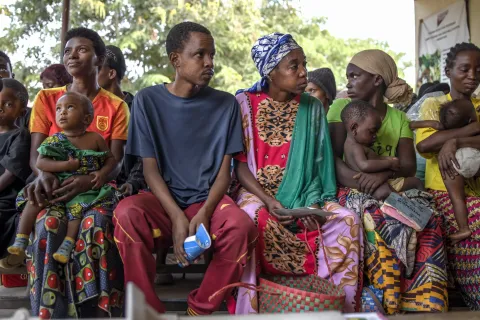
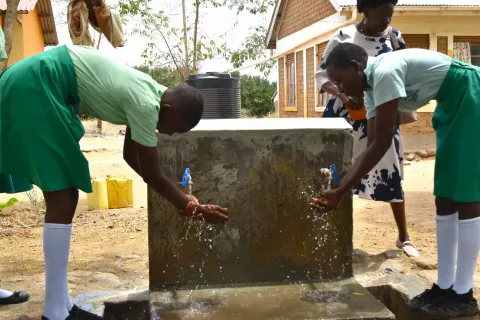
Yumbe and Madi-Okollo districts, which host Bidibidi and Rhino Camp refugee settlements respectively, are home to nearly 400,000 refugees, alongside vulnerable host communities. Both districts face increasing water stress due to erratic rainfall, prolonged dry seasons and declining groundwater levels. Schools and health facilities are also under significant pressure. On average, 71 pupils share one latrine, instead of the national standard of 40, and one in three health facilities lacks adequate water and sanitation services. These challenges disproportionally affect children the most, increasing the risk of waterborne diseases, disrupting learning particularly for adolescent girls, and placing additional pressure on already limited water resources, which can contribute to tensions between refugees and host communities. By strengthening climate-resilient WASH services and local systems, the programme will help improve child health, enhance learning environments, strengthen community sanitation and resilience and promote social cohesion.
The programme is aligned with Uganda’s National Development Plan IV, the National Climate Change Policy and the Comprehensive Refugee Response Framework and contributes to Sustainable Development Goals 6 and 13. It reflects the shared commitment of Austria and UNICEF to shift from short-term humanitarian support to sustainable, government-led and climate-resilient WASH systems that reach every child.
Media contacts
About UNICEF
UNICEF promotes the rights and wellbeing of every child, in everything we do. Together with our partners, we work in 190 countries and territories to translate that commitment into practical action, focusing special effort on reaching the most vulnerable and excluded children, to the benefit of all children, everywhere.
For more information about UNICEF and its work for children, visit www.unicef.org/uganda
Follow UNICEF on Twitter and Facebook
About the Austrian Development Agency (ADA)
The Austrian Development Agency (ADA), Austria’s official development cooperation agency, works with governments, civil society, and communities worldwide to reduce poverty, promote peace, protect the environment, and improve livelihoods for a sustainable and secure future.
For more information about ADA and its work in development cooperation and humanitarian aid, visit: www.entwicklung.at/en/