Water where it matters most
In Karamoja, where long dry spells test every tap and borehole, UNICEF-KOICA support is restoring water to schools and healthcare facilities and building the local skills and systems needed to keep services running

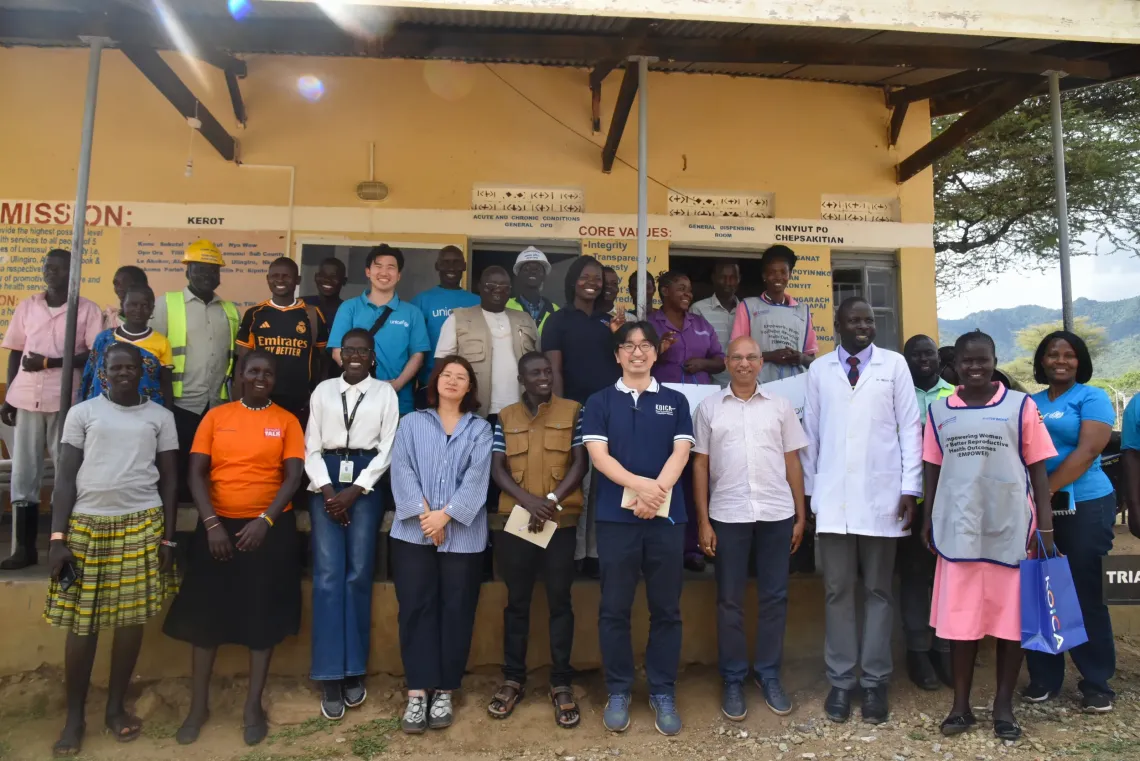
At Lemusui Health Centre III in Nakapiripirit District, some of the busiest weeks come during the dry season.
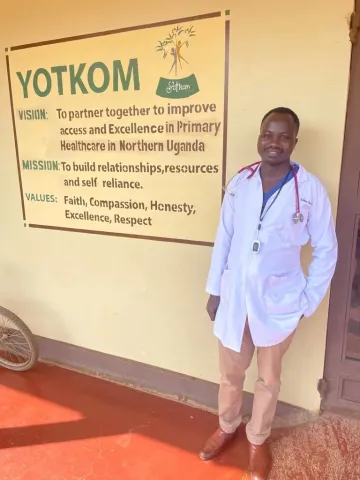
Dr Obott Luke, the facility in-charge, attests to that. The health centre serves about 14,600 people across a wide catchment area extending up to 65 kilometres, and in the dry months the maternity ward can support up to 30 delivering babies a month. Yet this is also when water is hardest to find. For years, keeping reliable water, sanitation and hygiene services running at the facility has long been a persistent challenge.
“The new water supply and sanitation system has brought hope,” says Dr Luke.
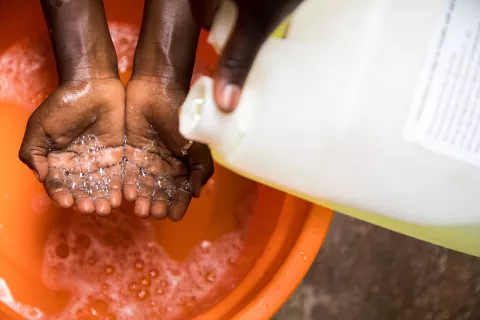
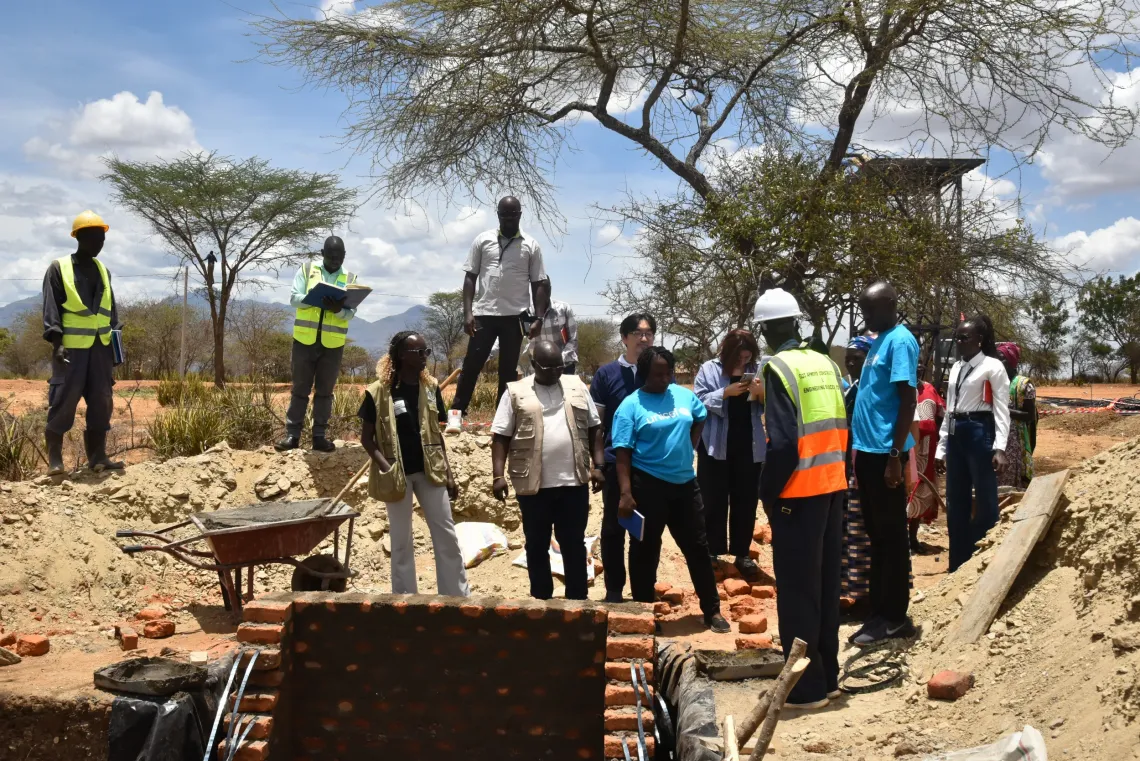
Through the UNICEF-KOICA partnership under the project “Accelerating Climate Resilient Water, Sanitation and Hygiene services for all schools and healthcare facilities in Karamoja”, Lemusui Health Centre III is receiving a motorised borehole, storage tanks, bathing shelter for ladies and tap stands. Two 5,000-litre water tanks are being installed, hand washing facilities along with improved sanitation facilities for women and men fitted with an incinerator. Health workers and cleaners have been trained in proper Water Sanitation and Hygiene (WASH) practices and infection prevention and control (IPC) practices, so the new facilities will be well operated and maintained.
Lemusui is one of 15 health centres planned for support under the project with nine facilities currently under implementation across the 9 districts of Karamoja.
During a joint UNICEF-KOICA monitoring visit, KOICA Country Director Mr. Jongsu Yi and UNICEF Chief of WASH, Environment and Climate Action, Mr. Lalit Patra met health workers, district officials and community representatives to monitor progress. Eroba Prisca, a member of the Nakapiripirit district’s health management committee, appreciated the project for the training the committee has received in implementing and sustaining WASH activities. She explained that the knowledge gained would not remain within the committee alone but would be shared with the wider community.
Restoring water and the skills to keep it flowing
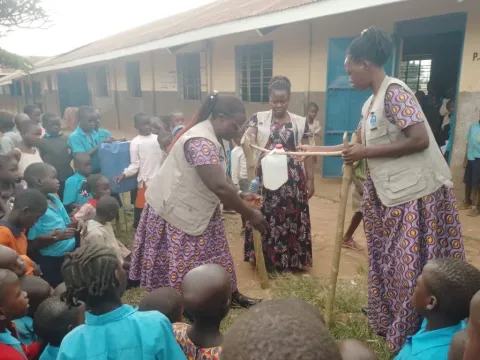
The current programmes builds on an earlier KOICA-UNICEF partnership implemented between 2018 and 2023, which combined WASH infrastructure investment with local capacity building in 100 schools across Karamoja.
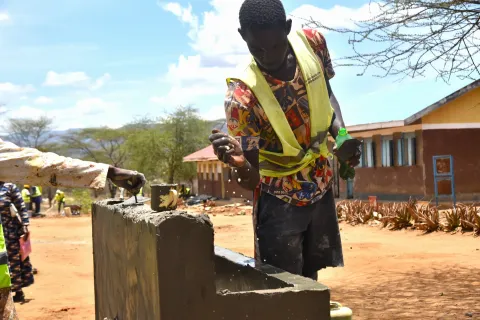
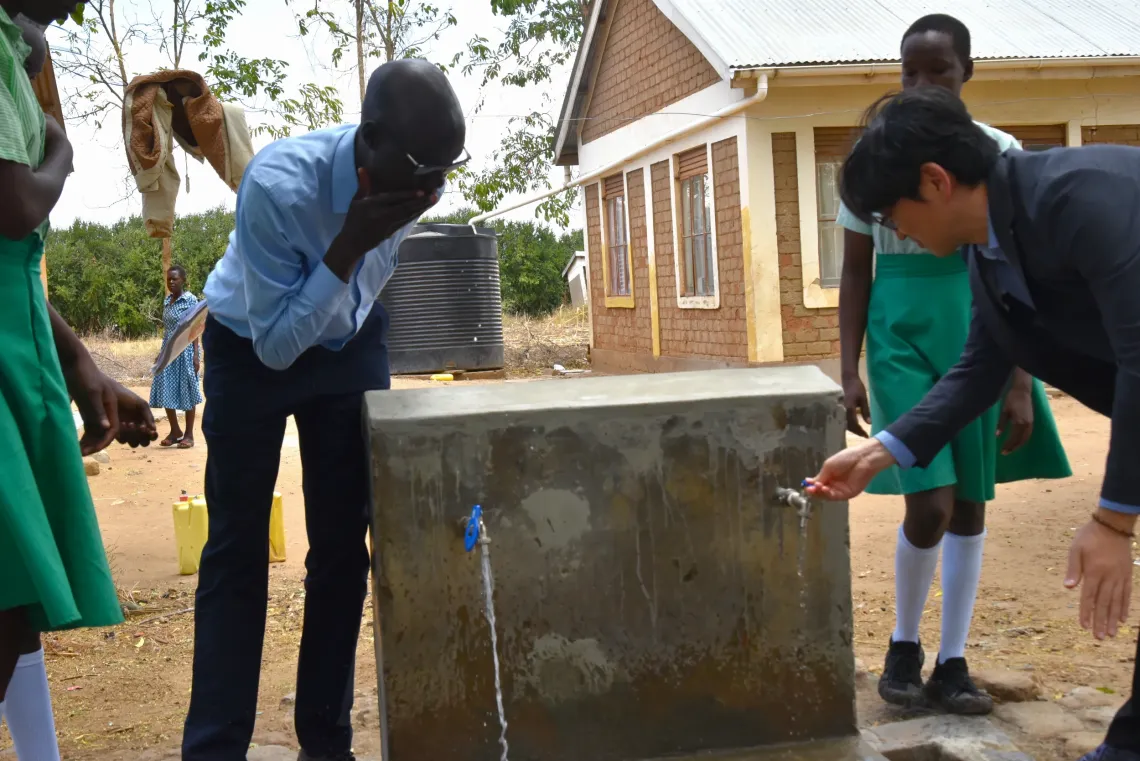
At Kalotom Primary School in Napak District, 1,259 pupils have access to safe and clean water again. The school's solar-powered system was restored during a hands-on training exercise for local artisans, who learnt to repair it by doing the work themselves. The skills that brought Kalotom's water back now stay in the community to keep it running.
The motorized water supply system was further rehabilitated by UNICEF, with support from KOICA, under a post-completion initiative aimed at improving the reliability of water supply at the school.
Kalotom was among 14 schools across seven districts supported between October 2025 and June 2026 through this post-completion initiative. The intervention reached an estimated 32,668 people, including 14,919 learners. During this period, 13 water-supply systems were rehabilitated, while eight schools were converted from direct-current to alternating-current pumping systems. The conversion makes key components easier and more affordable to maintain or replace locally an important consideration for schools expected to sustain the systems long after external support ends. The repairs themselves were designed as one-off support. In line with government policy, responsibility for the routine operation, preventive maintenance and timely repair of the systems rests with the respective districts and institutions.
Building resilience in a water-stressed region
District leaders have seen the support expand in stages. In Amudat District, the Chief Administrative Officer Mr. Leru Andrew highlighted the importance of sustained investment in water services.
"Phase one helped five schools, and the second phase reached four more. Thank you for the support."
For communities in Karamoja, where prolonged dry periods place continuous pressure on available water sources, maintaining reliable water supplies remains critical.
“Karamoja's dry weather makes a constant water supply essential,” Andrew added, noting that Amudat remains water-stressed following a prolonged dry spell.
In Napak District, the District Engineer Patrick Otim said additional investment under the second phase had extended support to three more schools contributing to district-wide water coverage to 82 per cent. The support goes beyond constructing new infrastructure. It also includes repairing existing systems and strengthening local capacity to monitor water safety.
UNICEF partner Food for the Hungry Association (FHA) and IDI Uganda, for example, have trained district staff to conduct on-site water quality testing, enabling local authorities to regularly verify that water supplied to schools, health facilities and communities remain safe.
Making investments last
For partners involved communities in the project, sustainability is as important as construction.
During the visit to Lemusui Health Centre III, KOICA Country Director Mr. Jongsu Yi commended the health workers and facility leadership for their commitment to improving services. He encouraged staff to take ownership of the new infrastructure and ensure that the equipment is properly operated and maintained.
UNICEF’s Mr. Lalit Patra reinforced the same message.
“New infrastructure should complement and strengthen facilities that are already in place. Continued maintenance of both existing and newly installed infrastructure is therefore essential.”
Mr. Godfrey Ayena, Country Director of FHA, echoed this approach.
“FHA works alongside UNICEF, KOICA and government as a partner,” he said, “to reinforce what government is already doing.”
For Dr. Obott, the improvements at Lemusui bring optimism that reliable WASH services can become a lasting part of health-care delivery.
“The project is developing well, and we believe it will be longstanding,” he says.
Eng. Peter Opwanya, UNICEF WASH Officer and Project Manager overseeing the ongoing construction works across 38 institutions in the Karamoja subregion, reaffirmed UNICEF’s commitment to ensuring that works are completed to the required quality standards and within the agreed timeframe.
Across some of Karamoja’s hardest-to-reach schools and health-care facilities, the principle is consistent: invest in infrastructure, strengthen the people and systems responsible for maintaining it, and build shared ownership among government, communities and partners.
Because in a region where every dry season puts water services under pressure, restoring a tap or borehole is only the beginning, keeping the water flowing is what makes the investment last.