The missing piece was never the water
In many schools, children still do not have a proper place to wash their hands, and often there is no soap.
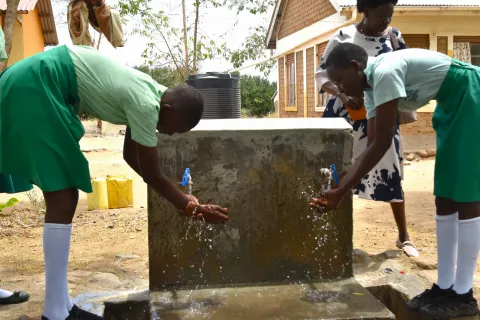
Visit many primary schools in Lamwo and Kiryandongo and you will see that they have water. There may be a borehole, a tank or a tap. But in many schools, children still do not have a proper place to wash their hands, and often there is no soap.
This gap brought ninety teachers together. Thirty-six women and fifty-four men from primary schools, sub-counties and health facilities across Lamwo and Kiryandongo were trained as Handwashing Ambassadors under the National Handwashing Initiative. Everyone who was invited attended.
The training was run by the Ministry of Water and Environment with UNICEF support, funded through the Japan Committee for UNICEF by Saraya Co., Ltd. Saraya has been behind handwashing promotion in Uganda since 2010, when it launched its Wash a Million Hands! project and committed one per cent of the sales of selected products in Japan to this work. Sixteen years on, that commitment is what puts a soap-making kit in front of a teacher in Lamwo.
The sessions were practical and interactive, not just speeches. Staff from the Ministry of Water and Environment, the education and health sectors, district health offices, and Rural Water Supply and Sanitation Regional Centres guided teachers through demonstrations and discussions. Teachers shared what is happening in their schools and highlighted common challenges, including diarrhoea, dysentery, and children missing class because they lack soap and safe places to wash their hands.
The training walked them through the F-Diagram, which is the map of how disease moves from faeces to fluids, fields, flies and food, and where in that chain a pair of clean hands breaks the journey. It covered the critical moments: after using the toilet, before eating, before preparing food, after handling waste, after cleaning a child. It covered the technique itself, palm to palm, between the fingers, and around the thumbs, demonstrated and then practised.
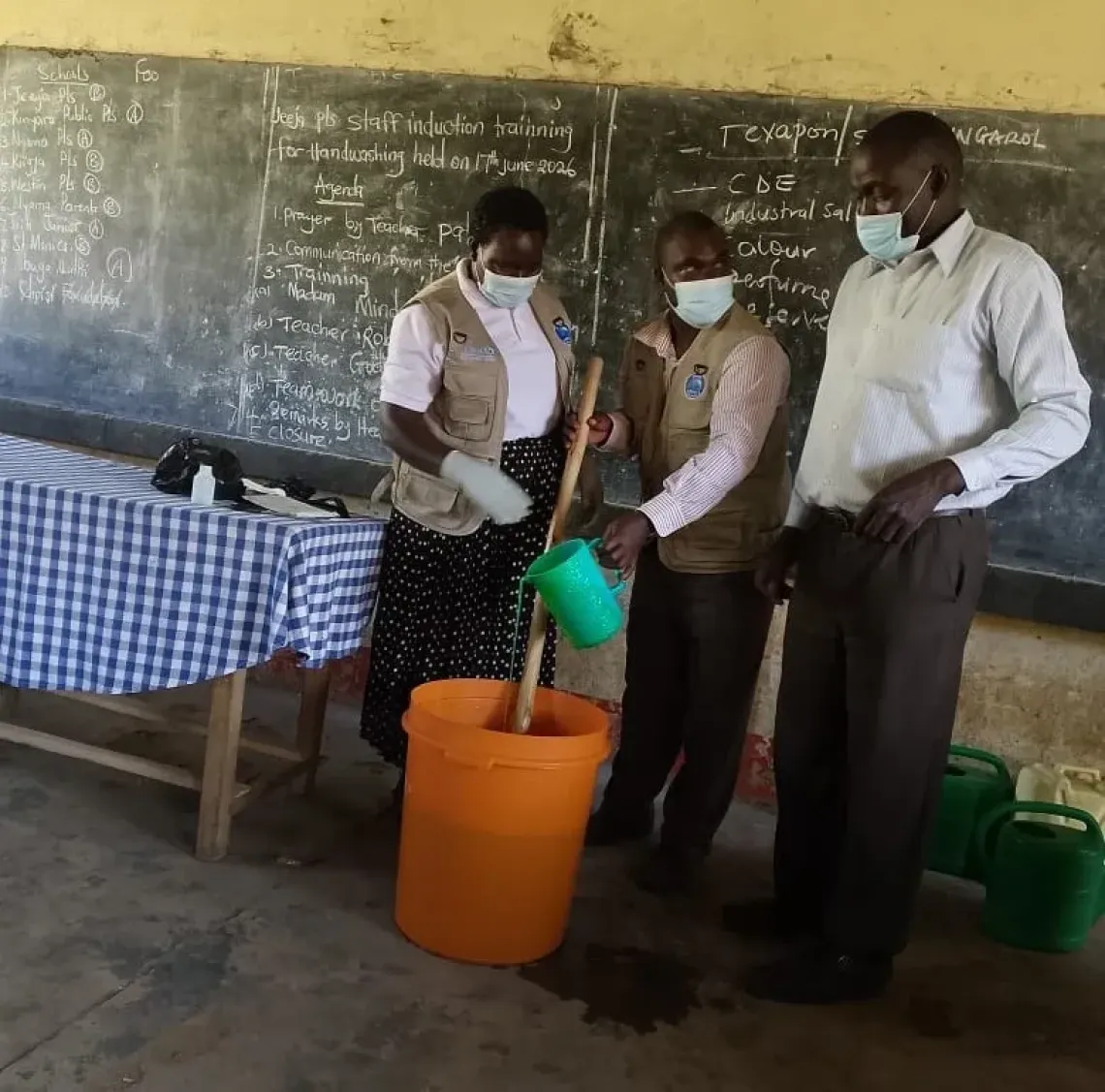
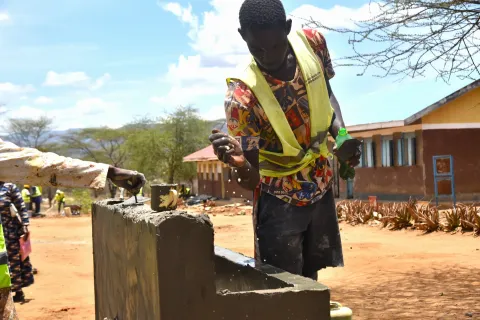
The training also covered the technologies that a school can afford. These included tippy taps, veronica buckets, school handwashing stations and Wash-a-Lot, low-cost innovations that need no plumbing and no budget line.
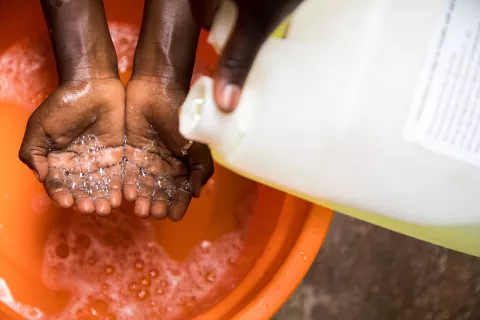
The most impactful session focused on soap making. Teachers learned how to produce liquid soap step by step, from measuring ingredients and mixing them safely to packaging and storing the final product. In their feedback, participants described this as the most useful part of the training. For schools, making soap locally means they do not have to wait for supplies that may not arrive or choose between buying soap and other classroom essentials. It also gives teachers practical knowledge they can share with parents, helping more homes access soap for regular handwashing.
By the end of the training, each school had developed a clear action plan. These plans included sharing hygiene messages during school assemblies, setting up handwashing points in places where children can easily see and use them, including hygiene lessons in everyday classroom teaching, and involving parents and community members in sanitation activities from the start.
The training also created a strong network. Ninety teachers across the two districts now know one another, can support their colleagues, and can be mobilized for future district hygiene campaigns. Teachers were already trusted members of their communities. This training has given them a clear and practical role in promoting handwashing and better hygiene in schools.