Karamoja's artisans turn new skills into livelihoods
Across nine districts, 84 trained artisans are keeping school water systems running, and building livelihoods from the skills they have gained

When the water stops flowing at a school in Napak District, eastern Uganda, Aaron Emoru is often among the first people called. Not long ago, such a breakdown could mean for a repair team from outside the district or depending on a partner or government to respond. In some cases, repairs could take weeks.
Today, Emoru can diagnose and fix many of the problems himself. The training he received through UNICEF and the Uganda Solar Energy Association (USEA) did more than teach him how to repair pumps and solar-powered water systems. It gave him a practical skill he can use to support his community and earn an income.
Emoru is one of 84 local artisans, 76 men and 8 women, trained across all nine districts of Karamoja sub region under the UNICEF-KOICA Post-Completion Project for Improving Access to Water, Sanitation and Hygiene (WASH). The project ran from October 2025 to June 2026 with support from the Korea International Cooperation Agency (KOICA).
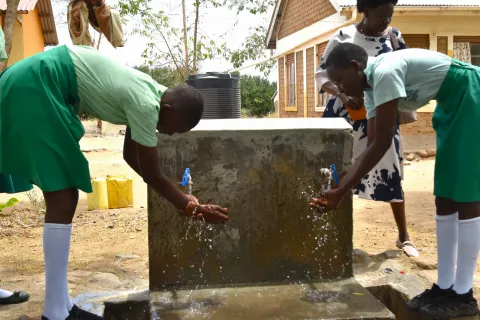
In Napak alone, he says, there are 11 schools with WASH facilities that include toilets, hand washing units and water points that require regular operation and maintenance. His team has worked in schools such as Kalotom Primary School, where artisans have cleared drainage channels and repaired tap stands and restored parts of water systems affected by heavy daily use.
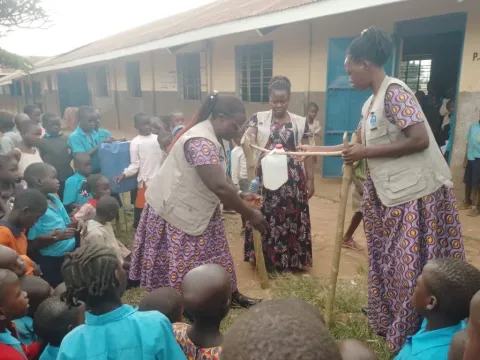
The same network now reaches Nabokotom Primary School in Amudat District, another site in the project's footprint, where artisans work alongside school leadership to keep the facilities running.
"The systems start well, but in the long run they die due to population pressure, and that is when we come in."

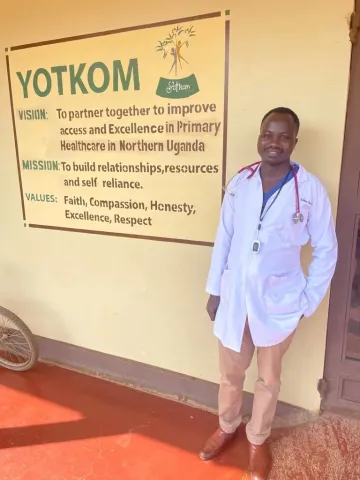
In Amudat District, fellow artisan Ula Dennis describes a similar transformation. What began as technical training has become a small but growing source of income. Dennis can repair and replace broken pumps, identify source spare parts from suppliers and detect and fix faulty control valves when water stops flowing. He also carries out water tank disinfection work.
"We even help private people, and we earn a small sum to take care of our families. The skills I have acquired have helped other people, and when we fix something, they pay us a small amount," he says.
The training has also expanded how much the artisans can do independently.
"Before, we could not carry out water and sanitation facilities assessments on our own. With the training, we are able to do them and report," Dennis says.
He has since opened a small shop selling spare parts and takes on extra work when called by partners such as Innovation Africa, schools or district authorities. His remaining gap, he says, is equipment that would enable him carry out more troubleshooting on site.
The training combined technical instruction with business entrepreneur skills, professional networking and links to suppliers and potential employers. Three artisans including Okwir Innocent, Michael Lokodos and Vincent Okot. have been supported to formalise and register their businesses.
For KOICA, this combination of technical and business support is key to sustaining the WASH investment.
"Infrastructure alone does not guarantee access to water. What sustains it is people with the skills and the incentive to keep it working. By training local artisans and helping them build businesses, we are making sure the systems KOICA has supported in Karamoja continue to serve children long after the project ends," says Mr Jongsu Yi, KOICA Uganda Country Director.

UNICEF sees the artisan network as central to protecting children's health and learning, particularly as climate pressures place increasing strain on water systems across Karamoja.
"When a school loses its water supply, children lose more than a tap. Hygiene suffers, the risk of disease rises and girls may miss class. Karamoja is facing longer dry spells and more pressure on every water point. Having trained artisans in every district means breakdowns are fixed in days, not months, and communities are better prepared for what the climate brings," says Mr. Lalit Patra, UNICEF Uganda Chief of WASH, Climate and Climate Action.
For district leaders, the value of this approach lies in reducing dependence on outside support and building local capacity that remains in the community.
In Amudat, the Chief Administrative Officer, Mr Leru Andrew, says the district continues to face water stress following prolonged dry conditions. He credits phased WASH support from UNICEF and KOICA, covering five schools in the first phase and another four in the second, with helping improve access to reliable WASH services.
"When somebody supports you and teaches you how to maintain, that is the best support," Mr Leru says.
That is the impact artisans like Emoru and Dennis represent make, a move from dependence on outside repair teams to a trained, paid workforce rooted in their own districts, from Napak to Amudat to Nakapiripirit.
As WASH systems across Karamoja continue to age due to intensive daily use, locally trained artisans stand ready to keep the water running not only a service to their communities, but it is also earning a livelihood from their skills.