Handwashing campaign in Uganda builds national capacity to implement large-scale programmes
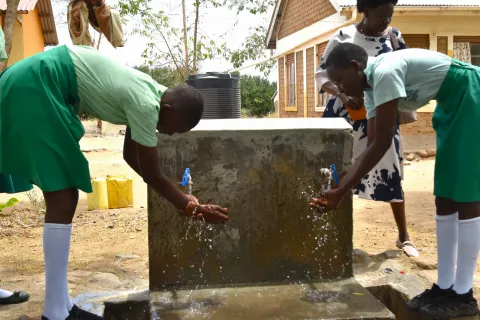
By washing hands with soap regularly and effectively, respiratory diseases can be reduced significantly.

By washing hands with soap regularly and effectively, respiratory diseases can be reduced significantly. For respiratory diseases, infections can be reduced by 21 per cent, while gastrointestinal illnesses could be reduced by 31 per cent, according to the US Centers for Disease Control.
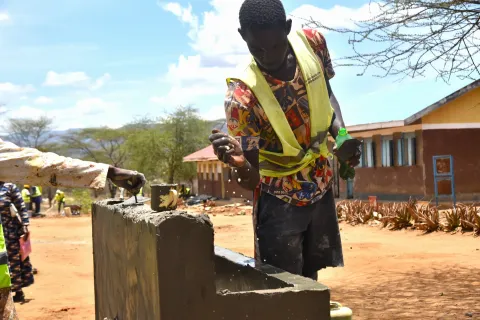
When there is a disease outbreak, many people respond to calls to wash hands. During such times, you will find handwashing stations in every public place. Once the crisis is over, people usually stop adhering to these simple practices. In many places, handwashing stations go missing or stand broken until another outbreak.
This is not ideal for our communities; hence, the need to break that cycle with constant messaging about the need for regular and proper handwashing. This explains why the Ministry of Water and Environment (MWE) together with the ministries of education and health as well as partners like UNICEF Uganda with funding from Japan National Committee of UNICEF have been implementing handwashing campaigns in some parts of the country under the auspices of the National Handwashing Initiative (NHWI).
The campaigns aimed at increasing the capacity of schools, faith-based organizations, district local governments and civil society organizations to implement and sustain large-scale handwashing with soap programmes. The campaign also set up to increase advocacy and coordination of national and district partners for efficient and innovative large-scale handwashing promotion by districts; increase awareness, knowledge and practice of hand washing with soap through effective national multi-media campaign; increase sector learning and knowledge management on handwashing with soap as well as supporting MWE to maintain an effective and operational national handwashing secretariat.
Among the key activities carried out were media and stakeholder engagements for the global handwashing day, supporting the districts of Kasese, Kamwenge, Ntoroko and Kyegegwa to take part in hygiene competitions held in Kamwenge District and training of hygiene promoters that were deployed in various refugee settlements.
Several other activities were carried out as part of the global handwashing day which included cleaning exercises in Mbale District and radio and television talk shows. Music, Dance and Drama (MDD) competitions were held in schools in western Uganda.
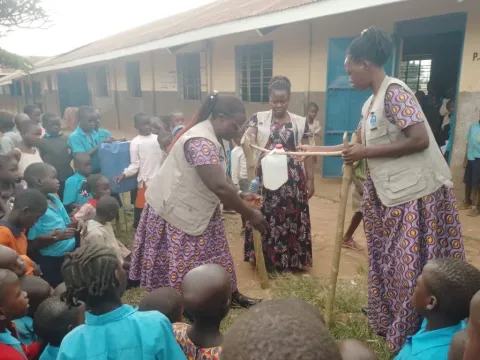
Schools are known to play a pivotal role in instilling behavioral habits such as handwashing at a young age. Programmes promoting such habits that incorporate fun activities while integrating hygiene education such as music dance and drama are known to have great promises. Children who learn these practices early are most likely to carry them into adulthood, creating healthier communities.
Uganda is home to millions of refugees who live in various settlements across the country. To reach them with handwashing information, UNICEF supported the Water Resources Institute to facilitate 10 graduate trainees that were deployed in several refugee settlements such as Nakivale, Kyaka II, Kyangwali, and Rhino for a period of six months.
These initiatives indicate how a simple practice of regular handwashing with soap is a powerful mitigating agent against disease. Continued awareness and engagement are important in promoting positive personal health outcomes and the well-being of communities