From store to child
The final journey of life-giving therapeutic food from a health centre shelf to a malnourished child in West Nile
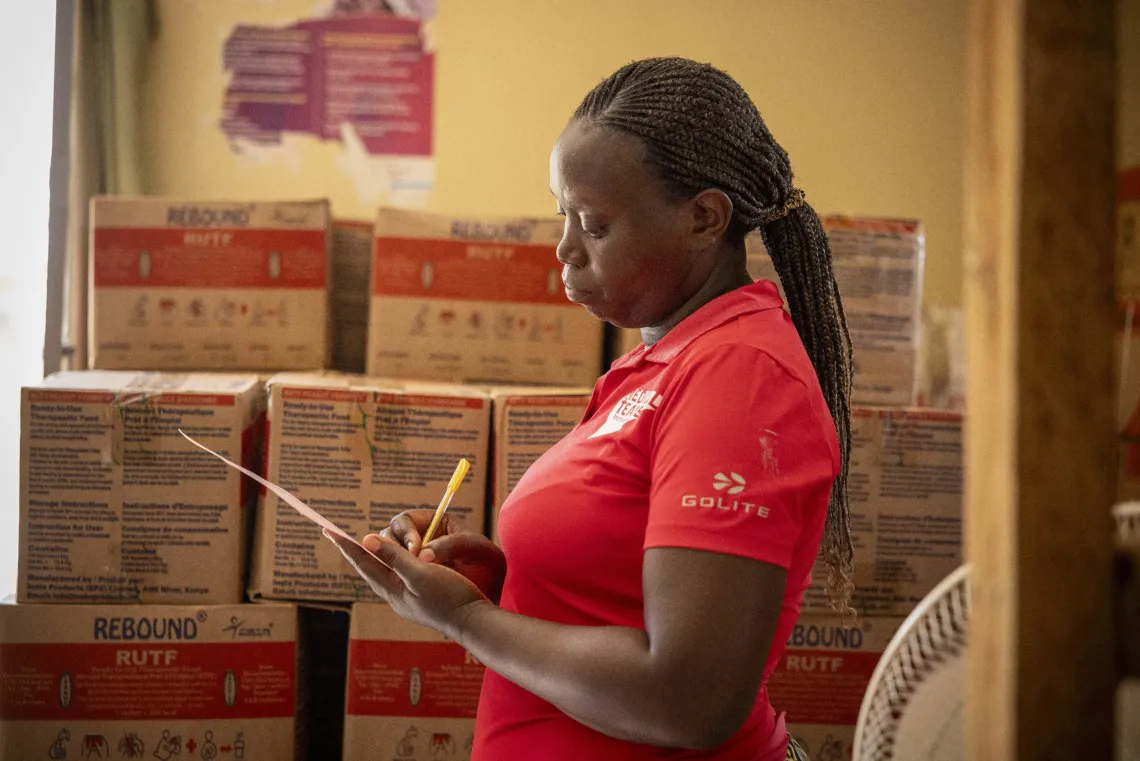
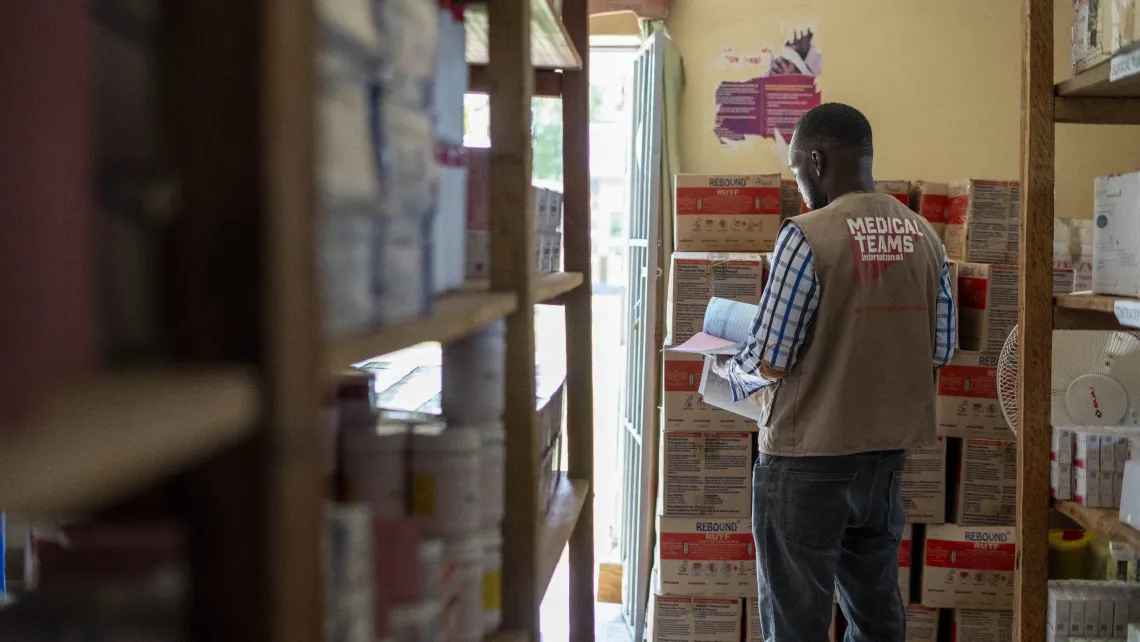
Seated at her desk, Susan Karungi, counts a consignment of khaki-coloured boxes marked with bold red words: ‘Ready-To-Use Therapeutic Food’ (RUTF). As the Stores Assistant at Uriama Health Centre III in Terego District, her first task of the day is registering this shipment supplied under a UNICEF nutrition project. Three blocks away in the Nutrition Unit, tens of malnourished children await the silver-red sachets of the life-giving RUTF. Between Susan and the children is a linked system that ensures the treatment on the store shelf reaches the hands that need it most.
The requisition
Every week, Vincent Kasule, the Nutrition Focal Person at Uriama Health Centre III, fills a request for RUTF based on the past week’s caseload. It is a small, simple piece of paperwork that decides whether a child with severe acute malnutrition (SAM) will receive treatment in the coming days. The paperwork moves rapidly: from the nutrition unit to the facility in charge for approval, and finally to Susan in the storeroom, who releases the cartons to Kasule.” The cartons are logged into the nutrition unit mini-store and tracked using a dispensing log book that bears an integrated registration number per child on the project. But how about new cases?
Forecasting and monitoring: the chart that catches a surge
On the wall of the nutrition unit hangs a performance-monitoring chart for 2025/26, which shows that seven cases of SAM a month is considered normal while 15 or more is an alert. By recording and reviewing daily and monthly caseloads, the team makes projections of how much RUTF will be required. However, some seasons have a surge of caseloads. In May 2026 alone, the chart recorded a spike of 23 cases and 12 new admissions. The Nutrition Focal Person attributes this to mass door-to-door screening and outreaches in the same month, under a UNICEF-supported lifesaving nutrition project. Funded by the Uganda Humanitarian Fund, the six-month response aims to support the identification, referral and treatment of children aged 6–59 months with SAM: 21,650 across 13 refugee-hosting districts, and a further 15,500 in the Karamoja sub-region.
Looking for hidden cases
The Nutrition Focal Person notes that malnutrition usually hides behind other illnesses like malaria. “It is rarely what brings a family to hospital on its own,” he says. That is why the outreaches draw out hidden community cases of SAM, in addition to providing other health services, especially in hard-to-reach areas. Across the district border in Yumbe District, at Komgbe Health Centre III, in Village 13, Cluster 5 of Bidibidi Refugee Settlement, a five-person team comprising a nutritionist, an enrolled nurse, a midwife and two VHTs sets out on a 30-minute drive to a church compound where mothers, a handful of them with children, and a few fathers are already gathered, waiting for the pre-announced outreach. Children are measured for height, weight and mid-upper arm circumference (MUAC); a VHT translates into Kakwa, a language spoken by some community members, so that mothers understand exactly what they are being told about nutrition and when to seek medical help.
Integrating nutrition into mainstream government health service delivery
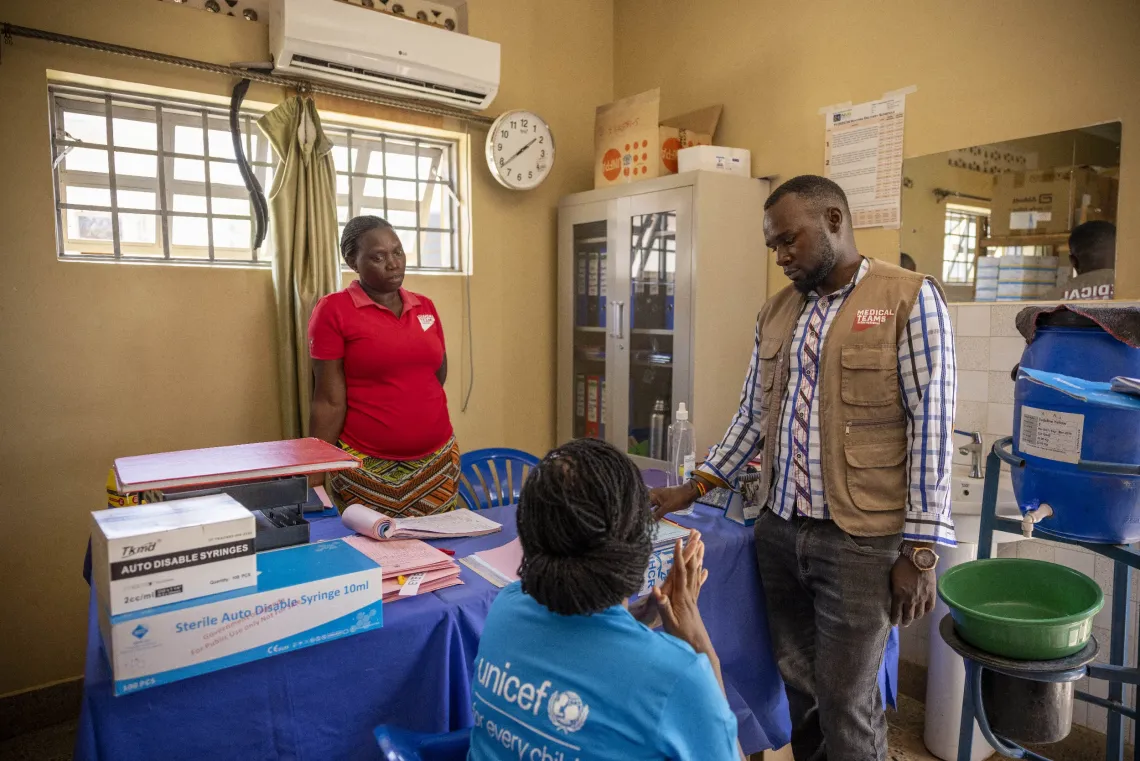
Paska Aluba, the Nutrition Specialist at UNICEF Uganda, notes a key objective of strengthening the health system to ensure that nutrition is included as a core service at government health facilities and always accessible for all children. This is the case elsewhere in Yumbe District, at Yumbe Health Centre IV. When Nafsi Nairah, 31, brings her baby to the outpatient department, her details are recorded and she is referred to the nutrition unit. The baby’s weight, height and MUAC are measured, and she is checked for oedema (body swelling) and given a simple appetite test before everything is logged in the integrated nutrition register. She is then sent to the pharmacy. At the dispensing point, she receives the prescribed quantity of RUTF based on her child’s weight and the scheduled follow-up period, following the same process as for any other health service.
The sachet in the hands that need it most
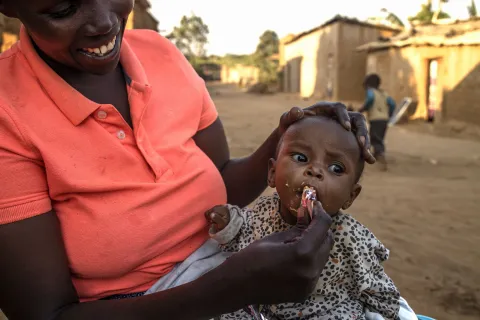
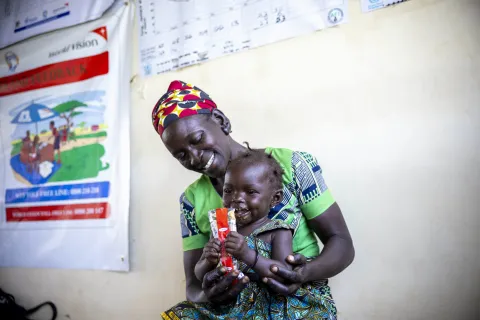
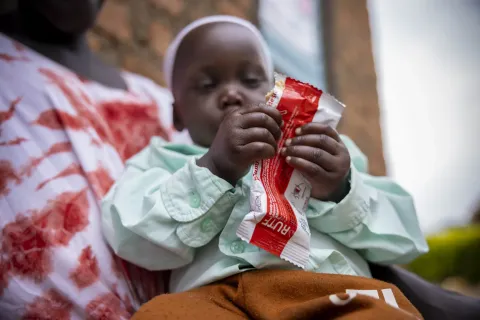
On the veranda outside the nutrition unit, Nairah’s baby squeezes the light brown paste from a red sachet, taking care not to waste a drop. The paste, comprising peanut butter, milk, vegetable oil, sugar and a mix of vitamins and minerals, is built to deliver dense nutrition fast; children on treatment typically recover by four to six weeks on average. By the end of the day at Uriama, 13 children accompanied by caregivers have visited the nutrition unit, each carrying RUTF sachets home: one new admission, 11 with improved weight and MUAC readings, and one discharge. The nutrition focal person tallies the day’s numbers against the project total and forecasts next week’s sachet order. In the store, Susan checks her stock card one more time, working, she says, “to ensure that the drugs and therapeutic feeds are available when needed and that they reach the last consumer.”