UNICEF calls for shared responsibility for refugee children
International responsibility-sharing to ensure refugee children have sustainable access to basic services.

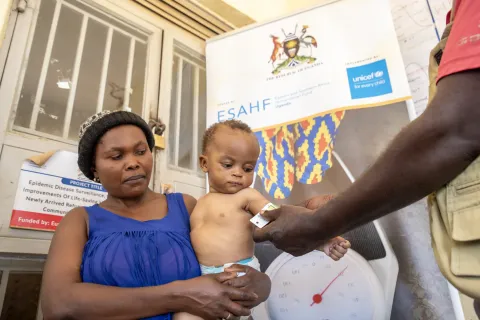
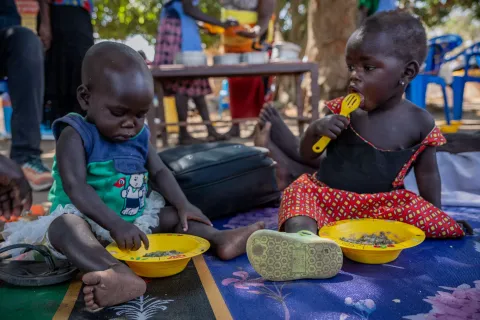
The World Refugee Day (WRD) was celebrated with a call from the United Nations Children’s Fund (UNICEF) for significant increase in international responsibility-sharing to ensure refugee children have sustainable access to basic services including education, health, nutrition, protection, water, and sanitation.
According to Munir Safieldin (Ph.D.), the UNICEF Representative in Uganda, it will require long-term commitment among all parties to support the integration of refugees in the national service delivery systems, as well as a well-resourced strategy to promote the resilience and self-reliance of the refugee population, particularly the adolescent, youth, and women.
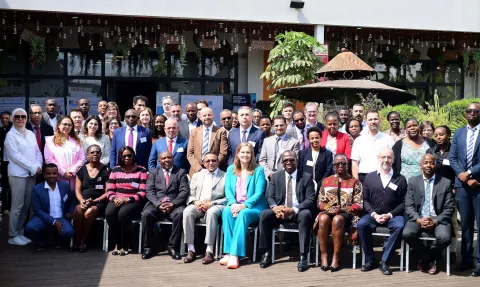
The National Commemoration of World Refugee Day 2024 was held at the Rhino Camp Refugee Settlement in Terego District, 486 kilometres from Uganda’s capital, Kampala.
WRD is an international day designated by the United Nations to honour refugees around the globe. It falls each year on 20 June and shines a light on the rights, needs and dreams of those forced to flee.
A joint statement by UNICEF and the United National High Commission for Refugees (UNHCR) states that no one chooses to abandon their homes and lives. Seeking refuge is not a choice but the only option for many to survive, find peace, and keep their dreams alive.
The UNICEF Representative in Uganda adds that peace remains scarce worldwide and lasting solutions are still obscure for too many. “However, we must continue to seek solutions and recognize the progress that has been made. Right now, refugees need our solidarity more than ever,” Safieldin further explained.
Uganda hosts the largest number of refugees in Africa. Figures by UNHCR place the number of refugees in Uganda at 1,680,000. The majority come from South Sudan, Eritrea, the Democratic Republic of Congo, Sudan, Somalia, and over 15 other countries.
In the past year and a half, more than 300,000 people have crossed into Uganda seeking safety, with 33,000 recently arriving from Sudan. There are over 114 million refugees globally who have been forcibly displaced, driven by war, violence, and climate-related challenges.


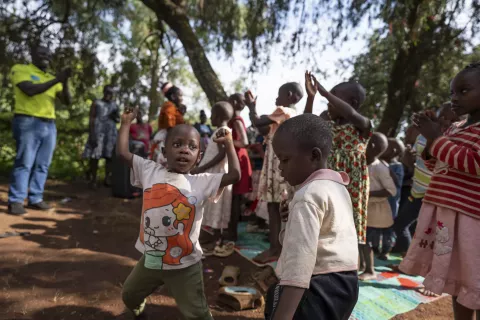
UNICEF estimates that there are 850,900 refugee children, and 419,561 are girls in Uganda. At the end of 2023, 47 million children lived in forced displacement and as UNICEF observes, despite the growing numbers, solutions have been out of reach for far too many displaced children.
Obstacles include a lack of responsibility sharing between countries, reliance on short-term, humanitarian assistance and limited sustainable financing for inclusion, and dehumanizing narratives about refugees and migrants.
Led by UNHCR, WRD focuses on solidarity with and solutions for refugees. Against the backdrop of UNICEF’s commitment to a longstanding partnership with UNHCR, laid out in a Strategic Collaboration Framework, UNICEF is joining UNHCR’s call for a world where refugees are welcomed.
UNICEF’s core message on WRD was that solutions are urgently needed for refugee and displaced children to ensure that they can enjoy the same rights and opportunities as other children.
Those solutions entail resolving what prevents refugee and displaced children from being able to rebuild their lives in inclusive, safe, and stable communities. This means meaningfully addressing the risks, discrimination and inequalities related to their displacement status so that refugee and displaced children can fully realize their rights.
It also means shifting from short-term humanitarian assistance to a development-focused approach that strengthens and resources inclusive national systems to provide the support refugee and displaced children- and their host communities- need to grow up healthy and happy, can fall back on social protection services, and can access learning to earn opportunities to fulfil their potential, UNICEF’s vision is a world where all refugee and displaced children can realize their rights and reach their full potential - wherever they are.
UNICEF has an important role to play in advocating for the rights of refugee and displaced children and supporting governments to ensure they are provided with a continuum of protection and care wherever they are.
One of the ways through which UNICEF supports refugee learners, is by running childhood education and Accelerated Education Programmes and by integrating Teaching at the Right Level into the formal education system.
The guest of honour at the World Refugee Day, the Minister of State for Disaster Preparedness, Relief and Refugees, Lillian Aber, thanked the donors, Non-Government Organisations (NGOs) and other partners for supporting government programmes in the face of shrinking resources but increasing number of refugees.
She also appreciated the host communities for their peaceful co-existence in solidarity with refugees.


UNICEF calls on governments to provide solutions for refugee children and youth by expanding legal and accessible pathways for children and families to seek refuge, with a focus on family reunification, and increased options for humanitarian, work and study visas, temporary protection, and refugee resettlement, among other suggestions.
Uganda's open-door policy towards refugees has been recognized globally as a best practice. This policy allows refugees to live, work, and access public services like national citizens.
The joint statement by UNICEF and UNHCR notes that this is the true solidarity with refugees that we celebrate today. Providing sanctuary and protection to refugees is an expression of our shared humanity.
"Uganda has made a strong statement that beyond feeling safe and welcomed, refugees need opportunities to thrive. They need a chance to learn and progress, to earn a living, and to feel a sense of belonging," said Minister of Disaster Preparedness, Relief and Refugees, Honourable Hilary Onek in his remarks read on his behalf by Hon. Lillian Aber.
He added, "Countries with more means should host refugees without being restrictive. This would embody the true spirit of a world that welcomes refugees."
The statement also highlights that Uganda and other safe havens for refugees need the solidarity of the international community in line with the Global Compact on Refugees and adding that they cannot do this alone and require support and resources.
As such Public and private donors must step up and take action. "We have a collective duty to help refugees access opportunities to become active members of their host communities through quality education, healthcare, community engagement, and employment. This is the best way to demonstrate our solidarity, as being a refugee is not their identity but a temporary condition. Long-term solutions, including building lasting peace in their countries of origin, are crucial," said Matthew Crentsil, the UNHCR Country Representative in Uganda.
In 2024, UNHCR and partners appealed for $858 million to support over 1.67 million refugees and 2.7 million host community members. As we celebrate World Refugee Day today, only 13% of the required funds have been received, leaving the refugee population, predominantly women and children, vulnerable as services and food assistance have had to be cut.