Protecting children from severe malnutrition
ECHO support helps the Government of Uganda and UNICEF protect refugee children from severe acute malnutrition

For any mother or father, few things are more frightening than watching a child grow weaker by the day and not knowing whether help will come in time.
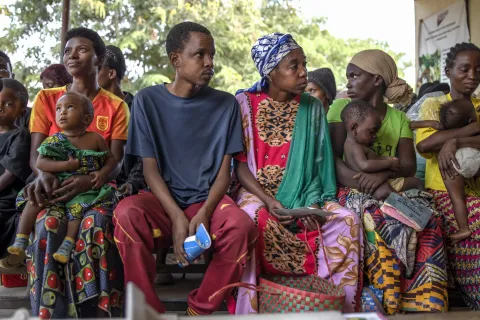
In Uganda’s refugee-hosting communities, many families are living under the strain of displacement, illness, food insecurity and overstretched services. For children under five, these pressures can be devastating. Severe acute malnutrition can leave a child dangerously thin, weak and highly vulnerable to disease. Without urgent treatment, it can quickly become fatal.
With funding from European Civil Protection and Humanitarian Aid Operations (ECHO), the Government of Uganda, with support from UNICEF, is helping to ensure that refugee and host children at greatest risk are identified early and treated in time.
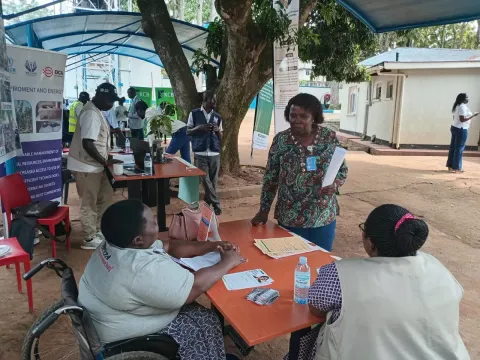
Led by the government and implemented in close collaboration with UNICEF, district local governments, National Medical Stores, health facilities, Village Health Teams and referral hospitals, the response helped sustain life-saving nutrition services for refugee children suffering from severe wasting.
According to UNICEF progress reports on the nutrition response, through this support, 5,320 cartons of Ready-to-Use Therapeutic Food (RUTF) and 500 cartons of F100 therapeutic milk were procured and delivered to refugee-hosting health facilities. These supplies supported the treatment of 5,320 children with severe acute malnutrition, including 2,554 girls and 2,766 boys.

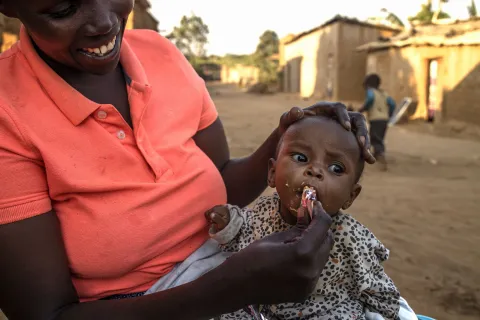
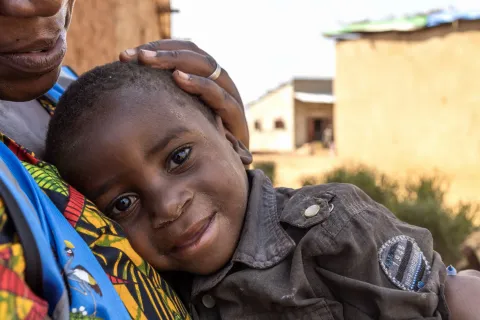
Behind these figures are thousands of individual stories of fear, strength and hope. They are stories of children arriving at health facilities weak and at risk, and of children who, with the right treatment, were able to regain strength and begin recovering.
Children without medical complications were treated through outpatient therapeutic care using RUTF, allowing them to continue treatment while staying with their families. Children with complications were admitted for inpatient care, where they received therapeutic milk, medical attention and close follow-up. In total, therapeutic milk supported the treatment of 1,049 children in inpatient therapeutic care units.
The intervention delivered strong results. It achieved a 77 per cent recovery rate, surpassing the 75 per cent target and improving significantly from the 60.8 per cent baseline. This means thousands of children were able to recover and continue growing, learning and living.
One major achievement was the uninterrupted availability of supplies, thanks to this critical and timely funding from ECHO. Through coordinated procurement, pre-positioning and last-mile delivery led by the Government of Uganda in collaboration with the National Medical Stores, UNICEF and district authorities, no supported facility reported a stock-out of RUTF. That consistency mattered. It meant health workers could continue treating children without interruption, and caregivers could seek help knowing that treatment would be available.
The response also depended on strong action at community level. Village Health Teams played a critical role in identifying children early through MUAC screening, referrals and household follow-up. At health facilities, nutrition screening was integrated into routine services such as outpatient departments, immunization clinics and young child clinics, helping to identify children before their condition worsened.